Introduction
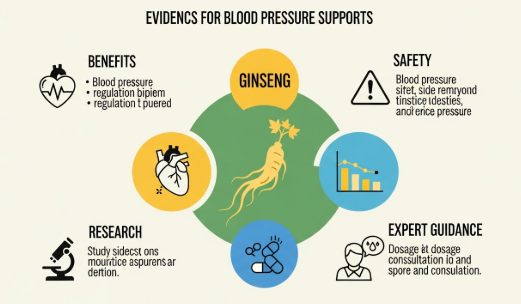
Ginseng for blood pressure support has gained increasing attention as more people seek natural ways to maintain cardiovascular health. High blood pressure, or hypertension, affects millions worldwide and remains a major risk factor for heart disease and stroke. As a result, interest in herbal medicine, including ginseng, continues to grow. However, natural does not always mean risk-free. Therefore, understanding what science actually says about ginseng and blood pressure is essential before considering its use.
Ginseng has a long history in traditional East Asian medicine. For centuries, it has been valued for promoting vitality and balance. Today, modern research is exploring how ginseng may influence vascular function, inflammation, and oxidative stress—key factors linked to blood pressure regulation.
Understanding Blood Pressure and Cardiovascular Health
Blood pressure measures the force of blood pushing against artery walls. When this pressure remains elevated over time, it can damage blood vessels and organs.
Key factors influencing blood pressure include:
- Arterial stiffness
- Endothelial function
- Hormonal regulation
- Oxidative stress and inflammation
- Lifestyle habits, such as diet and activity
Because hypertension develops gradually, supportive strategies often focus on long-term vascular health. This is where interest in herbal options like ginseng for blood pressure support emerges.
According to the World Health Organization (WHO), lifestyle modification remains the first step in blood pressure management. Herbal supplements may play a supportive role but should never replace medical care.
Source: https://www.who.int/news-room/fact-sheets/detail/hypertension
What Is Ginseng? A Brief Scientific Overview
Ginseng refers mainly to plants in the Panax genus. The most researched types include:
- Panax ginseng (Korean or Asian ginseng)
- Panax quinquefolius (American ginseng)
The active compounds in ginseng are called ginsenosides. These phytochemicals influence several biological pathways related to cardiovascular function.
Importantly, not all ginseng products are equal. Species, cultivation methods, and processing affect ginsenoside content. Therefore, scientific studies often specify standardized extracts.
How Ginseng May Support Healthy Blood Pressure
1. Effects on Blood Vessel Function
One proposed mechanism behind ginseng for blood pressure support involves improved endothelial function. The endothelium helps regulate blood vessel dilation.
Research published in Journal of Ginseng Research suggests that certain ginsenosides may enhance nitric oxide production. This molecule helps relax blood vessels and supports healthy circulation.
Source: https://www.ncbi.nlm.nih.gov/pmc/articles/PMC5452224/
As a result, vascular resistance may decrease slightly, which supports normal blood pressure levels.
2. Antioxidant and Anti-Inflammatory Actions
Oxidative stress plays a major role in hypertension development. Ginseng contains antioxidant compounds that help neutralize free radicals.
Studies indexed on PubMed indicate that ginseng may reduce markers of inflammation linked to vascular damage.
Source: https://pubmed.ncbi.nlm.nih.gov/
By supporting antioxidant defenses, ginseng may contribute indirectly to cardiovascular balance.
3. Adaptogenic Properties and Stress Response
Chronic stress can elevate blood pressure through hormonal pathways. Ginseng is classified as an adaptogen, meaning it may help the body respond more efficiently to stress.
Although this does not directly lower blood pressure, better stress regulation may support overall cardiovascular stability. Therefore, ginseng for blood pressure support is often discussed in the context of holistic health.
What Does Clinical Research Say?
Human studies on ginseng and blood pressure show mixed but promising results.
Key findings from clinical trials:
- Mild blood pressure-lowering effects in some populations
- Greater benefit seen in people with borderline or mild hypertension
- Improved arterial stiffness markers in select studies
A randomized controlled trial published in Hypertension Research observed modest reductions in systolic blood pressure after standardized Korean red ginseng supplementation.
Source: https://www.nature.com/articles/hr2010110
However, results vary based on dosage, duration, and individual health status. Therefore, medical guidance remains essential.
Ginseng vs. Conventional Blood Pressure Management
Ginseng should never replace prescribed antihypertensive medications. Instead, it may serve as a complementary approach.
Comparison overview:
| Aspect | Ginseng | Prescription Medication |
|---|---|---|
| Primary role | Supportive | Therapeutic |
| Onset of effect | Gradual | Often rapid |
| Evidence strength | Moderate | Strong |
| Medical supervision | Recommended | Required |
The National Institutes of Health (NIH) emphasizes caution when combining supplements with medications due to potential interactions.
Source: https://www.nccih.nih.gov/health/asian-ginseng
Safety, Dosage, and Who Should Avoid Ginseng
General safety considerations
Ginseng is generally well tolerated when used appropriately. However, side effects may include:
- Headache
- Digestive upset
- Sleep disturbances
Important precautions
Ginseng for blood pressure support may not be suitable for everyone.
Avoid or consult a healthcare professional if you:
- Take blood pressure or blood-thinning medications
- Have heart rhythm disorders
- Are pregnant or breastfeeding
Moreover, excessive intake may raise blood pressure in sensitive individuals. Therefore, balance and supervision matter.
Choosing a Quality Ginseng Product
Quality plays a major role in both safety and effectiveness.
Look for products that:
- Clearly state the Panax species
- Are standardized for ginsenoside content
- Come from reputable manufacturers
- Follow Good Manufacturing Practices (GMP)
Organizations like USP and ConsumerLab offer independent testing guidance.
Source: https://www.usp.org
Practical Tips for Integrating Ginseng Safely
If approved by a healthcare provider, consider these steps:
- Start with a low dose
- Monitor blood pressure regularly
- Avoid combining multiple stimulatory supplements
- Take breaks to prevent overuse
Consistency and observation are key. Moreover, lifestyle factors such as diet, exercise, and sodium intake remain foundational.
Conclusion
Ginseng for blood pressure support represents a promising yet nuanced area of herbal medicine. Scientific evidence suggests potential benefits through vascular support, antioxidant action, and stress modulation. However, effects are modest and highly individual.
Importantly, ginseng should complement—not replace—medical treatment. With proper guidance, high-quality products, and realistic expectations, ginseng may play a supportive role in long-term cardiovascular wellness.
Always consult a qualified healthcare professional before starting any herbal supplement, especially for blood pressure concerns.
Frequently Asked Questions (FAQ)
Is ginseng proven to lower blood pressure?
Research shows modest supportive effects, not guaranteed reductions.
Can I take ginseng with blood pressure medication?
Consult your doctor, as interactions are possible.
Which ginseng is best for blood pressure support?
Most studies focus on Panax ginseng, especially standardized extracts.
How long does it take to see effects?
Benefits, if any, usually appear after several weeks.
Is ginseng safe for long-term use?
Short-term use is generally safe, but long-term use should be supervised.
This article is for informational purposes only and is not a substitute for professional medical advice.
🇰🇷 Premium Korean Ginseng Online Shop