Korean Red Ginseng (Panax ginseng Meyer) has been cherished for over 2,000 years as a symbol of strength, longevity, and vitality.
What began as a traditional herbal root used by ancient Korean physicians has now evolved into a globally recognized functional supplement—available in various modern forms, each designed to maximize absorption, convenience, and health outcomes.
From steamed roots to highly concentrated extracts, Korean Red Ginseng has undergone innovations that preserve its traditional essence while enhancing its scientific effectiveness.
But how do these different forms compare, and which one is best for you?
Let’s explore the science, technology, and benefits behind the most common forms of processed Korean Red Ginseng.
🌸 1. What Makes Korean Red Ginseng Unique
Unlike white ginseng, which is simply dried raw root, Korean Red Ginseng (KRG) is carefully steamed and dried at controlled temperatures.
This process changes its chemical structure, converting mild ginsenosides into more potent and stable forms, such as:
- Rg3, Rh1, Rh2, and Compound K — known for their stronger adaptogenic and antioxidant activity.
As a result, red ginseng exhibits:
- Higher bioavailability (easier absorption in the body)
- Enhanced anti-inflammatory, immune, and metabolic effects
- Longer shelf life and stronger tonic properties
Modern extraction and standardization methods now allow manufacturers to capture these benefits in diverse formats—each suitable for different needs and lifestyles.
⚗️ 2. The Major Forms of Korean Red Ginseng and Their Benefits
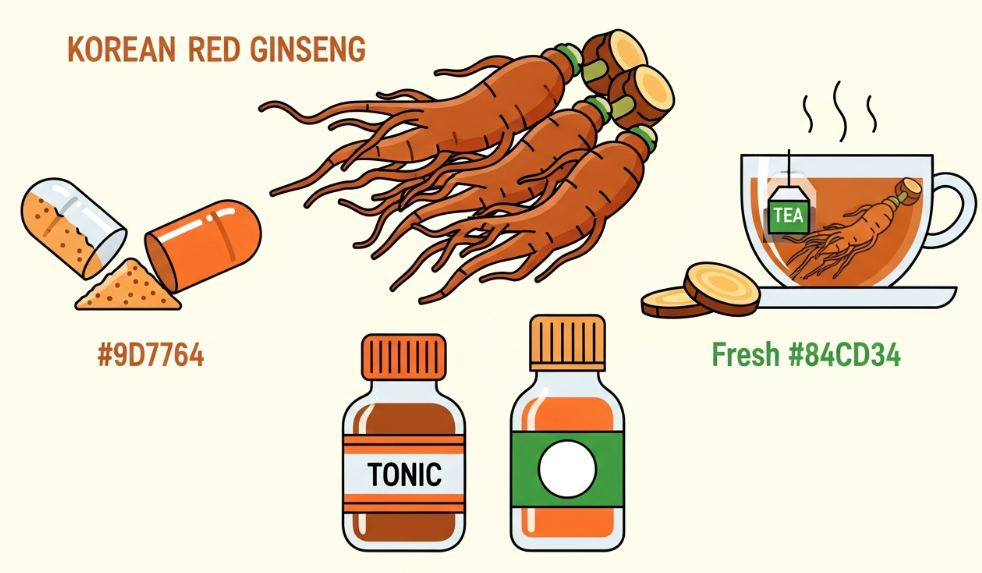
🧱 A. Whole Root (Traditional Form)
Description:
The original form of Korean Red Ginseng, consisting of the whole steamed and dried root, often sliced or boiled into tea.
Production:
Harvested after six years, the ginseng root is steamed at 90–100°C, then dried for preservation. This process enhances its red color and increases key ginsenosides like Rg3.
Benefits:
- Preserves all-natural compounds and fiber content.
- Provides a slow, sustained release of ginsenosides.
- Traditional and ceremonial use emphasizes its vital energy (Qi) strengthening properties.
Best for:
Purists and traditional users who value holistic benefits and enjoy herbal teas.
💧 B. Red Ginseng Extract (Concentrated Liquid)
Description:
This is the most potent and bioavailable form of Korean Red Ginseng. The root is boiled and condensed into a viscous extract, standardized for consistent ginsenoside concentration.
Production:
After extraction, water and ethanol are removed under low pressure, leaving behind a rich, semi-liquid concentrate containing active compounds.
Benefits:
- Rapid absorption through the digestive tract.
- Higher ginsenoside density (6–10%) than raw root.
- Proven benefits in energy, immunity, and blood sugar regulation.
- Convenient for daily supplementation—often 1–2 grams per dose.
Scientific Insight:
Studies in Journal of Ginseng Research (2019) found that red ginseng extract improved immune response and reduced fatigue significantly more than powder forms.
It is also linked to better antioxidant protection due to concentrated active compounds.
Best for:
Busy professionals and older adults seeking strong, evidence-based effects in a small daily dose.
💊 C. Capsules or Tablets
Description:
Encapsulated Korean Red Ginseng extract powder offers a precise, easy-to-dose supplement without the bitter taste of traditional preparations.
Production:
Standardized extract is dried into powder and encapsulated. Some formulations combine ginseng with zinc, vitamin B12, or royal jelly for synergistic benefits.
Benefits:
- Consistent dosage for clinical accuracy.
- Convenient, travel-friendly, and odorless.
- Enhances mental clarity, stamina, and immune function.
- Can be combined with other adaptogens (like rhodiola or ashwagandha).
Scientific Evidence:
A 2020 Nutrients study found that 400 mg/day of KRG capsules improved energy metabolism and insulin sensitivity in overweight adults within 8 weeks.
Best for:
Modern users seeking an easy, tasteless option backed by measurable outcomes.
🍵 D. Red Ginseng Tea (Instant or Brewed)
Description:
One of the most popular forms worldwide, red ginseng tea comes in sachets or granules. It may include added honey, jujube, or herbal blends for flavor.
Production:
Made from dried root or extract powder mixed with maltodextrin or natural sweeteners.
Traditional preparation involves simmering ginseng slices in water for 10–20 minutes.
Benefits:
- Promotes calm energy and focus.
- Supports immune defense during seasonal changes.
- A soothing ritual that encourages relaxation and mindfulness.
Scientific Note:
Tea provides a milder but steady release of ginsenosides. It is especially beneficial for daily maintenance and stress balance.
Best for:
Individuals new to ginseng, those sensitive to strong supplements, or those seeking a gentle daily tonic.
🧴 E. Red Ginseng Tonic (Liquid Shots)
Description:
Modern functional beverages that blend red ginseng extract with vitamins, honey, or herbal adaptogens in ready-to-drink vials or bottles.
Production:
Liquid extracts are standardized, flavored, and bottled in small doses (often 50–100 ml) for direct consumption.
Benefits:
- Fast-acting energy support—ideal for fatigue and focus.
- Synergistic with other nutrients (like B vitamins or royal jelly).
- Convenient and pleasant-tasting.
Scientific Findings:
In a 2018 clinical trial (Phytotherapy Research), ginseng tonic users reported a 30% reduction in perceived fatigue after two weeks, compared to placebo.
Best for:
Athletes, students, and those needing quick vitality boosts without caffeine crashes.
🧫 F. Fermented Red Ginseng (Probiotic-Enhanced)
Description:
A next-generation innovation in ginseng processing. Fermented red ginseng uses lactic acid bacteria to pre-digest ginsenosides into smaller compounds, enhancing absorption.
Production:
Enzymatic fermentation converts ginsenosides like Rb1 into Compound K, which is more readily absorbed by the human gut.
Benefits:
- Up to 4x higher bioavailability than regular extracts.
- Stronger anti-inflammatory and insulin-sensitizing effects.
- Supports gut microbiome and digestive health.
Scientific Support:
A 2021 Frontiers in Pharmacology study confirmed that fermented KRG significantly improved insulin sensitivity, immune function, and fatigue recovery in adults.
Best for:
Individuals with digestion issues or metabolic disorders (like insulin resistance).
🌿 3. Comparing the Forms: Bioavailability and Use Case
| Form | Strength | Absorption Speed | Ideal Use | Key Benefit |
|---|---|---|---|---|
| Whole Root | Moderate | Slow | Traditional users | Long-term vitality |
| Extract | Very High | Fast | General health, fatigue, immunity | Potent and efficient |
| Capsules/Tablets | High | Moderate | Precision dosage | Easy and consistent |
| Tea | Mild | Moderate | Daily maintenance | Relaxing ritual |
| Tonic/Drink | Moderate-High | Fast | Instant energy | On-the-go vitality |
| Fermented | Very High | Very Fast | Metabolic and digestive support | Enhanced absorption |
Each form offers distinct advantages depending on your health goals, schedule, and tolerance.
For those seeking clinical-level effects, standardized extract or fermented forms are ideal.
For daily balance and gentle energy, tea or tonic forms provide sustained wellness support.
🧠 4. Safety and Usage Guidelines
Korean Red Ginseng is generally safe for long-term use when taken in recommended amounts.
Typical dosage range:
- Extract: 1–2 grams per day
- Capsules: 200–400 mg/day
- Tea: 1–2 cups per day
- Fermented ginseng: 500 mg–1 g/day
Precautions:
- Avoid consumption close to bedtime (may increase alertness).
- Consult a healthcare professional if taking antidiabetic or antihypertensive medications.
- Use only third-party tested and standardized products for safety and potency.
Disclaimer: This content is for educational purposes only and should not replace professional medical advice. Always consult your healthcare provider before starting any new supplement regimen.
🌺 5. Why Formulation Quality Matters
The efficacy of Korean Red Ginseng depends not only on its form but also on the purity, concentration, and standardization of its ginsenosides.
Look for products that:
- Specify ginsenoside content (≥5%)
- Use 6-year-old Korean roots (not Chinese or American varieties)
- Are certified by KFDA or GMP standards
Authentic Korean Red Ginseng brands often use advanced extraction methods to preserve full-spectrum compounds—ensuring both traditional potency and modern reliability.
🌞 6. The Future of Korean Red Ginseng: From Tradition to Biotechnology
Thanks to biotechnology and precision extraction, researchers are developing nano-ginseng and liposomal formulations that deliver ginsenosides directly into cells with minimal degradation.
These new technologies promise to:
- Increase bioavailability by 10–20x
- Shorten absorption time
- Deliver targeted effects on energy, immunity, and metabolism
This marks a new era in ginseng science—where ancient wisdom meets advanced nutraceutical innovation.
🌿 Conclusion: Choosing the Right Form for Your Health Journey
Korean Red Ginseng offers remarkable versatility—whether in the simplicity of traditional tea or the scientific precision of fermented extracts.
Each form delivers a unique expression of the same root’s essence: vitality, balance, and resilience.
The best form depends on your goals and lifestyle:
- For daily wellness: tea or capsules
- For clinical metabolic support: fermented extract
- For quick energy: tonics or drinks
- For holistic vitality: whole root or concentrated extract
Whichever you choose, authentic Korean Red Ginseng remains a timeless ally in promoting energy, immunity, mental clarity, and longevity—backed by centuries of heritage and modern clinical validation.
🇰🇷 Premium Korean Ginseng Online Shop