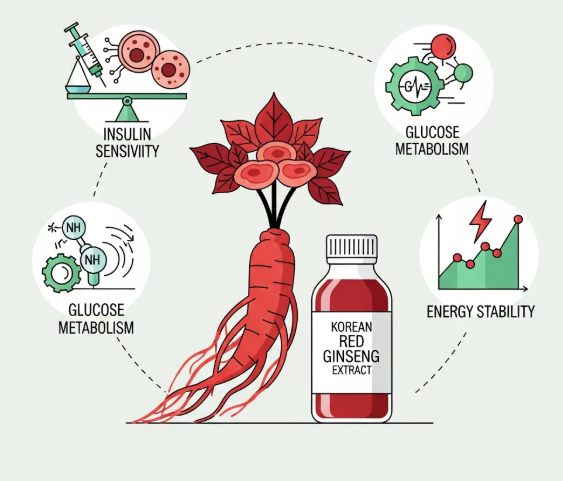
Insulin sensitivity is a cornerstone of metabolic wellness. It refers to how effectively cells respond to insulin, the hormone responsible for directing glucose from the bloodstream into muscle, liver, and fat cells. Optimal insulin sensitivity ensures steady energy, balanced nutrient storage, and healthy metabolic function. Suboptimal insulin responsiveness can contribute to energy dips, cognitive fog, and metabolic inefficiency — even in otherwise healthy individuals.
Korean Red Ginseng (Panax ginseng), a well-researched adaptogenic herb, contains bioactive compounds called ginsenosides, as well as polysaccharides and polyacetylenes, which may support insulin sensitivity through multiple mechanisms. While it is not a treatment for diabetes or any medical condition, studies suggest that Korean Red Ginseng can promote cellular responsiveness to insulin and help maintain metabolic efficiency.
This article explores the science-backed ways in which Korean Red Ginseng supports insulin sensitivity and holistic metabolic health.
1. Understanding Insulin Sensitivity
Insulin acts as a “key” that allows glucose to enter cells for energy production or storage. When cells are less responsive to insulin, glucose remains elevated in the bloodstream longer, and energy delivery to muscles and the brain is reduced. Over time, reduced insulin sensitivity can:
- Impair energy production
- Promote fat storage, particularly in the abdominal area
- Increase oxidative stress in metabolic tissues
- Contribute to fatigue and cognitive sluggishness
Maintaining high insulin sensitivity is therefore essential for stable energy, metabolic resilience, and overall wellness.
2. Ginsenosides and Cellular Glucose Uptake
The primary bioactive compounds in Korean Red Ginseng, ginsenosides, have been studied for their effects on cellular glucose uptake:
- Rg1, Rb1, and Rg3 enhance glucose transport into muscle and liver cells
- Activate AMP-activated protein kinase (AMPK), which improves energy utilization
- Support mitochondrial function for efficient ATP production
- Reduce oxidative stress that impairs insulin signaling
These mechanisms collectively contribute to improved insulin responsiveness at the cellular level.
3. Modulating Post-Meal Glucose and Energy Stability
Rapid spikes in blood glucose after meals can reduce energy efficiency and lead to fatigue or cravings. Korean Red Ginseng has been shown to:
- Support balanced postprandial glucose levels
- Reduce oxidative stress caused by glucose surges
- Promote smooth energy delivery to tissues
This natural regulatory effect enhances metabolic efficiency and helps maintain stable energy throughout the day.
4. Antioxidant Protection for Insulin Signaling
Oxidative stress damages cellular machinery, including insulin receptors, impairing glucose uptake. Korean Red Ginseng contains potent antioxidants that:
- Protect metabolic tissues from reactive oxygen species (ROS)
- Maintain receptor function in muscle, liver, and fat cells
- Enhance mitochondrial energy production
- Reduce inflammation associated with impaired insulin signaling
Antioxidant protection is a key component in maintaining high insulin sensitivity over time.
5. Liver Function and Glucose Processing
The liver regulates glucose by storing glycogen after meals and releasing glucose during fasting or physical activity. Korean Red Ginseng supports liver efficiency by:
- Enhancing glycogen storage and mobilization
- Protecting hepatocytes from oxidative stress
- Promoting smooth glucose processing
Optimal liver function contributes to better insulin sensitivity and energy stability.
6. Energy Production and Fatigue Reduction
Reduced insulin sensitivity can limit glucose uptake into cells, decreasing ATP production and leading to fatigue. Korean Red Ginseng helps:
- Improve mitochondrial energy efficiency
- Enhance oxygen utilization in muscles and brain
- Support sustained energy during physical or cognitive activity
This translates into improved physical stamina and cognitive endurance.
7. Cognitive Function and Glucose Delivery
The brain consumes a significant portion of daily glucose. Efficient insulin signaling ensures that neurons receive energy efficiently. Korean Red Ginseng may support cognitive function by:
- Promoting efficient glucose uptake in neural tissue
- Reducing oxidative stress in the brain
- Enhancing focus, attention, and memory
- Reducing cognitive fatigue associated with metabolic inefficiency
This holistic support ties metabolic efficiency directly to mental performance.
8. Adaptogenic Stress Support
Chronic stress can impair insulin sensitivity by altering cortisol rhythms, increasing oxidative stress, and interfering with glucose metabolism. Korean Red Ginseng, as an adaptogen, helps:
- Regulate cortisol balance
- Reduce stress-related metabolic disruption
- Promote cellular resilience to physiological stress
- Support consistent energy availability
By mitigating stress-induced metabolic strain, it supports stable insulin function.
9. Forms and Bioavailability of Korean Red Ginseng
The effectiveness of Korean Red Ginseng depends on preparation:
- Whole root – traditional tonic for overall wellness
- Powder/capsules – standardized ginsenoside content for consistency
- Fermented extracts – enhanced absorption and bioavailability
- Concentrates – high-potency, convenient dosing
Choosing high-quality, standardized products ensures consistent support for insulin sensitivity.
10. Lifestyle Integration for Optimal Insulin Sensitivity
To maximize benefits, Korean Red Ginseng should be integrated into a holistic lifestyle approach:
- Balanced diet, rich in fiber and low-glycemic foods
- Regular physical activity (aerobic + resistance training)
- Adequate sleep and recovery
- Stress management practices (mindfulness, yoga, breathing exercises)
- Hydration and antioxidant-rich foods
Together, these practices amplify the effects of Korean Red Ginseng on metabolic efficiency and insulin sensitivity.
Conclusion: Supporting Insulin Sensitivity with Korean Red Ginseng
Korean Red Ginseng supports insulin sensitivity through multiple pathways:
- Enhanced cellular glucose uptake via ginsenosides
- AMPK activation and mitochondrial energy support
- Balanced post-meal glucose responses
- Antioxidant protection of metabolic tissues
- Liver support for glycogen storage and glucose regulation
- Cognitive and physical energy enhancement
- Adaptogenic stress resilience
Incorporating Korean Red Ginseng as part of a holistic lifestyle promotes stable energy, metabolic efficiency, and overall vitality — all without making medical claims.