Hypertension (high blood pressure) is one of the most widespread chronic conditions globally and a leading contributor to cardiovascular morbidity and mortality. Despite its prevalence, hypertension is notoriously difficult to detect in early stages because it often progresses silently. The early signs of hypertension—though sometimes subtle—can serve as vital warnings before severe complications such as myocardial infarction, stroke, or chronic kidney disease occur.
This expanded scientific article explores the early clinical manifestations of hypertension, the underlying physiological mechanisms behind them, and how Korean ginseng (Panax ginseng) may play a complementary role in cardiovascular support through its bioactive compounds.
⭐ Why Hypertension Is Often Symptomless: A Scientific Perspective
Hypertension develops when the force exerted by circulating blood against arterial walls remains chronically elevated. Over time, this increased pressure induces:
- Endothelial dysfunction
- Arterial stiffness
- Increased peripheral vascular resistance
- Left ventricular hypertrophy
Interestingly, the body is highly adaptive; slow increases in blood pressure may not trigger immediate symptoms. Baroreceptors—pressure sensors located in the carotid sinus and aortic arch—”reset” to a higher threshold, allowing the body to falsely interpret elevated pressure as normal. This neurological adaptation explains why many individuals do not notice symptoms even at dangerously high levels.
However, when damage accumulates or blood pressure spikes rapidly (hypertensive urgency or emergency), noticeable symptoms begin to manifest.
🔎 Detailed Scientific Overview of the Early Signs of Hypertension
Below is an expanded and more physiological explanation of each symptom.
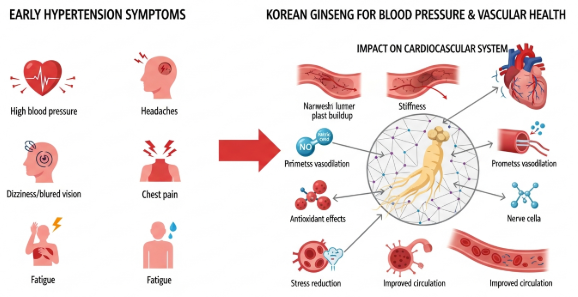
1. Headaches (Typically Occipital)
Hypertensive headaches are often described as pulsating and primarily occur at the back of the head.
Scientific mechanism:
When blood pressure rises significantly, cerebral autoregulation becomes impaired. This increases intracranial pressure and stretches cerebral blood vessels, stimulating pain receptors. These headaches are more common during hypertensive crises (≥180/120 mmHg).
2. Fatigue, Weakness, and Reduced Exercise Tolerance
Chronic high blood pressure increases afterload—the resistance the left ventricle must overcome to pump blood.
Physiological result:
- Increased myocardial oxygen demand
- Reduced cardiac efficiency
- Early onset fatigue and systemic weakness
In long-standing untreated hypertension, left ventricular hypertrophy (LVH) further contributes to reduced cardiac output and chronic fatigue.
3. Heart Palpitations or Arrhythmias
Hypertension alters cardiac electrical conduction by promoting structural changes such as:
- Myocardial hypertrophy
- Fibrosis in cardiac tissue
- Left atrial enlargement
These changes increase susceptibility to premature beats, atrial fibrillation, and irregular cardiac rhythms.
4. Visual Disturbances (Blurred Vision or Photopsia)
Because the retina contains highly sensitive microvasculature, it is often affected early.
Mechanism:
Chronic hypertension causes hypertensive retinopathy, including:
- Narrowing of arterioles
- Arteriovenous nicking
- Retinal hemorrhage
- Cotton wool spots
Visual symptoms indicate that microvascular damage is already occurring.
5. Shortness of Breath (Dyspnea)
When hypertension affects the heart long enough, it can lead to diastolic dysfunction or heart failure.
Physiological explanation:
Stiffened ventricular walls cannot fill properly, causing blood to back up into the lungs, resulting in mild to severe dyspnea.
6. Nosebleeds (Epistaxis)
Although not the most common symptom, nosebleeds may occur when blood pressure spikes abruptly.
Mechanism:
High intravascular pressure can rupture delicate nasal capillaries.
This is more typical in hypertensive urgency rather than chronic mild hypertension.
7. Peripheral Edema (Leg or Ankle Swelling)
Edema occurs when hypertension impairs kidney function or increases venous pressure.
Underlying cause:
- Sodium and fluid retention
- Reduced renal filtration
- Microvascular leakage in peripheral tissues
Persistent edema may indicate target-organ damage.
8. Cognitive Fog or Difficulty Concentrating
Hypertension affects cerebral microcirculation and reduces brain perfusion.
Long-term effects include:
- Reduced executive function
- Lower attention capacity
- Increased risk of vascular dementia
🌿 Korean Ginseng and Cardiovascular Support: A Scientific Review
Korean ginseng (Panax ginseng) is widely studied for its adaptogenic and cardiovascular properties. Its primary active compounds, ginsenosides, exhibit promising biological effects.
Key Mechanisms Relevant to Blood Pressure Support
1. Endothelial Nitric Oxide (NO) Production
Ginsenosides—particularly Rb1, Rg1, and Rg3—stimulate endothelial nitric oxide synthase (eNOS), promoting vasodilation.
Effects:
- Decreased vascular resistance
- Improved arterial flexibility
- Enhanced blood flow
This is beneficial for individuals with stiff or constricted blood vessels.
2. Antioxidant and Anti-inflammatory Activity
Hypertension is linked to oxidative stress and chronic low-grade inflammation.
Ginsenosides help reduce:
- Reactive oxygen species (ROS)
- Lipid peroxidation
- Inflammatory cytokine production
This protects arteries from endothelial damage.
3. Regulation of the Renin–Angiotensin–Aldosterone System (RAAS)
Some studies suggest ginseng helps modulate RAAS activity, potentially reducing vasoconstriction and sodium retention—two core drivers of hypertension.
4. Improved Lipid Profile and Circulation
Panax ginseng may contribute to:
- Lower LDL oxidation
- Improved HDL levels
- Better microcirculation
- Protection against arterial plaque formation
These effects support healthier long-term cardiovascular function.
5. Stress Reduction and HPA Axis Regulation
Stress activates the sympathetic nervous system, raising heart rate and blood pressure.
As an adaptogen, ginseng promotes:
- Cortisol balance
- Reduced sympathetic overactivation
- Improved resilience to stress
Lower stress response ⇒ more stable blood pressure.
🥗 Lifestyle Interventions to Pair With Ginseng
For best results, combine ginseng supplementation with:
- Low-sodium diet
- Mediterranean or DASH dietary pattern
- Regular aerobic exercise
- Weight management
- Stress-reduction techniques
- Consistent sleep schedule
- Regular blood pressure monitoring
Read also: Choosing Korean Ginseng for Hypertension: Evidence-Based Guidance for Safe Blood Pressure Support