High blood pressure, or hypertension, is one of the most significant global health concerns, affecting more than 1.2 billion adults worldwide. It markedly increases the risk of heart disease, stroke, kidney failure, and vascular damage. The good news: hypertension is one of the most preventable and manageable chronic conditions, especially when addressed early with a combination of medical guidance, evidence-based lifestyle changes, and supportive natural interventions.
This scientifically grounded article explains how to lower high blood pressure, backed by physiological principles, clinical evidence, and up-to-date research. It also highlights how Korean ginseng (Panax ginseng) may be used as a supportive natural ingredient to promote vascular and metabolic health.
⭐ Understanding High Blood Pressure: A Brief Scientific Overview
Blood pressure rises when the force of blood pushing against arterial walls is consistently too high. This can be driven by:
- Increased peripheral vascular resistance
- Reduced arterial elasticity
- Imbalance in the renin–angiotensin–aldosterone system (RAAS)
- Excessive sympathetic nervous system activity
- Endothelial dysfunction (impaired nitric oxide release)
High blood pressure silently damages arteries, thickens the heart muscle, impairs kidney filtration, and accelerates atherosclerosis. Lowering blood pressure early reduces the risk of cardiovascular events by up to 40–50%.
🔬 Scientifically Proven Ways to Lower High Blood Pressure
Below are comprehensive, deeply scientific methods supported by clinical research.
1. Reduce Sodium Intake and Improve Electrolyte Balance
Excess sodium causes the body to retain water, increasing blood volume and vascular pressure.
Scientific Mechanisms
- Sodium increases extracellular fluid volume
- Stimulates RAAS activation
- Decreases arterial compliance
Clinically recommended sodium level:
< 2,300 mg/day (optimal: 1,500 mg/day)
Enhance potassium intake
Potassium counters sodium’s effects by promoting vasodilation and increasing sodium excretion.
Sources: bananas, avocados, spinach, potatoes, beans.
2. Adopt the DASH or Mediterranean Diet
These diets are clinically validated for blood pressure reduction.
Effects on vascular health
- Reduces oxidative stress
- Stabilizes glucose and lipid metabolism
- Enhances nitric oxide (NO) release
- Lowers arterial stiffness
Key components
- High fruits & vegetables
- Whole grains
- Lean proteins (fish, poultry)
- Nuts & seeds
- Minimal trans fats & processed foods
3. Increase Physical Activity
Exercise improves endothelial function and decreases vascular resistance.
Mechanisms
- Enhances nitric oxide bioavailability
- Reduces sympathetic tone
- Improves insulin sensitivity
- Lowers inflammation
Guideline:
150 minutes weekly of moderate aerobic exercise (e.g., brisk walking, cycling, swimming).
4. Manage Body Weight
A reduction of just 5–10% of body weight can significantly lower systolic and diastolic blood pressure.
How weight loss lowers BP
- Decreases total peripheral resistance
- Improves RAAS balance
- Reduces ventricular workload
BMI goal: 18.5–24.9
5. Reduce Stress and Overactivation of Sympathetic Nervous System
Chronic stress increases norepinephrine and cortisol, raising blood pressure.
Effective stress-reducing practices:
- Deep breathing / diaphragmatic breathing
- Meditation
- Yoga
- Stretching
- Sleep optimization
Scientific studies show stress reduction can lower systolic BP by 5–10 mmHg.
6. Limit Alcohol and Avoid Smoking
Alcohol raises BP through endothelial dysfunction and increased sympathetic activity. Smoking stiffens arteries and damages vessel lining.
Safe threshold:
– Alcohol: max 1 drink/day (women), 2 (men)
– Smoking: zero
7. Monitor Blood Pressure Regularly
Home BP monitoring increases treatment success by up to 20%.
Goal: <120/80 mmHg for optimal health.
🌿 The Potential Role of Korean Ginseng in Supporting Healthy Blood Pressure
Korean ginseng (Panax ginseng) is extensively studied for its cardiovascular benefits, particularly in endothelial function, nitric oxide regulation, and stress modulation.
Here’s the science behind it:
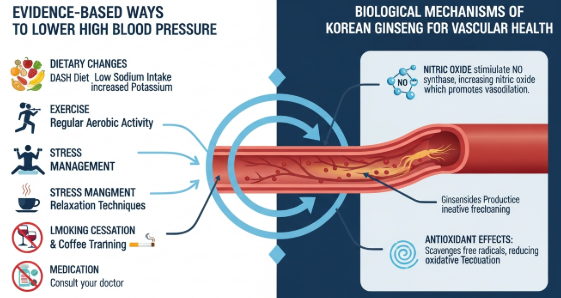
1. Enhances Nitric Oxide (NO) Production
Ginsenosides such as Rb1, Rg1, and Rg3 activate endothelial nitric oxide synthase (eNOS).
Effects:
- Promotes vasodilation
- Reduces vascular resistance
- Improves arterial elasticity
This mechanism is especially beneficial for individuals with stiff arteries or endothelial dysfunction.
2. Reduces Oxidative Stress and Inflammation
Hypertension is strongly linked to oxidative damage in blood vessels.
Ginseng provides:
- Reduced ROS (reactive oxygen species)
- Lower lipid peroxidation
- Decreased inflammatory cytokines (IL-6, TNF-α)
This protects arterial walls from damage and thickening.
3. Helps Regulate RAAS (Renin–Angiotensin–Aldosterone System)
Some preclinical studies show ginseng may modulate RAAS activity, potentially:
- Decreasing vasoconstriction
- Promoting sodium excretion
- Reducing fluid retention
4. Supports Stress Resilience (Adaptogenic Effect)
As an adaptogen, Panax ginseng helps balance the HPA axis.
Benefits:
- Reduces cortisol spikes
- Decreases sympathetic activation
- Promotes stable heart rate and arterial pressure
Stress is a major overlooked driver of hypertension; ginseng helps address this biologically.
5. Improves Blood Circulation and Microvascular Health
Ginseng helps improve:
- Microcirculation
- Blood viscosity
- Oxygen delivery
Healthy circulation plays a crucial role in maintaining stable blood pressure.
🥗 Practical Protocol: Combining Lifestyle Changes + Ginseng
For individuals with elevated blood pressure, beneficial daily habits include:
- DASH/Mediterranean diet
- 30 minutes of aerobic exercise
- Stress management techniques
- Adequate hydration
- Reduced sodium
- Regular monitoring
- Daily supplementation with Korean ginseng (if approved by a healthcare provider)