Stress and hypertension are closely linked. While hypertension is traditionally associated with diet, lifestyle, and genetics, chronic psychological stress has emerged as one of the strongest, scientifically proven contributors to elevated blood pressure. Modern routines, fast-paced work environments, and emotional strain activate physiological pathways that directly raise blood pressure — especially in younger adults.
This article explores how stress biologically causes hypertension, why unmanaged stress becomes dangerous over time, and how Korean ginseng (Panax ginseng) may help support a healthier stress response and cardiovascular function.
⭐ How Stress Raises Blood Pressure: A Scientific Explanation
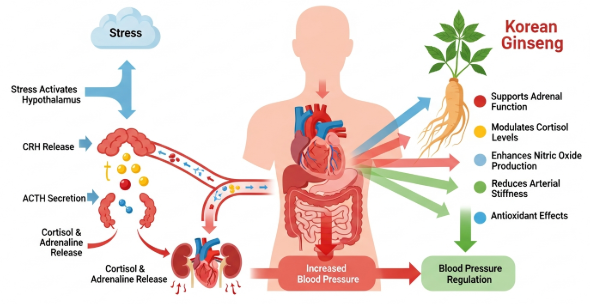
When you face stress — physical, emotional, or psychological — your body activates two major systems:
1. The Sympathetic Nervous System (SNS)
Also known as the “fight-or-flight” system.
Stress causes the release of:
- Adrenaline
- Noradrenaline
These hormones cause:
- Rapid increase in heart rate
- Constriction of blood vessels
- Sudden spikes in blood pressure
Frequent activation leads to chronically elevated vascular tone and persistent hypertension.
2. The HPA Axis (Hypothalamic–Pituitary–Adrenal System)
Chronic stress elevates cortisol, a hormone that:
- Increases glucose levels
- Enhances sodium retention
- Stimulates fluid retention
- Increases vascular resistance
High cortisol = consistently higher blood pressure.
🔎 Why Stress-Induced Hypertension Is Dangerous
Chronic stress not only raises blood pressure — it makes hypertension more resistant to treatment.
It contributes to:
- Endothelial dysfunction
- Arterial stiffness
- Increased inflammation
- Elevated blood lipids
- Higher risk of arrhythmias
- Insulin resistance
- Sleep disturbances
Many individuals with “unexplained high blood pressure” are actually experiencing stress-driven hypertension.
🧠 Common Symptoms of Stress-Related Hypertension
- Persistent headaches
- Chest tightness or palpitations
- Difficulty sleeping
- Irritability or mood swings
- Fatigue and burnout
- Muscle tension (neck and shoulders)
- Brain fog or unable to focus
When these symptoms occur together with elevated blood pressure, stress is likely the root cause.
🌿 How Korean Ginseng May Help Support Stress & Blood Pressure Regulation
Panax ginseng is one of the most researched adaptogenic herbs, meaning it helps the body respond more effectively to stress.
✔ 1. Regulates the HPA Axis
Ginsenosides help balance cortisol levels, reducing the negative cardiovascular effects of chronic stress.
✔ 2. Reduces Sympathetic Nervous System Overactivation
Ginseng may help stabilize adrenal activity, lowering stress-related spikes in blood pressure.
✔ 3. Improves Nitric Oxide (NO) Production
NO relaxes blood vessels, improving circulation and helping maintain normal vascular resistance.
✔ 4. Enhances Mood, Focus, and Energy
Helps reduce mental fatigue, burnout, and emotional stress — major contributors to hypertension.
✔ 5. Anti-inflammatory and Antioxidant Effects
Chronic stress increases inflammation and oxidative stress; ginseng helps counteract both.
Korean ginseng does not replace antihypertensive medication, but it can be a powerful supportive tool for people whose blood pressure rises due to stress.
🥗 Lifestyle Tips to Reduce Stress-Driven Hypertension
- Practice deep breathing or meditation
- Reduce caffeine and high-sodium foods
- Maintain consistent sleep patterns
- Exercise regularly (30 minutes/day)
- Limit screen exposure before bed
- Stay hydrated
- Engage in relaxing activities (music, hobbies, stretching)
Managing stress is essential — especially for young adults who are increasingly experiencing hypertension at earlier ages.