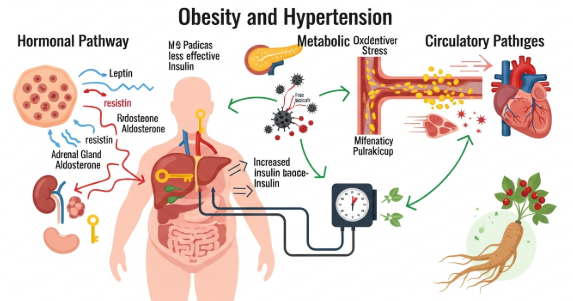
Obesity is one of the strongest and most well-established risk factors for hypertension. The relationship is not only statistical—it is mechanistically proven through hormonal, metabolic, renal, and vascular pathways. Below is a clear, scientific explanation of why excess body fat directly raises blood pressure.
⭐ 1. Increased Sympathetic Nervous System (SNS) Activity
People with excess adipose tissue experience chronic stimulation of the sympathetic nervous system, which increases:
- Heart rate
- Vasoconstriction
- Cardiac output
- Peripheral vascular resistance
All of these elevate blood pressure.
Visceral fat, in particular, secretes signals that overstimulate SNS continuously.
⭐ 2. Activation of the Renin–Angiotensin–Aldosterone System (RAAS)
Obesity increases RAAS activity, especially in visceral fat tissue.
What this causes:
- More angiotensin II → vasoconstriction
- More aldosterone → sodium & water retention
- Higher blood volume → higher blood pressure
This is one of the most powerful and dangerous hypertension pathways triggered by obesity.
⭐ 3. Insulin Resistance and Hyperinsulinemia
Most individuals with obesity develop some level of insulin resistance.
Elevated insulin leads to:
- Kidney sodium retention
- Increased SNS activity
- Thickening of vascular smooth muscle
Insulin also reduces the natural vasodilator nitric oxide, causing stiffer arteries.
⭐ 4. Mechanical Pressure From Fat Around the Kidneys
Perirenal and renal sinus fat physically compress the kidneys, impairing their ability to regulate fluid and electrolytes.
This results in:
- Reduced natriuresis (salt excretion)
- Fluid retention
- Increased intravascular volume
This is why obese patients often have salt-sensitive hypertension.
⭐ 5. Endothelial Dysfunction
Excess fat tissue produces inflammatory cytokines such as:
- TNF-α
- IL-6
- CRP
These damage the endothelium and reduce nitric oxide (NO) availability. Without adequate NO, blood vessels are unable to relax, leading to persistent vasoconstriction and high blood pressure.
⭐ 6. Adipokines and Hormonal Imbalances
Obesity alters adipokine production:
Increased leptin
- Stimulates SNS
- Raises blood pressure
Reduced adiponectin
- Decreases vascular protection
- Encourages inflammation
- Promotes arterial stiffness
These hormonal changes directly worsen hypertension.
⭐ 7. Chronic Inflammation
Obesity is a pro-inflammatory state. Low-grade systemic inflammation contributes to:
- Arterial stiffness
- Oxidative stress
- Impaired kidney function
- Reduced vascular elasticity
All of which elevate blood pressure over time.
Summary (Simple Scientific Takeaway)
Obesity increases blood pressure through seven major mechanisms:
- Overactive sympathetic nervous system
- Overactive RAAS system
- Insulin resistance
- Mechanical kidney compression
- Endothelial dysfunction
- Hormonal imbalance (adipokines)
- Chronic inflammation
Together, these mechanisms create a “perfect storm” that makes hypertension far more likely—and more severe—in individuals with overweight or obesity.