High blood pressure (hypertension) remains one of the most widespread cardiovascular conditions globally, and one of the strongest dietary factors contributing to it is excess salt (sodium) intake. While the body needs sodium to maintain nerve signaling, muscle contraction, and fluid balance, the modern diet contains far more sodium than the human body is designed to handle. Understanding how sodium interacts with the cardiovascular system is essential for preventing and managing hypertension.
Why Salt Affects Blood Pressure: A Scientific Breakdown
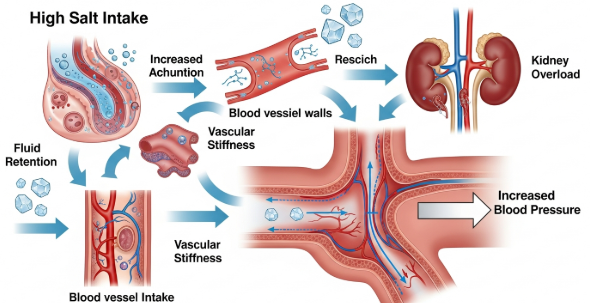
1. Sodium Disrupts Fluid Balance
When sodium levels rise, the body retains extra water to dilute the sodium concentration in the bloodstream.
This increases total blood volume, which requires the heart to pump harder, raising blood pressure.
2. Impact on Kidney Function
The kidneys filter excess sodium, but when intake exceeds capacity, sodium accumulates in the bloodstream and tissues.
Long-term overload causes:
- Reduced sodium excretion
- Increased intravascular volume
- Chronic elevation of blood pressure
Studies show that individuals who are “salt-sensitive” often have genetic or renal factors that impair sodium regulation.
3. Sodium Causes Vascular Stiffness
High sodium levels damage the endothelium (the inner lining of blood vessels), leading to:
- Reduced production of nitric oxide (a natural vasodilator)
- Increased arterial stiffness
- Heightened vascular resistance
This vascular rigidity significantly contributes to persistent high blood pressure.
4. Hormonal Activation: RAAS System
Excess sodium intake can activate the Renin–Angiotensin–Aldosterone System (RAAS), which:
- Narrows blood vessels (vasoconstriction)
- Increases fluid retention
- Raises blood pressure further
This hormonal pathway is a major target for many antihypertensive medications.
Recommended Daily Sodium Intake
According to WHO and AHA guidelines:
- Recommended maximum: 2,000 mg sodium/day (~5 grams salt)
- Optimal for people with hypertension: 1,500 mg/day
However, most people consume 3,000–4,500 mg/day, often unknowingly.
Hidden Sources of Sodium You Should Watch Out For
Even if you don’t use much table salt, sodium is heavily present in processed foods:
High-sodium foods:
- Instant noodles
- Canned soups
- Cheese & processed dairy
- Soy sauce, fish sauce
- Sausages & deli meats
- Chips, crackers, snacks
- Bread (yes, bread contains salt)
These account for more than 70% of the sodium consumed daily.
Signs You May Be Consuming Too Much Salt
Although often silent, early indicators include:
- Persistent thirst
- Frequent urination
- Swelling in fingers or ankles
- Headaches
- Feeling bloated
- Elevated blood pressure readings
Prolonged high sodium intake increases risks of:
- Heart attack
- Stroke
- Kidney disease
- Heart failure
Tips to Reduce Sodium Without Sacrificing Taste
✔ Choose fresh over processed foods
Fresh meats, vegetables, and whole ingredients contain significantly less sodium.
✔ Read nutrition labels carefully
Look for:
- “Low sodium” (<140 mg per serving)
- “No added salt”
- “Sodium-free”
✔ Flavor with herbs and natural spices
Garlic, ginger, turmeric, and rosemary enhance taste without sodium.
✔ Be careful with sauces
Soy sauce, BBQ sauce, oyster sauce, and chili sauce are among the highest sodium condiments.
✔ Cook at home more often
Restaurants often use large amounts of salt for flavor.
Can Supplements or Herbs Help? (Ginseng Connection)
Korean red ginseng is widely studied for cardiovascular support. Some studies suggest:
- It may promote vasodilation via nitric oxide modulation
- It may help improve circulation
- It may support blood pressure stability in certain individuals
While not a replacement for sodium reduction, it can be a supportive addition to a heart-healthy lifestyle when used appropriately.