Executives are exposed to a pattern called chronic anticipatory stress — the stress that occurs not from what is happening, but from what could happen.
Scientific findings show:
- High performers spend 60–80% more time in goal-oriented cognitive states.
- Decision fatigue reduces prefrontal cortex efficiency.
- Constant availability (calls, Slack, crisis escalation) disrupts sleep cycles.
- Cortisol remains elevated even after working hours, impairing recovery.
This means that stress solutions must be:
✔ Rapid
✔ Scientifically backed
✔ Sustainable
✔ Compatible with demanding schedules
🔬 1. Parasympathetic Activation Through Strategic Micro-Recovery
Executives rarely have long breaks, so recovery must fit into minutes.
Research-supported micro-recovery methods include:
• Physiological Sigh (Neuroscience-based breathing)
Shown to reduce CO₂ levels and calm the autonomic system within 1–2 minutes.
• 90-Second Visual Reset
Looking at distant objects relaxes the visual cortex, lowering cognitive load.
• Brief Somatic Grounding
Touching a desk, chair, or textured object interrupts stress loops.
These micro-methods help reset the brain during back-to-back meetings or crisis calls.
🔥 2. Cognitive Load Management (Executive-Level Mental Efficiency)
Leaders experience a constant cognitive backlog. Strategies include:
• Decision Batching
Reserve specific time blocks for repetitive decisions — proven to reduce decision fatigue.
• Mental Off-Loading
Writing short notes or voice memos prevents overactivation of the working memory.
• Priority Compression
Limit “today’s must-do” to three non-negotiables to prevent performance anxiety.
Neuroscience confirms that reducing cognitive fragmentation improves accuracy and emotional regulation.
🌙 3. Sleep Architecture Optimization for High Performers
Executives often suffer from:
- Racing thoughts before bedtime
- Nocturnal cortisol spikes
- Shortened REM cycles
Evidence-based techniques:
• The 45-Minute Wind-Down Rule
No strategic thinking or high-stimulus tasks 45 min before sleep.
• Low-Light Melatonin Support
Warm lighting signals circadian alignment for better sleep onset.
• Evening Magnesium + L-Theanine (optional)
Shown to improve sleep depth and reduce neural excitation.
🍃 4. Korean Red Ginseng: A Scientifically Validated Stress Modulator
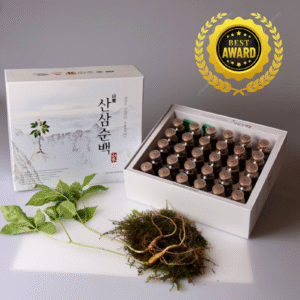
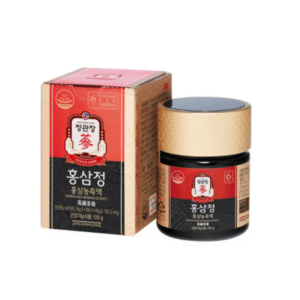
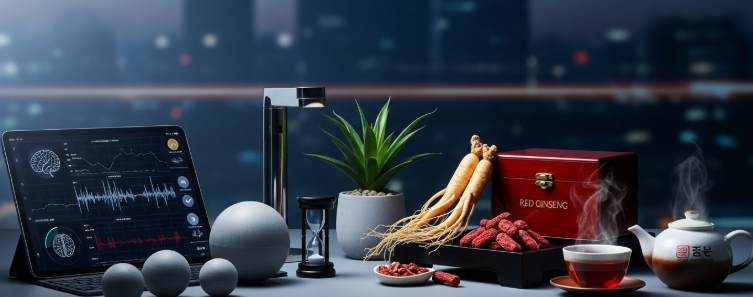
Korean red ginseng (Panax ginseng) is one of the most highly researched adaptogens in clinical settings.
Studies show that:
✔ Reduces Cortisol Reactivity
Ginsenosides regulate the HPA axis, preventing excessive stress hormone spikes.
✔ Improves Executive Cognitive Function
Enhances working memory, processing speed, and decision clarity.
✔ Boosts Mental & Physical Energy
Supports mitochondrial activity, reducing fatigue without overstimulation.
✔ Enhances Mood Stability
Promotes balanced neurotransmitters (dopamine & serotonin modulation).
✔ Helps Restore Better Sleep Quality
Adaptogenic mechanisms lead to lower nighttime cortisol and deeper rest.
For executives facing constant pressure, Korean ginseng is one of the few natural supplements with high-level scientific support for stress, focus, and resilience.
🧩 5. Executive Emotional Regulation Techniques
- Labeling emotions reduces amygdala activity by up to 50%.
- Reframing stress as challenge boosts performance hormones (adrenaline, dopamine).
- Boundary control (setting communication windows) significantly lowers burnout risk.
🌿 6. Lifestyle Precision: Executive-Friendly Anti-Stress Routines
- 10-minute morning sunlight
- 20–30 minutes moderate exercise daily
- Protein + healthy fats for stable glucose
- Limiting stimulants after 2 PM
- Periodic digital silence windows
These habits protect long-term metabolic and mental health.
🌏 Scientific Sources (External)
- Harvard Stress & Resilience Program
- Journal of Psychopharmacology
- National Institutes of Health – Adaptogen Research
- Stanford Neuroscience Lab – Stress Physiology