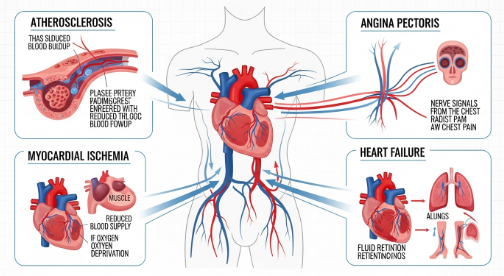
Heart disease remains one of the world’s most significant health challenges. Many cardiovascular conditions progress silently for years before any symptoms appear. Because of this, recognizing heart disease symptoms is crucial for early awareness and timely evaluation by qualified medical professionals.
While medical treatment must always be conducted by licensed healthcare providers, many individuals explore traditional botanicals—such as Korean ginseng (Panax ginseng)—to support general wellness, energy balance, and resilience to daily stress. This article provides a scientific-style explanation of heart disease symptoms and explores how Korean ginseng may support overall well-being without replacing professional medical care.
Understanding Heart Disease From a Scientific Perspective
The term heart disease encompasses several conditions affecting the heart and blood vessels, including:
- Coronary artery disease (CAD)
- Heart failure
- Arrhythmias
- Structural abnormalities
- Microvascular dysfunction
Although different in origin, these conditions share common physiological pathways. Many symptoms emerge when the heart is unable to circulate oxygenated blood effectively, resulting in cellular stress, metabolic changes, and altered neural signaling.
Scientific Breakdown of Heart Disease Symptoms
1. Chest Discomfort (Angina-like Sensations)
Chest discomfort is one of the most recognized early indicators of cardiovascular issues.
Scientific mechanism:
When oxygen delivery to the heart becomes insufficient, cardiac muscle cells experience metabolic stress. This triggers nerve signals interpreted by the brain as:
- pressure
- tightness
- burning
- heaviness
This symptom may appear during physical exertion or emotional stress. Persistent or worsening discomfort warrants medical attention.
2. Shortness of Breath (Dyspnea)
Shortness of breath often reflects reduced cardiac pumping efficiency.
Scientific mechanism:
Lower cardiac output increases pressure in the blood vessels of the lungs, leading to fluid accumulation and decreased oxygen exchange.
This results in:
- difficulty breathing during activity
- breathlessness at rest
- rapid or shallow breathing
3. Unusual or Persistent Fatigue
Fatigue—especially severe and unexplained—is a frequently overlooked symptom of early heart disease.
Scientific mechanism:
Reduced circulation lowers the delivery of oxygen and nutrients to tissues. This leads to:
- mitochondrial stress
- decreased muscle performance
- prolonged tiredness despite rest
Women often report fatigue earlier than other symptoms.
4. Radiating Pain (Jaw, Shoulder, Back, Arm)
Scientific mechanism:
Referred pain occurs because sensory nerves from the heart connect to the same spinal pathways as nerves from the jaw, shoulder, back, and arm.
The brain may misread the origin of the pain, causing spreading discomfort.
5. Lightheadedness or Dizziness
Scientific mechanism:
When blood flow to the brain briefly decreases—due to arrhythmias, sudden drops in blood pressure, or reduced heart output—lightheadedness can occur.
If combined with chest discomfort or breathlessness, immediate medical evaluation is recommended.
6. Swelling in Legs, Ankles, or Feet (Peripheral Edema)
Scientific mechanism:
Inefficient cardiac pumping causes blood to accumulate in the lower extremities.
Fluid then leaks into surrounding tissues, producing noticeable swelling.
7. Irregular Heartbeat (Palpitations)
Palpitations may feel like fluttering, racing, skipping, or pounding.
Scientific mechanism:
Arrhythmias arise from disruptions in the heart’s electrical signaling. These disturbances may be triggered by structural changes, metabolic stress, or electrolyte imbalances.
Why Early Awareness Matters
Recognizing symptoms early enables:
- timely medical evaluation
- appropriate diagnostic testing
- reduced risk of more serious complications
Heart disease cannot be diagnosed through symptoms alone. Only examinations performed by healthcare professionals—such as ECG, imaging studies, blood tests, or stress testing—can determine the true cause.
The Scientific Role of Korean Ginseng in General Wellness
Important: Korean ginseng does not treat, diagnose, or cure heart disease.
However, scientific research has explored its potential benefits in supporting overall physiological well-being.
The root contains bioactive compounds known as ginsenosides, which have been studied for their effects on energy metabolism, stress response, antioxidant activity, and circulatory support in a non-medical context. Here is an overview based on published research:
1. Support for Energy and Fatigue Management
Scientific insights:
Some studies suggest that ginsenosides may influence:
- mitochondrial function
- ATP production
- overall cellular energy efficiency
These effects help explain why ginseng is frequently used to support natural vitality and daily endurance.
2. Adaptogenic Properties and Stress Regulation
Adaptogens are botanicals traditionally used to help the body respond to physical and emotional stress.
Scientific insights:
Research indicates that Korean ginseng may interact with:
- the HPA axis (hypothalamic–pituitary–adrenal system)
- cortisol levels
- autonomic nervous system balance
Lower stress levels are generally associated with better overall health, though this does not imply medical treatment.
3. Circulatory and Endothelial Support (Non-Medical Context)
Scientific insights:
Several studies have examined the role of ginsenosides in:
- supporting nitric oxide production
- maintaining healthy endothelial function
- encouraging normal circulation
These benefits relate to general vitality and performance but do not replace medical evaluation for heart symptoms.
4. Antioxidant Effects
Oxidative stress is known to influence cellular aging and overall wellness.
Scientific insights:
Ginseng has been studied for its potential ability to:
- reduce oxidative damage
- support immune function
- promote cellular protection
These effects position ginseng as a valuable component of daily wellness routines.
Integrating Ginseng Into a Wellness Lifestyle
When used appropriately, Korean ginseng may support:
- daily energy
- mental clarity
- stress recovery
- overall vitality
Individuals with existing health concerns should consult healthcare professionals before starting any supplement, including ginseng.
Conclusion
Heart disease symptoms—such as chest discomfort, breathlessness, fatigue, swelling, and irregular heartbeat—represent complex physiological responses that signal the need for professional evaluation. Understanding these symptoms scientifically empowers individuals to act early and seek appropriate care.
Korean ginseng, while not a treatment for heart disease, offers scientifically observed benefits for general wellness, including energy metabolism, stress balance, and antioxidant support. When combined with a healthy lifestyle and medical guidance, it can be part of a balanced approach to supporting overall well-being.