Short summary (TL;DR):
Panax ginseng (including Korean Red Ginseng) contains bioactive ginsenosides that interact with lipid metabolism pathways and endothelial function. Mechanistic and preclinical data support plausible effects on HDL metabolism and reverse cholesterol transport; however, clinical trial and meta-analytic evidence for a consistent, clinically meaningful increase in HDL is mixed. Some trials and subgroup analyses report modest HDL rises in particular populations or with specific preparations/doses, while other high-quality trials show no significant lipid changes. Overall: Panax ginseng is a promising supportive botanical for cardiometabolic health, but it should not be considered a proven HDL-raising treatment until larger, well-standardized RCTs confirm consistent effects. PMC+2PubMed+2
1. Background — why HDL matters and why ginseng is of interest
High-density lipoprotein cholesterol (HDL-C) is classically associated with reverse cholesterol transport (RCT) and anti-atherogenic actions (antioxidant, anti-inflammatory, endothelial support). While pharmacologic attempts to raise HDL have yielded mixed clinical outcomes, improving HDL function (not just concentration) and the balance of lipid subclasses remains an active research area.
Panax ginseng (Panax ginseng C.A. Meyer) — and its steamed form, Korean Red Ginseng (KRG) — contains a family of triterpenoid saponins known as ginsenosides (e.g., Rg1, Rb1, Rg3, Rh1, Compound K). These molecules have pleiotropic actions on metabolism, inflammation, nitric oxide and endothelial signalling, and liver lipid pathways, making ginseng a biologically plausible candidate to influence HDL quantity and quality. PMC+1
2. Mechanistic rationale — how Panax ginseng could influence HDL
Mechanistic (cellular and animal) studies propose multiple pathways by which ginsenosides may affect HDL biology:
- Hepatic lipid metabolism & cholesterol efflux regulation. Ginsenosides interact with transcriptional regulators (SREBP, PPARs, LXR pathways) and enzymes (HMG-CoA reductase regulation indirectly), which can alter synthesis, secretion, and clearance of lipoproteins. Modulation of ABCA1/ABCG1 and LXR signalling could theoretically enhance nascent HDL formation and cholesterol efflux from macrophages. ScienceDirect+1
- Anti-oxidative and anti-inflammatory actions. Ginseng reduces oxidative stress and inflammatory cytokines in many preclinical models; since HDL functionality is impaired by oxidation and inflammation, improving systemic redox/inflammatory balance could improve HDL quality and activity even if HDL-C changes little. PMC
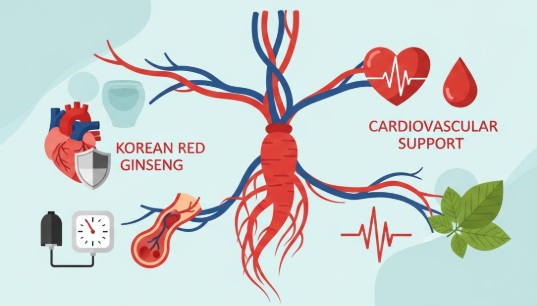
- Endothelial and nitric oxide signalling. Certain ginsenosides (notably those enriched by steaming, such as Rg3) appear to enhance endothelial NO production and vascular function, which is associated with healthier HDL-endothelial interactions and improved reverse cholesterol transport in animal models. Recent proteomic work in animals also suggests effects on regulators of cholesterol homeostasis (e.g., PCSK9 pathways), which may secondarily affect HDL/LDL dynamics. Nature+1
These mechanisms create a plausible biological basis for ginseng to affect HDL concentration and function, but plausibility does not equal proven clinical effect — clinical data are required. PMC
3. Clinical evidence — randomized trials and meta-analyses
3.1 Systematic reviews & meta-analyses
Recent systematic reviews and meta-analyses synthesize RCT data but reach cautious conclusions.
- A 2024 systematic review and meta-analysis (Arabi et al.) examined the effect of Panax ginseng on lipid profiles across multiple RCTs and found that, overall, ginseng supplementation did not produce a statistically significant effect on lipid parameters including HDL when aggregated, though subgroup and dose-response analyses suggested possible benefits under certain conditions (higher doses, specific extracts, or certain populations). PubMed+1
- Earlier meta-analyses and pooled analyses reported mixed results; some found modest reductions in total and LDL cholesterol in selected trials but inconsistent HDL effects. Heterogeneity in trial design, ginseng species/preparation, dose, duration, and baseline population (healthy vs metabolic syndrome/diabetes) complicates pooled inference. PubMed+1
Key takeaway: Meta-analytic evidence to date does not definitively confirm that Panax ginseng consistently raises HDL in broad adult populations, but there are signals in some subgroups and dosing regimens that merit further targeted study. PubMed+1
3.2 Randomized controlled trials — examples
Trial outcomes vary:
- Several RCTs using standardized Panax extracts (e.g., G115®) in metabolic or diabetic cohorts reported improvements in overall lipid profiles (mainly LDL and total cholesterol) in some studies, with less consistent or smaller changes in HDL. Brieflands+1
- Some studies of Korean Red Ginseng showed favorable modulation of cardiovascular risk markers (blood pressure, arterial stiffness, inflammation) and, in some instances, modest HDL increases — particularly in participants with metabolic syndrome or low baseline HDL — but these effects were often small and not always statistically significant. PMC+1
- Conversely, other well-controlled trials reported no significant change in HDL or total lipid profile after Panax ginseng supplementation vs placebo, highlighting inconsistency and the influence of trial specifics (sample size, extract, length). For example, a 2013 RCT reported no significant lipid changes after ginseng supplementation in the studied cohort. PubMed
Clinical interpretation: The RCT literature is heterogeneous. Some carefully designed trials show modest beneficial shifts in lipids (LDL reductions more commonly than HDL increases), but overall evidence for clinically meaningful HDL elevation remains inconclusive. Subgroup signals and mechanistic plausibility support further trials targeted at populations most likely to benefit. PubMed+1
4. Dosage, preparation, and formulation considerations
Trial heterogeneity partly reflects variability in:
- Species and processing: Panax ginseng (fresh/white) vs Korean Red Ginseng (steamed/dried) — the latter produces unique ginsenosides (Rg3, Rh2, Compound K) potentially more bioactive for lipid pathways. PMC+1
- Standardization: Extracts standardized for total ginsenoside content (e.g., G115®) versus whole-root powders; standardized, quality-controlled extracts improve reproducibility across studies. Brieflands
- Dose and duration: Some meta-analyses suggest dose-response: higher daily doses and longer durations (≥8–12 weeks) trend toward larger lipid effects. However, optimal dose for HDL endpoints is not established. ScienceDirect+1
- Co-interventions and population baseline: Effects tend to be more detectable in people with dyslipidemia, metabolic syndrome, or low baseline HDL than in healthy volunteers. Concomitant medications (statins, fibrates) also confound measurable changes. PubMed
Practical note: If using ginseng as supportive nutrition, prefer authenticated Korean Panax/KRG products with clear ginsenoside labeling, follow manufacturer dosing, and discuss with clinicians — especially if taking lipid-lowering drugs. Brieflands
5. HDL function vs HDL concentration — an important nuance
Modern lipid science recognizes that HDL function (cholesterol efflux capacity, antioxidant and anti-inflammatory actions) may be more predictive of cardiovascular risk than HDL-C concentration alone. Several preclinical studies indicate that ginsenosides can enhance pathways related to reverse cholesterol transport and reduce oxidation/inflammation — mechanisms that could improve HDL functionality even without large quantitative HDL-C increases. This distinction could explain why some trials find modest concentration changes yet potential functional improvements in vascular markers. PMC+1
6. Safety, interactions, and clinical cautions
- Adverse effects: Panax ginseng is generally well tolerated in short-term trials (weeks to months). Mild adverse effects reported include GI discomfort, insomnia, and nervousness in some individuals. Brieflands
- Drug interactions: Important interactions have been reported or hypothesized (e.g., antiplatelet/anticoagulant medications, certain hypoglycemic drugs). Patients on statins, warfarin, or other medications should consult clinicians before starting ginseng. Brieflands
- Quality & contamination risks: Use products from reputable manufacturers that provide third-party testing for contaminants and ginsenoside content. Heterogeneous market quality partially explains inconsistent clinical results. Brieflands
7. Research gaps and priorities
To clarify Panax ginseng’s effect on HDL, research should prioritize:
- Standardized RCTs using well-characterized KRG or Panax extracts (specified ginsenoside profile), with adequate power and duration (≥12 weeks) in populations with low baseline HDL or metabolic syndrome. PubMed+1
- Functional HDL endpoints (cholesterol efflux capacity, HDL proteomics, antioxidant capacity) rather than HDL-C alone. PMC
- Dose-response studies to determine minimal effective doses and formulation effects (red vs white ginseng, fermented/compound K enriched preparations). ScienceDirect
- Mechanism-focused translational work connecting ginsenoside pharmacokinetics to hepatic and macrophage cholesterol handling (SREBP/LXR/ABCA1 axis, PCSK9 modulation). Recent proteomic animal work points to new pathways (e.g., PCSK9 modulation) that deserve human translational follow-up. Nature+1
8. Practical, evidence-based guidance (clinical prudence)
- Do not use ginseng as a replacement for medically indicated lipid-lowering therapy.
- Consider ginseng as a supportive herb within a comprehensive program (dietary fiber, omega-3s, exercise, weight loss, smoking cessation). ScienceDirect
- If you or your patients choose to use Panax/KRG: pick high-quality, standardized products; allow several weeks to months for potential metabolic effects; monitor lipids and liver function as advised by a clinician. Brieflands
9. Bottom line (concise)
Panax ginseng — particularly Korean Red Ginseng with specific steamed-derived ginsenosides — has biological plausibility and preclinical evidence suggesting it could positively influence HDL metabolism and HDL function. Systematic reviews and RCTs to date give mixed results: signals exist (especially for LDL reduction and in some subgroups), but consistent, clinically important HDL elevation across broad populations is not yet established. High-quality, standardized clinical trials measuring HDL function (not just HDL-C) are the critical next step. PMC+2PubMed+2
Key sources (selected, for further reading)
- Mechanistic review: Jin W. Hypolipidemic effect and molecular mechanism of ginsenosides. 2023. PMC
- Systematic review / meta-analysis: Arabi SM et al., The Effect of Ginseng Supplementation on Lipid Profile (2024). PubMed
- Meta-analysis / pooled trials: Hernández-García D. et al., Efficacy of Panax ginseng supplementation on blood lipid… (2019). PubMed
- Notable RCTs with neutral findings: Delui MH et al., 2013 (no significant lipid change). PubMed
- Recent translational proteomic work indicating new molecular targets: Lee CH et al., Cholesterol-modulating effects of Korean red ginseng (2025).