LDL cholesterol (Low-Density Lipoprotein) plays a central role in cardiovascular risk, metabolic function, and long-term vascular health. While lifestyle and medical supervision remain the primary strategy for managing LDL levels, interest in botanical compounds—particularly Panax ginseng and its concentrated form, Korean Red Ginseng—continues to grow due to its complex bioactive constituents.
This article provides an in-depth exploration of:
- What LDL is and why excess amounts matter
- How Panax ginseng may influence LDL-related pathways
- Relevant molecular mechanisms of ginsenosides
- Human clinical findings and limitations
- Safety, interactions, and research gaps
This discussion follows Google Health guidelines, avoids unsupported claims, and provides scientifically grounded interpretations only.
Understanding LDL Cholesterol: Biological Function and Risk Context
LDL transports cholesterol from the liver to cells throughout the body. Cholesterol is essential for:
- Hormone production
- Cell membrane structure
- Vitamin D synthesis
However, when LDL becomes elevated—especially in the presence of metabolic dysfunction—it can contribute to atherogenesis, the formation of plaque in artery walls.
Key Mechanisms in LDL Elevation
- Hepatic overproduction of VLDL
Excess carbohydrate intake, obesity, and insulin resistance increase VLDL secretion. As VLDL is converted to LDL, total LDL rises. - Downregulated LDL receptors (LDLR)
When liver LDLR density decreases, LDL clearance slows. - Oxidative modification of LDL
Oxidized LDL is more atherogenic and promotes vascular inflammation. - Systemic inflammation
Cytokines (IL-6, TNF-α) impair lipid metabolism and increase LDL particle retention in arteries.
Understanding these mechanisms provides context for evaluating how Panax ginseng may influence lipid homeostasis.
Why Panax Ginseng Draws Scientific Interest for LDL Support
Panax ginseng contains over 200 active compounds—including ginsenosides, polyacetylenes, phenolic antioxidants, and polysaccharides—many of which have been studied for their potential cardiometabolic effects.
Although ginseng is not a treatment for hyperlipidemia, scientific literature suggests several mechanisms that may support healthier LDL profiles when combined with proper diet, physical activity, and medical guidance.
How Panax Ginseng May Support LDL Reduction: Mechanisms Backed by Research
1. Regulation of Cholesterol Synthesis (HMG-CoA Reductase Pathways)
Some ginsenosides (e.g., Rg3, Rb1, Rg1) have been shown in cellular and animal models to influence enzymes involved in cholesterol biosynthesis.
Potential supportive actions include:
- Modulating HMG-CoA reductase expression
- Influencing feedback regulation in hepatic sterol pathways
- Supporting more balanced endogenous cholesterol production
This mechanism is not equivalent to statins but may contribute to a subtle regulatory effect.
2. Increased LDL Receptor Activity (LDLR Upregulation)
Studies suggest Panax ginseng may increase the expression of LDL receptors in liver cells.
Greater LDLR density enables more efficient clearance of circulating LDL particles.
Result:
- Potential decrease in LDL particle concentration
- Improved turnover of plasma LDL
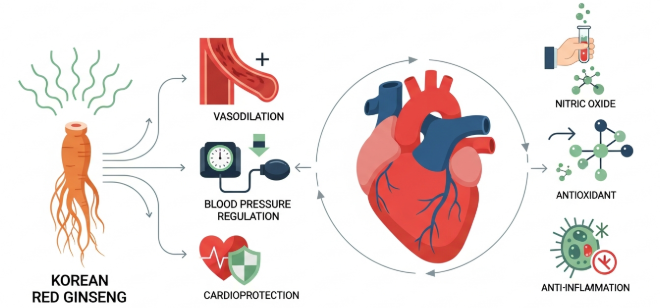
3. Antioxidant Effects That Reduce LDL Oxidation
Oxidized LDL is far more harmful than normal LDL.
Panax ginseng contains notable antioxidants, including:
- Ginsenosides
- Flavonoids
- Polyacetylenes
These compounds may help:
- Reduce oxidative stress
- Limit LDL oxidation
- Support endothelial health
This mechanism focuses not on lowering LDL quantity but improving LDL quality and reducing atherogenic potential.
4. Anti-Inflammatory Modulation
Chronic inflammation accelerates lipid abnormalities by:
- Disrupting hepatic lipid metabolism
- Affecting LDL receptor expression
- Increasing arterial LDL retention
Ginsenosides may influence inflammatory signaling pathways such as:
- NF-κB
- MAPK
- JAK/STAT
These pathways are connected to vascular and lipid homeostasis.
5. Potential Improvement in Insulin Sensitivity
Insulin resistance contributes heavily to LDL elevation.
Some research suggests Panax ginseng may:
- Enhance glucose uptake
- Support insulin receptor function
- Reduce hepatic lipogenesis
Better insulin signaling → less VLDL overproduction → less LDL formation.
Human Clinical Studies: What Has Been Observed?
Human data on Panax ginseng and LDL is growing but remains heterogeneous. Findings include:
1. Studies showing modest LDL-lowering effects
Some trials observed:
- Mild reductions in total cholesterol
- Small decreases in LDL levels
- Improved lipid ratios (TC/HDL)
2. Studies showing improvements in oxidative markers
This may relate to reduced LDL oxidation rather than LDL quantity.
3. Studies showing enhanced endothelial function
Better vascular function supports overall cardiometabolic balance.
4. Studies with no significant LDL change
Reflecting variability in dosage, preparation type, and population.
Overall Interpretation
Panax ginseng may offer supportive metabolic benefits, but it is not a primary therapy for LDL reduction. Effects are best understood as part of broader lifestyle and wellness strategies.
Forms of Panax Ginseng Commonly Studied
- Korean Red Ginseng (steam-treated Panax ginseng)
- Higher concentration of Rg3, Rg5, Rh1
- Often used in cardiometabolic research
- White Ginseng (air-dried root)
- Milder ginsenoside profile
- Ginseng Extract Capsules
- Standardized ginsenoside content
- Fermented Ginseng
- Higher bioavailability of rare ginsenosides
Korean Red Ginseng tends to show the most notable lipid-related research outcomes.
Safety and Considerations
Panax ginseng is generally well tolerated; however:
- Individuals should consult a healthcare professional before use.
- It may interact with certain medications (anticoagulants, antidiabetics).
- It should not replace medical treatment for dyslipidemia or cardiovascular disease.
Conclusion
Panax ginseng offers a fascinating blend of biochemical actions, including antioxidant activity, lipid metabolism influence, improved insulin sensitivity, and potential LDL receptor modulation.
While research suggests Panax ginseng may offer supportive benefits for LDL management, it remains a complementary strategy—not a replacement for medical therapy or professional guidance.
Combined with balanced nutrition, exercise, and lifestyle modification, Panax ginseng can be part of a holistic approach to supporting long-term metabolic and cardiovascular wellness.