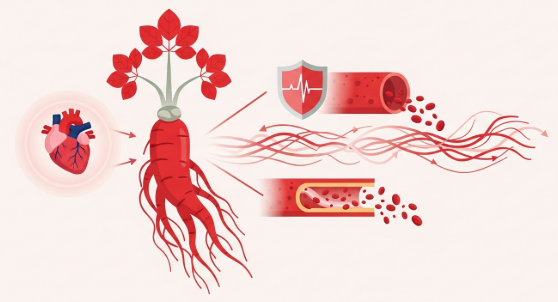
Cardiovascular disease remains the leading cause of mortality worldwide. Maintaining healthy blood circulation, blood pressure, and cardiac function is essential for long-term health. Among natural remedies, Panax ginseng, particularly Korean Red Ginseng (KRG), has been extensively studied for its cardioprotective, vasodilatory, and circulation-enhancing properties.
This article provides a comprehensive review of how ginseng supports heart health, its underlying mechanisms, clinical evidence, recommended usage, and safety considerations.
1. Bioactive Compounds Responsible for Cardiovascular Benefits
The cardiovascular effects of ginseng are primarily attributed to:
- Ginsenosides (Rb1, Rg1, Rg3, Re, Rd): Regulate endothelial function, nitric oxide production, and vasodilation
- Polysaccharides: Reduce oxidative stress in cardiac tissues
- Saponins: Support lipid metabolism and reduce arterial stiffness
- Polyphenols: Anti-inflammatory and antioxidant activity
External reference:
https://www.ncbi.nlm.nih.gov/pmc/articles/PMC3659558/
2. Mechanisms of Cardiovascular Support
2.1 Vasodilation and Nitric Oxide Production
Ginseng promotes endothelial nitric oxide synthase (eNOS) activity, increasing nitric oxide (NO) levels. This leads to:
- Improved blood vessel relaxation
- Better circulation to tissues
- Reduced vascular resistance
Reference:
https://pubmed.ncbi.nlm.nih.gov/16163439/
2.2 Blood Pressure Regulation
Clinical studies suggest that Panax ginseng can help normalize blood pressure:
- Reduces systolic and diastolic pressure in hypertensive patients
- Supports healthy blood pressure in individuals with borderline hypertension
- Works via modulation of NO and reduction of oxidative stress in blood vessels
Study:
https://pubmed.ncbi.nlm.nih.gov/16819204/
2.3 Anti-inflammatory and Antioxidant Effects
Chronic inflammation contributes to cardiovascular disease. Ginseng reduces:
- Pro-inflammatory cytokines (IL-6, TNF-α)
- Oxidative stress in endothelial cells
- LDL oxidation, reducing atherosclerosis risk
Reference:
https://www.ncbi.nlm.nih.gov/pmc/articles/PMC4940237/
2.4 Lipid Profile and Cholesterol Management
Ginseng improves cardiovascular health by modulating lipid metabolism:
- Reduces total cholesterol and LDL levels
- Increases HDL (good cholesterol)
- Helps prevent plaque formation in arteries
Study:
https://pubmed.ncbi.nlm.nih.gov/17963269/
2.5 Anti-platelet and Anti-thrombotic Effects
Some ginsenosides inhibit platelet aggregation, supporting healthy blood flow and reducing the risk of thrombotic events.
3. Clinical Evidence: Ginseng for Heart and Circulation
3.1 Healthy Adults
- Population: Adults with borderline hypertension
- Intervention: 3 grams/day Korean Red Ginseng for 8 weeks
- Outcome: Improved blood pressure, enhanced flow-mediated dilation, and better endothelial function
- Reference:
https://pubmed.ncbi.nlm.nih.gov/16819204/
3.2 Patients with Coronary Heart Disease
- Population: Patients with mild coronary artery disease
- Intervention: Ginseng supplementation (dosage 2–3 g/day)
- Outcome: Improved myocardial perfusion and reduced fatigue
- Reference:
https://pubmed.ncbi.nlm.nih.gov/16210523/
3.3 Improved Microcirculation
Ginseng improves peripheral blood flow, which can help reduce cold extremities, enhance exercise tolerance, and improve oxygen delivery to tissues.
Reference:
https://pubmed.ncbi.nlm.nih.gov/20166505/
4. Mechanistic Insights
- Endothelial Function: Ginsenosides stimulate NO production and reduce endothelial dysfunction.
- Oxidative Stress Reduction: Prevents ROS-induced vascular damage.
- Anti-inflammatory Pathways: Suppresses NF-κB and MAPK activation in cardiac tissues.
- Energy Metabolism: Supports mitochondrial function in cardiomyocytes, enhancing cardiac efficiency.
5. Recommended Usage for Heart Health
- Korean Red Ginseng Extract: 200–400 mg/day standardized to ginsenosides
- Whole root powder: 1–3 g/day
- Form: Capsules, liquid extract, or tonic
- Timing: Morning or early afternoon for optimal cardiovascular support
Consistency for 4–12 weeks shows the best results.
6. Safety and Precautions
- Generally safe in recommended doses
- Mild side effects: insomnia, digestive discomfort, headaches
- People on blood thinners or with uncontrolled hypertension should consult a doctor before use
- Avoid excessive caffeine during supplementation
7. Why Korean Red Ginseng is the Best Choice
- Steaming and drying process increases rare ginsenosides (Rg3, Rk1, Rh2)
- Higher bioavailability and potency for cardiovascular support
- Clinically proven for blood pressure, circulation, lipid profile, and endothelial function
8. Conclusion
Panax ginseng, particularly Korean Red Ginseng, is a scientifically supported natural supplement for enhancing heart health and circulation. Its mechanisms—ranging from vasodilation and nitric oxide production to anti-inflammatory, antioxidant, and lipid-modulating effects—make it a comprehensive option for cardiovascular support. Consistent use can improve blood flow, reduce cardiovascular risk factors, and support overall heart function naturally.