Introduction
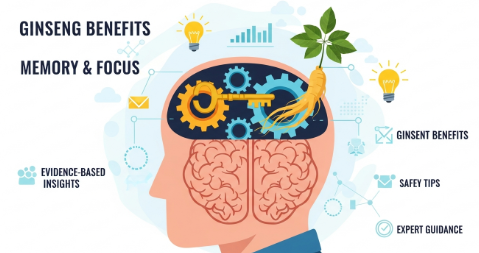
Ginseng benefits for improving memory and focus have been discussed in traditional medicine for centuries. Today, modern neuroscience and clinical research increasingly support these claims. Ginseng, especially Panax ginseng (Korean ginseng), contains bioactive compounds called ginsenosides. These compounds influence brain function, cognition, and mental performance. Therefore, ginseng is often studied as a natural option for supporting memory, attention, and mental clarity.
This article provides an evidence-based, medically responsible review of how ginseng may support cognitive health. It also explains mechanisms, safety considerations, and practical usage based on current scientific literature.
Medical disclaimer: This article is for educational purposes only. It is not a substitute for professional medical advice, diagnosis, or treatment. Always consult a qualified healthcare provider before using herbal supplements.
What Is Ginseng and Why Is It Important for Brain Health?
Ginseng is a slow-growing perennial herb widely used in East Asian medicine. The most researched form is Panax ginseng C.A. Meyer. It is often referred to as Korean or Asian ginseng.
Key bioactive compounds
Ginseng contains over 40 ginsenosides. These compounds act on multiple systems in the body. Importantly, several ginsenosides cross the blood–brain barrier.
As a result, they may influence:
- Neurotransmitter activity
- Cerebral blood flow
- Neuroinflammation
- Oxidative stress
According to the National Institutes of Health (NIH), ginseng is classified as an adaptogen. Adaptogens help the body maintain balance during physical and mental stress.
Source:
https://www.nccih.nih.gov/health/asian-ginseng
Ginseng Benefits for Improving Memory and Focus: What Does Science Say?
1. Effects on Memory Performance
Several human and animal studies suggest that ginseng supports memory formation and recall.
For example, a randomized controlled trial published in Psychopharmacology found that Panax ginseng improved working memory and reaction time in healthy adults. Importantly, these effects were observed without serious adverse reactions.
Study reference:
https://pubmed.ncbi.nlm.nih.gov/15888517/
Additionally, ginsenosides may enhance synaptic plasticity. This process is essential for learning and long-term memory.
2. Support for Focus and Attention
Mental focus depends on balanced neurotransmitters such as acetylcholine and dopamine. Research suggests ginseng may help regulate these systems.
Moreover, ginseng appears to improve attention under mental fatigue. Therefore, it may be useful during demanding cognitive tasks.
According to a review in Journal of Ginseng Research, ginseng supplementation showed positive effects on attention and cognitive processing speed.
Source:
https://www.sciencedirect.com/science/article/pii/S1226845313000706
How Ginseng Works in the Brain
Understanding the mechanisms helps explain why ginseng benefits cognitive function.
Antioxidant and anti-inflammatory effects
The brain is highly sensitive to oxidative stress. Over time, oxidative damage can impair memory and focus.
Ginseng helps by:
- Reducing free radical damage
- Modulating inflammatory pathways
- Protecting neurons from stress-induced injury
The World Health Organization (WHO) recognizes oxidative stress as a contributor to cognitive decline. Therefore, antioxidant-rich herbs like ginseng receive scientific attention.
WHO reference:
https://www.who.int/publications/i/item/WHO-MSD-MER-15.1
Improved cerebral blood flow
Healthy blood circulation delivers oxygen and glucose to brain cells. Studies show that ginseng may enhance nitric oxide production. Consequently, cerebral blood flow improves.
Better circulation often correlates with sharper mental clarity and sustained attention.
Ginseng Compared to Other Herbal Nootropics
Many herbs claim cognitive benefits. However, not all have equal scientific support.
| Herb | Evidence Strength | Primary Cognitive Effect |
|---|---|---|
| Panax ginseng | Strong (human trials) | Memory, focus, mental stamina |
| Ginkgo biloba | Moderate | Blood flow, memory |
| Bacopa monnieri | Moderate | Learning, recall |
| Rhodiola rosea | Emerging | Fatigue reduction |
Compared to others, ginseng shows broader cognitive effects. Moreover, it has a longer history of clinical research.
Who May Benefit Most from Ginseng?
While ginseng is not a treatment for neurological disease, some populations may benefit more.
Potential candidates include:
- Adults experiencing mental fatigue
- Students during high cognitive demand
- Middle-aged individuals concerned about memory
- Older adults seeking healthy aging support
However, effects vary between individuals. Therefore, expectations should remain realistic and evidence-based.
Safety, Dosage, and Precautions
Is ginseng safe?
According to the National Center for Complementary and Integrative Health (NCCIH), ginseng is generally safe when used short term.
Common mild side effects may include:
- Headache
- Digestive upset
- Sleep disturbances
Important precautions
You should consult a healthcare professional if you:
- Are pregnant or breastfeeding
- Have diabetes or hypertension
- Take anticoagulants or stimulants
Recommended dosages in studies often range from 200–400 mg/day of standardized extract. However, product quality and ginsenoside content vary.
Source:
https://www.nccih.nih.gov/health/ginseng
How to Choose a High-Quality Ginseng Product
Not all supplements meet quality standards. Therefore, careful selection is essential.
Look for products that:
- Specify Panax ginseng
- Standardize ginsenoside content
- Follow GMP (Good Manufacturing Practices)
- Provide third-party testing
Korean red ginseng is often preferred due to strict cultivation and processing standards.
Frequently Asked Questions (FAQ)
Is ginseng proven to improve memory and focus?
Clinical studies suggest ginseng may support memory and attention. However, results vary by individual and dosage.
How long does it take to notice cognitive effects?
Some studies report effects within weeks. Long-term benefits may require consistent use.
Can ginseng replace prescription cognitive medications?
No. Ginseng is not a substitute for prescribed treatment. Always consult a medical professional.
Is ginseng suitable for daily use?
Short-term daily use is generally safe. Long-term use should be supervised by a healthcare provider.
Does ginseng help prevent dementia?
Current evidence does not support ginseng as a preventive treatment for dementia. Research is ongoing.
Conclusion
Scientific evidence increasingly supports ginseng benefits for improving memory and focus, especially in healthy adults under mental stress. Through antioxidant activity, neurotransmitter modulation, and improved blood flow, ginseng offers a promising, natural approach to cognitive support.
However, it should be used responsibly. Always prioritize medical guidance and evidence-based expectations.
🇰🇷 Premium Korean Ginseng Online Shop