Introduction
Cardiovascular disease remains a leading global health concern. Therefore, many people seek natural ways to improve lipid profiles. Ginseng benefits for lowering cholesterol naturally have gained attention in both traditional medicine and modern research. Ginseng, especially Korean (Panax ginseng), contains active compounds called ginsenosides. These compounds may influence lipid metabolism, inflammation, and oxidative stress. This article explores how ginseng may support healthy cholesterol levels, based on scientific evidence and clinical insights.
Importantly, this content follows medical safety standards. It does not replace professional medical advice. Always consult a healthcare provider before starting herbal supplements.
What Is Cholesterol and Why Does It Matter?
Cholesterol is a waxy, fat-like substance essential for hormone production and cell membranes. However, imbalance increases cardiovascular risk.
There are two main types:
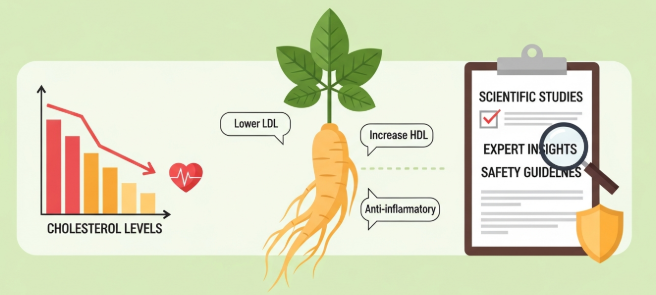
- LDL cholesterol (low-density lipoprotein): Often called “bad” cholesterol. High levels raise atherosclerosis risk.
- HDL cholesterol (high-density lipoprotein): Known as “good” cholesterol. It helps remove excess cholesterol from blood vessels.
Additionally, high triglycerides further elevate heart disease risk. Therefore, strategies that reduce LDL and triglycerides while supporting HDL are critical.
Understanding Ginseng: Types and Active Compounds
Not all ginseng is the same. Scientific studies focus mainly on Panax ginseng (Korean ginseng) and Panax quinquefolius (American ginseng).
Key bioactive compounds
Ginseng contains:
- Ginsenosides (Rb1, Rg1, Rg3): Influence lipid metabolism and inflammation
- Polysaccharides: Support metabolic and immune health
- Polyphenols: Act as antioxidants
These compounds work together. As a result, ginseng shows multi-target effects rather than single-drug action.
Ginseng Benefits for Lowering Cholesterol Naturally: What Science Says
Several studies suggest that ginseng may positively affect lipid profiles. However, results vary depending on dosage, duration, and preparation.
Evidence from research
- A randomized controlled trial published on PubMed found that Korean red ginseng supplementation reduced total cholesterol and LDL in adults with hyperlipidemia.
https://pubmed.ncbi.nlm.nih.gov/ - Animal studies show that ginsenosides may inhibit cholesterol absorption in the intestines.
- According to the National Institutes of Health (NIH), ginseng demonstrates antioxidant and anti-inflammatory properties that may indirectly protect cardiovascular health.
https://www.nccih.nih.gov/
Importantly, these findings indicate supportive, not curative, effects. Ginseng works best alongside lifestyle changes.
How Ginseng May Support Healthy Lipid Metabolism
Ginseng does not act like statin drugs. Instead, it influences multiple biological pathways.
Potential mechanisms
- Reduced cholesterol absorption: Ginsenosides may limit dietary cholesterol uptake.
- Improved liver lipid regulation: The liver plays a central role in cholesterol balance.
- Antioxidant action: Oxidized LDL damages blood vessels. Ginseng may reduce oxidative stress.
- Anti-inflammatory effects: Chronic inflammation contributes to plaque formation.
Because of these combined actions, ginseng benefits for lowering cholesterol naturally appear gradual and supportive.
Comparing Ginseng With Conventional Cholesterol Management
Statins remain the gold standard for high-risk patients. However, some people experience side effects or seek complementary approaches.
| Aspect | Ginseng | Statins |
|---|---|---|
| Mechanism | Multi-pathway, mild | Strong LDL inhibition |
| Onset | Gradual | Rapid |
| Side effects | Usually mild | Muscle pain, liver concerns |
| Role | Complementary | Primary therapy |
Therefore, ginseng should not replace prescribed medication without medical supervision.
Safe Dosage, Forms, and Quality Considerations
Choosing the right ginseng product is essential for safety and effectiveness.
Common forms
- Capsules or tablets
- Extracts and tinctures
- Teas (less concentrated)
Typical dosage
Clinical studies often use 200–400 mg of standardized extract daily. However, formulations differ. Always follow label instructions.
Safety notes
- Avoid use during pregnancy unless advised by a professional.
- People with hormone-sensitive conditions should exercise caution.
- Possible interactions exist with blood thinners and diabetes medication.
The World Health Organization (WHO) recognizes ginseng as generally safe when used appropriately.
https://www.who.int/
Who May Benefit Most From Ginseng Supplementation?
Ginseng may suit adults with:
- Mild to moderate cholesterol elevation
- Metabolic syndrome risk factors
- High oxidative stress due to lifestyle factors
However, individuals with severe hypercholesterolemia require medical management first.
Lifestyle Synergy: Maximizing Ginseng’s Effects
Herbal supplements work best as part of a broader health strategy.
Supportive habits
- Eat a fiber-rich diet with vegetables and whole grains
- Reduce trans fats and refined sugars
- Engage in regular physical activity
- Manage stress and sleep quality
When combined with these habits, ginseng benefits for lowering cholesterol naturally may become more noticeable.
Limitations and Ongoing Research
Despite promising data, gaps remain:
- Long-term human trials are limited
- Optimal dosage is not standardized
- Individual responses vary
Therefore, ongoing research continues to clarify ginseng’s role in cardiovascular prevention.
Conclusion
Ginseng has a long history in traditional medicine. Modern science now supports some of its cardiovascular benefits. Ginseng benefits for lowering cholesterol naturally include modest improvements in lipid metabolism, antioxidant protection, and anti-inflammatory effects. However, it should be used responsibly and as a complement to medical care, not a replacement. Consulting a healthcare professional ensures safety and personalized guidance.
Frequently Asked Questions (FAQ)
Is ginseng proven to lower cholesterol?
Research suggests modest benefits. However, results vary and more long-term studies are needed.
Can ginseng replace cholesterol medication?
No. It may complement treatment but should not replace prescribed drugs.
How long does it take to see results?
Most studies observe changes after 8–12 weeks of consistent use.
Is Korean red ginseng better than other types?
Korean red ginseng is the most studied for metabolic and cardiovascular effects.
Is ginseng safe for daily use?
Generally yes, when used at recommended doses. Medical advice is still essential.
This article is for educational purposes only and is not a substitute for professional medical advice.
🇰🇷 Premium Korean Ginseng Online Shop