Introduction
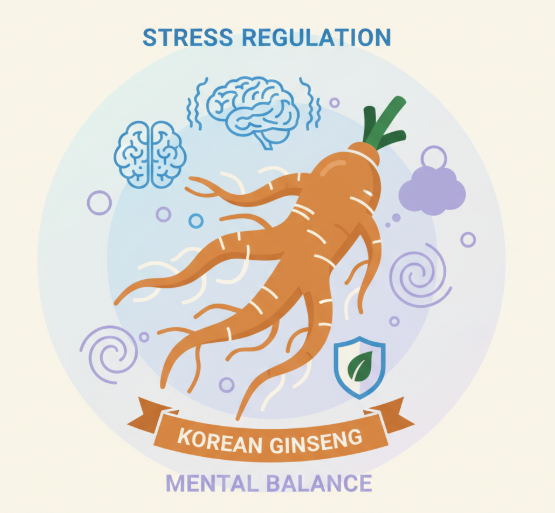
Anxiety disorders affect millions of people worldwide. As a result, many individuals seek complementary strategies alongside conventional care. Ginseng for anxiety support has attracted growing attention because it combines traditional use with increasing scientific validation. In particular, Korean ginseng (Panax ginseng) has demonstrated adaptogenic properties that help the body manage stress more effectively. This article explores how ginseng may support anxiety management using evidence-based data, while also addressing safety, dosage, and clinical relevance.
Understanding Anxiety and the Body’s Stress Response
Anxiety involves persistent worry, heightened alertness, and physical tension. Consequently, the body activates stress pathways that elevate cortisol and adrenaline. Over time, this activation disrupts sleep, mood, and cognitive performance.
Moreover, chronic anxiety often contributes to fatigue, weakened immunity, and metabolic imbalance. Therefore, clinicians increasingly recognize the importance of stress-modulating interventions.
Although psychotherapy and medication remain first-line treatments, many patients also explore herbal strategies. For this reason, researchers have examined ginseng for anxiety support within integrative care models.
What Is Ginseng? A Scientific Overview
Ginseng refers to the root of plants in the Panax genus. The most researched varieties include:
- Panax ginseng (Korean ginseng)
- Panax quinquefolius (American ginseng)
Among these, Korean ginseng receives the most attention in stress and mental performance research. Notably, it contains active compounds called ginsenosides, which influence neuroendocrine signaling.
According to the National Center for Complementary and Integrative Health (NCCIH), researchers have studied ginseng for stress adaptation, fatigue reduction, and cognitive support
https://www.nccih.nih.gov/health/ginseng
How Ginseng for Anxiety Support Works in the Body
HPA Axis Regulation
The hypothalamic–pituitary–adrenal (HPA) axis governs the body’s stress response. When this system becomes dysregulated, anxiety symptoms often intensify.
Research suggests that ginsenosides help regulate cortisol output. Therefore, the body can respond to stress without prolonged hormonal elevation. As a result, emotional resilience may improve.
Neurotransmitter Modulation
Anxiety frequently involves imbalances in serotonin, dopamine, and GABA. Importantly, preclinical studies show that ginseng compounds interact with these neurotransmitters.
For example, data published in the Journal of Ginseng Research indicate that ginseng enhances GABA signaling. Consequently, neural excitability decreases, which promotes calmness
https://www.sciencedirect.com/journal/journal-of-ginseng-research
Anti-Inflammatory and Antioxidant Activity
Chronic inflammation contributes to anxiety-related neurochemical changes. Meanwhile, oxidative stress impairs neuronal communication. Ginseng addresses both mechanisms.
Specifically, ginsenosides reduce inflammatory markers and neutralize free radicals. Therefore, ginseng for anxiety support may indirectly protect brain function.
Clinical Evidence Supporting Ginseng for Anxiety Support
Human Clinical Trials
Several human studies have evaluated ginseng’s effect on stress-related symptoms:
- A randomized controlled trial reported improved stress tolerance and mood stability in adults taking standardized Panax ginseng.
- Another study observed reduced mental fatigue and improved emotional balance during periods of psychological strain.
However, researchers consistently describe ginseng as supportive, not curative.
Animal and Mechanistic Studies
Animal models demonstrate reduced anxiety-like behaviors after ginseng administration. Additionally, neurochemical analysis confirms modulation of stress-related pathways.
The World Health Organization (WHO) recognizes ginseng as a traditional herbal medicine for fatigue and weakness. However, it does not classify ginseng as a primary treatment for anxiety disorders
https://www.who.int/publications
Comparing Ginseng with Other Herbal Anxiety Supports
Many herbs claim anxiety benefits. Nevertheless, their mechanisms differ.
Ginseng vs. Ashwagandha
Ashwagandha primarily lowers cortisol levels. In contrast, ginseng balances stress while maintaining energy and focus. Therefore, ginseng suits individuals who experience anxiety-related fatigue.
Ginseng vs. Valerian Root
Valerian induces sedation. Meanwhile, ginseng supports alert calmness without drowsiness. Consequently, ginseng works better for daytime stress management.
Thus, ginseng for anxiety support fits best within an adaptogenic, non-sedating framework.
Safety Profile and Medical Considerations
General Safety
Most healthy adults tolerate Korean ginseng well. Nevertheless, some individuals experience mild effects such as:
- Headache
- Digestive upset
- Insomnia at excessive doses
According to PubMed-reviewed data, ginseng may interact with anticoagulants and stimulant medications
https://pubmed.ncbi.nlm.nih.gov
Recommended Dosage
Clinical research typically uses:
- 200–400 mg/day of standardized extract
- 1–2 grams/day of dried root
However, practitioners should individualize dosing based on age, health status, and concurrent medications.
Medical Disclaimer
This article provides educational information only. Ginseng for anxiety support does not replace professional medical advice, diagnosis, or treatment. Individuals with anxiety disorders should consult a qualified healthcare provider before using herbal supplements.
Practical Guidelines for Safe and Effective Use
To use ginseng responsibly:
- Choose products with verified ginsenoside content
- Avoid combining ginseng with high caffeine intake
- Monitor blood pressure and sleep quality
- Use consistently for at least three weeks
Additionally, combine ginseng with lifestyle interventions such as exercise, mindfulness, and adequate sleep.
Conclusion
In summary, ginseng for anxiety support offers a scientifically plausible and clinically supported option within integrative stress management. Through HPA axis regulation, neurotransmitter modulation, and antioxidant protection, Korean ginseng may enhance emotional resilience.
Nevertheless, ginseng should complement—not replace—evidence-based anxiety treatments. When used thoughtfully and under professional guidance, it can support long-term mental wellness.
Frequently Asked Questions (FAQ)
Is ginseng proven to cure anxiety?
No. Ginseng supports stress regulation but does not cure anxiety disorders.
How long before benefits appear?
Most users notice changes within 2–4 weeks of consistent use.
Can ginseng interact with anxiety medication?
Yes. Therefore, medical consultation is essential.
Is Korean ginseng the best option?
Yes. Researchers study Korean ginseng most extensively for stress and mental performance.
Who should avoid ginseng?
Pregnant individuals, children, and people with chronic illness should seek medical advice first.
🇰🇷 Premium Korean Ginseng Online Shop