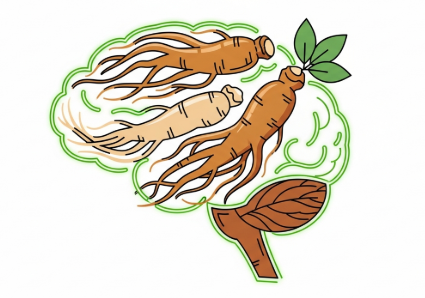
Mental clarity refers to the ability to think clearly, focus, remember information, and make sound decisions. In modern life, cognitive fatigue, stress, and poor sleep often reduce this ability. As a result, many people explore herbal options to support brain performance. One of the most studied herbs in this area is ginseng for mental clarity. This article reviews the scientific evidence, biological mechanisms, safety profile, and practical considerations of ginseng, using a medical and evidence-based approach.
This content is for educational purposes only and is not a substitute for professional medical advice.
Understanding Ginseng and Its Traditional Use
Ginseng is a perennial plant belonging to the genus Panax. The name “Panax” comes from the Greek word meaning “all-healing.” Historically, ginseng has been used in Traditional Chinese Medicine and Korean medicine for over 2,000 years. It was commonly prescribed to support vitality, concentration, and resilience to stress.
There are several types of ginseng. However, the most researched for cognitive health are:
- Panax ginseng (Korean ginseng)
- Panax quinquefolius (American ginseng)
Both contain active compounds called ginsenosides, which are responsible for most neurological effects.
How Ginseng Supports Mental Clarity: Biological Mechanisms
Researchers have identified multiple mechanisms through which ginseng may support cognitive function. These mechanisms explain why ginseng for mental clarity has gained attention in scientific literature.
1. Neurotransmitter Regulation
Ginsenosides influence neurotransmitters such as acetylcholine, dopamine, and serotonin. These chemicals play key roles in memory, attention, and mood. By supporting balanced neurotransmission, ginseng may improve focus and mental processing speed.
2. Neuroprotection and Antioxidant Effects
Oxidative stress damages brain cells over time. Ginseng contains antioxidant compounds that reduce free radical activity. According to studies indexed in PubMed, ginsenosides protect neurons from oxidative injury and inflammation.
Source: https://pubmed.ncbi.nlm.nih.gov/
3. Improved Cerebral Blood Flow
Adequate blood flow delivers oxygen and glucose to the brain. Ginseng has been shown to improve endothelial function and cerebral circulation. This may enhance alertness and reduce mental fatigue.
4. Stress Response Modulation
Chronic stress impairs cognition. Ginseng is classified as an adaptogen, meaning it helps the body adapt to physical and psychological stress. The National Institutes of Health (NIH) notes that adaptogens may support hypothalamic-pituitary-adrenal (HPA) axis balance.
Source: https://www.ncbi.nlm.nih.gov/
Scientific Evidence: What Do Studies Say?
Clinical research on ginseng and cognition has increased over the last two decades. While results vary, many studies support its role in mental performance.
Human Clinical Trials
- A randomized controlled trial published in Psychopharmacology found that Panax ginseng improved working memory and reaction time in healthy adults.
- Another study in Journal of Ginseng Research showed reduced mental fatigue and better attention after ginseng supplementation.
Source: https://www.sciencedirect.com/journal/journal-of-ginseng-research
Systematic Reviews
Systematic reviews suggest that ginseng may offer mild to moderate cognitive benefits, especially under stress or fatigue. However, researchers emphasize the need for standardized dosing and long-term studies.
The World Health Organization (WHO) recognizes ginseng as a traditional herbal medicine with supportive evidence for cognitive function.
Source: https://www.who.int/
Comparing Ginseng with Other Cognitive Herbs
Many herbs are marketed for brain health. However, ginseng has distinct advantages.
| Herb | Primary Benefit | Evidence Strength |
|---|---|---|
| Ginseng | Focus, memory, stress resilience | Moderate to strong |
| Ginkgo biloba | Blood flow, memory | Moderate |
| Bacopa monnieri | Learning, memory retention | Moderate |
| Rhodiola rosea | Fatigue reduction | Emerging |
Compared to others, ginseng for mental clarity benefits from broader clinical research and longer historical use.
Safety, Dosage, and Who Should Be Careful
Although ginseng is generally safe, responsible use is essential.
Typical Dosage
- Standardized extract: 200–400 mg per day
- Dried root: 1–2 grams per day
Always choose products standardized for ginsenoside content.
Possible Side Effects
Most side effects are mild and include:
- Headache
- Insomnia
- Digestive discomfort
- Nervousness at high doses
Contraindications
Consult a healthcare professional before using ginseng if you:
- Are pregnant or breastfeeding
- Have autoimmune conditions
- Take anticoagulants, stimulants, or antidepressants
- Have hypertension or diabetes
The NIH and FDA emphasize that herbal supplements can interact with medications.
Source: https://ods.od.nih.gov/
Choosing High-Quality Ginseng Products
Product quality determines effectiveness and safety. Consider these factors:
- Origin (Korean ginseng is often preferred)
- Third-party testing
- Clear labeling of ginsenoside content
- Absence of contaminants
Avoid products making exaggerated claims, such as curing neurological diseases. Evidence-based use focuses on support, not treatment.
Practical Tips for Cognitive Support
Ginseng works best as part of a comprehensive approach. Combine it with:
- Adequate sleep
- Balanced nutrition
- Regular physical activity
- Stress management techniques
Herbal supplements should complement, not replace, healthy lifestyle habits.
Conclusion
Ginseng for mental clarity is supported by traditional use and growing scientific evidence. Its effects on neurotransmitters, oxidative stress, blood flow, and stress response make it a valuable herbal option for cognitive support. However, benefits are modest and vary between individuals. Safe use, quality sourcing, and professional guidance remain essential. When used responsibly, ginseng can be part of a holistic strategy for maintaining cognitive performance.
This article does not replace medical consultation. Always seek advice from a qualified healthcare professional.
Frequently Asked Questions (FAQ)
Is ginseng proven to improve mental clarity?
Clinical studies suggest modest improvements in attention and mental fatigue, especially under stress.
How long does ginseng take to work?
Some people notice effects within days, while others require several weeks.
Can ginseng prevent cognitive decline?
There is no evidence that ginseng prevents dementia. It may support general cognitive function.
Is Korean ginseng better than American ginseng?
Both have benefits, but Korean ginseng is more stimulating and widely studied for cognition.
Can I take ginseng daily?
Short-term daily use is generally safe. Long-term use should be supervised by a healthcare professional.
🇰🇷 Premium Korean Ginseng Online Shop