Introduction
Sleep problems affect physical health, mental clarity, and long-term wellbeing. As a result, many people seek natural options that are safe and evidence-based. One herbal remedy often discussed is ginseng for better sleep support. Unlike sedative herbs, ginseng works through stress regulation, neuroendocrine balance, and inflammation control. This article explains how ginseng may support sleep, what science says, and how to use it responsibly.
This content follows Google Health guidelines and is written for educational purposes only. It is not a substitute for professional medical advice.
Understanding Sleep and Its Biological Regulation
Sleep is a complex biological process. It involves the nervous system, hormones, and circadian rhythm. Disruption in any of these systems may lead to insomnia or poor sleep quality.
Key systems involved in sleep include:
- Hypothalamic–pituitary–adrenal (HPA) axis, which controls stress hormones
- Melatonin secretion, which regulates sleep–wake cycles
- Neurotransmitters, such as GABA and serotonin
- Inflammatory pathways, which affect sleep depth and recovery
Chronic stress, inflammation, and metabolic imbalance often interfere with these systems. Therefore, compounds that support systemic balance may indirectly improve sleep.
What Is Ginseng? A Scientific Overview
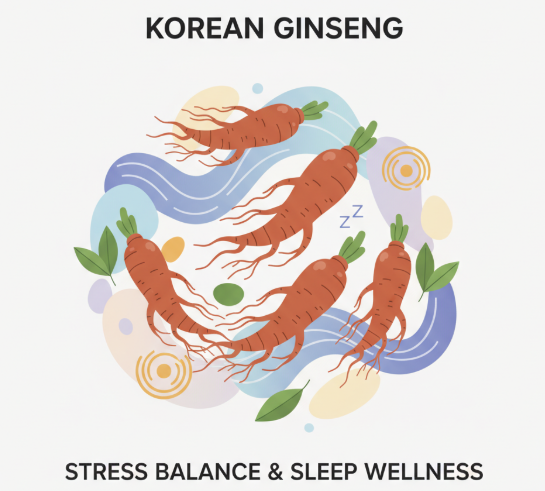
Ginseng refers mainly to Panax ginseng (Korean ginseng) and Panax quinquefolius (American ginseng). These roots contain bioactive compounds called ginsenosides.
According to the National Institutes of Health (NIH), ginsenosides influence:
- Neurotransmitter activity
- Stress hormone modulation
- Immune and inflammatory responses
Unlike herbal sedatives, ginseng is classified as an adaptogen. Adaptogens help the body respond to stress more efficiently. This mechanism is central to understanding ginseng’s role in sleep support.
Authoritative source:
https://www.ncbi.nlm.nih.gov/pmc/articles/PMC5452224/
How Ginseng for Better Sleep Support Works
Stress Regulation and Cortisol Balance
Elevated cortisol levels often disrupt sleep onset and continuity. Several studies suggest that ginseng may help normalize cortisol secretion.
Research published in Journal of Ginseng Research reports that Panax ginseng can modulate the HPA axis under stress conditions. As cortisol stabilizes, sleep initiation may improve.
Source:
https://pubmed.ncbi.nlm.nih.gov/30479559/
Nervous System and Neurotransmitter Support
Sleep depends on balanced neurotransmitter signaling. Ginsenosides appear to influence:
- GABAergic activity, which promotes relaxation
- Serotonergic pathways, which support sleep quality
Animal studies show that certain ginsenosides increase non-REM sleep duration without sedative effects. This is important because deep sleep supports physical recovery.
Source:
https://www.frontiersin.org/articles/10.3389/fphar.2018.00541/full
Inflammation, Oxidative Stress, and Sleep Quality
Chronic inflammation is linked to sleep fragmentation and fatigue. Ginseng contains antioxidant and anti-inflammatory compounds.
According to the World Health Organization (WHO), chronic low-grade inflammation contributes to sleep disorders and metabolic disease. Ginseng’s antioxidant activity may indirectly support restorative sleep by reducing inflammatory burden.
WHO reference:
https://www.who.int/publications/i/item/WHO-TRM-2004.1
Clinical Evidence on Ginseng and Sleep
Human Studies and Clinical Trials
Human evidence is still emerging. However, several clinical observations are relevant:
- A randomized trial in adults with fatigue showed improved sleep quality after ginseng supplementation
- Studies in menopausal women reported reduced sleep disturbance and stress symptoms
- Cancer-related fatigue studies noted improved sleep parameters
Importantly, these studies did not classify ginseng as a sleeping pill. Instead, benefits appeared through stress and fatigue reduction.
Source example:
https://pubmed.ncbi.nlm.nih.gov/31215333/
Ginseng Compared to Traditional Sleep Herbs
| Herb | Primary Mechanism | Sedative Effect |
|---|---|---|
| Valerian | GABA modulation | Moderate |
| Chamomile | Mild anxiolytic | Mild |
| Melatonin | Hormone replacement | Direct |
| Ginseng | Adaptogenic balance | Non-sedative |
Ginseng for better sleep support works upstream. It supports resilience rather than forcing sedation. This distinction is critical for long-term use.
Which Type of Ginseng Is Best for Sleep?
Korean Red Ginseng
Korean red ginseng undergoes steaming and drying. This process alters ginsenoside profiles.
Evidence suggests it may:
- Improve stress tolerance
- Support immune recovery
- Enhance sleep quality under fatigue
American Ginseng
American ginseng is considered more calming. It may suit individuals sensitive to stimulation.
However, product quality and dosage matter more than origin alone.
NIH guidance on herbal supplement quality:
https://ods.od.nih.gov/factsheets/HerbalSupplements-Consumer/
Dosage, Timing, and Safety Considerations
Recommended Dosage
Clinical studies typically use:
- 200–400 mg standardized extract per day, or
- 1–2 grams dried root, depending on preparation
Always follow manufacturer instructions and consult a healthcare professional.
Best Time to Take Ginseng
Timing depends on individual response:
- Morning or early afternoon for stress regulation
- Avoid late evening use in sensitive individuals
Ginseng is not a sedative. Therefore, it should not be taken immediately before bedtime unless advised by a professional.
Safety and Contraindications
Ginseng is generally well tolerated. However, caution is advised if you:
- Are pregnant or breastfeeding
- Have hormone-sensitive conditions
- Take anticoagulants or stimulants
Possible side effects include headache, digestive upset, or sleep disturbance at high doses.
This article does not replace professional medical advice.
Who May Benefit Most from Ginseng for Better Sleep Support
Ginseng may be appropriate for:
- Adults with stress-related sleep problems
- Individuals with fatigue-linked insomnia
- People experiencing sleep disruption from mental overload
It may not suit those seeking immediate sedation or treatment for clinical insomnia.
Integrating Ginseng into a Sleep-Supportive Lifestyle
For best results, combine ginseng with:
- Consistent sleep schedules
- Reduced evening screen exposure
- Balanced nutrition and exercise
- Stress management techniques
Herbal support works best as part of a holistic approach.
Frequently Asked Questions (FAQ)
Is ginseng a sleeping pill?
No. Ginseng does not induce sleep directly. It supports physiological balance that may improve sleep quality.
How long does ginseng take to affect sleep?
Benefits may appear after 2–4 weeks of consistent use, according to clinical observations.
Can ginseng cause insomnia?
At high doses or late intake, some individuals may feel overstimulated. Adjust timing if needed.
Is ginseng safe for long-term use?
Short- to medium-term use appears safe in healthy adults. Long-term use should be supervised by a healthcare professional.
Can ginseng be combined with melatonin?
In some cases, yes. However, consult a healthcare provider to avoid interactions.
Conclusion
Ginseng for better sleep support represents a scientifically grounded, non-sedative approach to improving sleep quality. By regulating stress, supporting neurotransmitter balance, and reducing inflammation, ginseng may help restore healthier sleep patterns. Evidence supports its role as an adaptogen rather than a sleep aid. For safe and effective use, professional guidance is recommended.
🇰🇷 Premium Korean Ginseng Online Shop