Introduction
Sleep quality plays a critical role in physical health, cognitive performance, and emotional balance. However, modern lifestyles often disrupt normal sleep patterns. As a result, many people seek natural approaches to support restorative sleep. Ginseng for sleep quality improvement has gained attention as a traditional herbal option supported by emerging scientific evidence. This article provides an in-depth, evidence-based analysis of how ginseng may influence sleep quality, its mechanisms of action, safety considerations, and practical guidance for responsible use.
Understanding Sleep Quality and Why It Matters
Sleep quality refers not only to sleep duration but also to sleep efficiency, depth, and continuity. Poor sleep quality is associated with fatigue, impaired immunity, metabolic disorders, and reduced mental focus. According to the World Health Organization (WHO), chronic sleep disturbance increases long-term health risks.
Key elements of healthy sleep include:
- Falling asleep within 20–30 minutes
- Minimal nighttime awakenings
- Adequate time in deep and REM sleep
- Feeling refreshed upon waking
Therefore, improving sleep quality is as important as increasing total sleep time.
What Is Ginseng? A Brief Scientific Overview
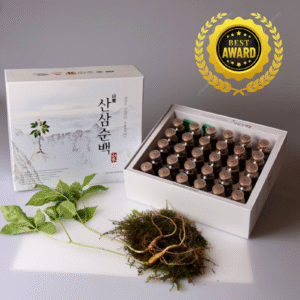
Ginseng refers to the root of Panax species, particularly Panax ginseng (Korean ginseng). The term “Panax” derives from Greek, meaning “all-healing.” For centuries, ginseng has been used in East Asian medicine to support vitality, stress resilience, and neurological balance.
The primary bioactive compounds in ginseng are ginsenosides. These compounds influence the central nervous system, endocrine signaling, and inflammatory pathways. The National Institutes of Health (NIH) recognizes ginseng as one of the most researched medicinal herbs worldwide.
Authoritative reference:
https://www.ncbi.nlm.nih.gov/pmc/articles/PMC5452224/
How Ginseng May Support Sleep Quality Improvement
1. Modulation of the Stress Response
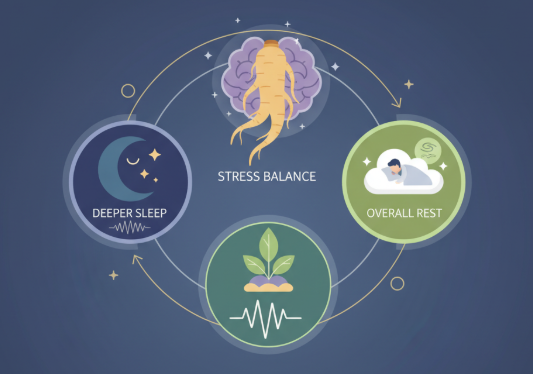
Stress is a major contributor to sleep disturbances. Ginseng is classified as an adaptogen, meaning it helps the body adapt to stress. Studies suggest ginsenosides regulate the hypothalamic-pituitary-adrenal (HPA) axis, which controls cortisol secretion.
Lower nighttime cortisol levels may support easier sleep onset and deeper rest. Therefore, ginseng for sleep quality improvement may be particularly relevant for stress-related insomnia.
Scientific source:
https://pubmed.ncbi.nlm.nih.gov/31272562/
2. Effects on Neurotransmitters Involved in Sleep
Sleep regulation depends on neurotransmitters such as gamma-aminobutyric acid (GABA), serotonin, and dopamine. Experimental research indicates that certain ginsenosides enhance GABAergic activity in the brain.
As a result, neuronal excitability decreases. This mechanism may promote relaxation without strong sedation. Unlike conventional sleep medications, ginseng does not act as a hypnotic agent.
Supporting research:
https://www.frontiersin.org/articles/10.3389/fphar.2021.674103/full
3. Improvement of Sleep Architecture
Sleep architecture refers to the structure of sleep cycles, including non-REM and REM phases. Small human and animal studies indicate that ginseng supplementation may increase slow-wave sleep duration.
Slow-wave sleep is essential for physical recovery and immune regulation. Consequently, this supports the rationale for using ginseng for sleep quality improvement rather than for inducing drowsiness.
Ginseng vs. Common Sleep Aids: A Comparison
Many people compare herbal solutions with pharmaceutical or supplement-based sleep aids. Understanding differences is essential.
Ginseng compared to melatonin and sedatives:
- Does not force sleep onset
- Supports physiological balance rather than sedation
- May improve daytime energy without rebound fatigue
- Lower risk of dependency when used responsibly
However, ginseng is not appropriate for acute insomnia requiring immediate medical intervention.
Types of Ginseng and Their Relevance to Sleep
Korean Red Ginseng (Panax ginseng)
This form is steamed and dried, which alters ginsenoside composition. Korean red ginseng has the strongest evidence for neurological and stress-related benefits.
White Ginseng
Air-dried and less processed. It contains fewer transformed ginsenosides. Effects may be milder.
For sleep-related applications, standardized Korean ginseng extracts are most often used in clinical studies.
Dosage, Timing, and Practical Use
Appropriate dosing is essential for safety and effectiveness. Most studies use standardized extracts containing 5–7% ginsenosides.
General guidance (not medical advice):
- Typical dose: 200–400 mg per day
- Timing: Morning or early afternoon
- Avoid late evening use initially
Because ginseng may increase alertness in some individuals, timing adjustments are important.
Always consult a qualified healthcare professional before use, especially if you have chronic conditions.
Safety, Side Effects, and Contraindications
Ginseng is generally well tolerated when used responsibly. However, mild side effects may occur.
Possible side effects include:
- Headache
- Digestive discomfort
- Nervousness at high doses
People who should seek medical advice before using ginseng include:
- Pregnant or breastfeeding individuals
- People with autoimmune diseases
- Individuals taking anticoagulants or antidepressants
This article does not replace professional medical advice.
Safety reference:
https://ods.od.nih.gov/factsheets/Ginseng-Consumer/
What Do Major Health Organizations Say?
- NIH recognizes ginseng as a widely studied botanical with potential neurological benefits.
- WHO monographs describe traditional uses related to fatigue and weakness.
- PubMed-indexed studies increasingly explore sleep-related outcomes.
However, no organization classifies ginseng as a primary insomnia treatment. It is considered a complementary approach.
Integrating Ginseng into a Holistic Sleep Strategy
For optimal results, ginseng should be part of a broader sleep hygiene plan.
Key complementary strategies include:
- Consistent sleep-wake schedules
- Reduced screen exposure before bedtime
- Balanced nutrition and regular exercise
- Stress management techniques
When combined with these practices, ginseng for sleep quality improvement may offer measurable benefits.
Frequently Asked Questions (FAQ)
Is ginseng safe for long-term use?
Short- to medium-term use appears safe for most adults. Long-term use should be supervised by a healthcare provider.
Can ginseng replace sleep medication?
No. Ginseng is not a replacement for prescribed sleep medication. It may support sleep quality as a complementary approach.
How long does it take to notice effects?
Some users report changes within two to four weeks. Results vary by individual and dosage.
Does ginseng cause drowsiness?
Ginseng does not act as a sedative. Instead, it supports balance and stress regulation.
Which ginseng is best for sleep quality?
Standardized Korean ginseng extracts have the strongest supporting evidence.
Conclusion
Scientific interest in ginseng continues to grow, particularly regarding neurological and stress-related outcomes. While it is not a sleep medication, ginseng for sleep quality improvement may support deeper, more restorative sleep through stress modulation and neurotransmitter balance. When used responsibly and under professional guidance, ginseng represents a promising herbal option within an evidence-based wellness strategy.
This content is for informational purposes only and is not a substitute for professional medical advice.
🇰🇷 Premium Korean Ginseng Online Shop