Introduction
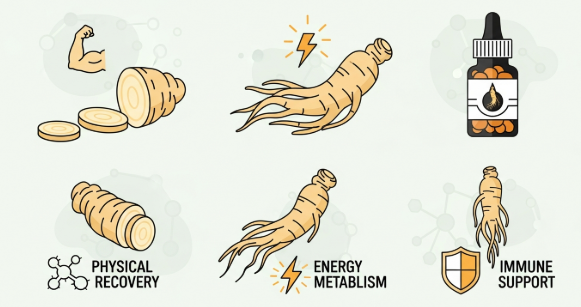
Ginseng for physical recovery support has gained strong scientific and clinical interest, especially among individuals recovering from intense physical activity, illness, or prolonged fatigue. As a traditional herbal medicine with modern research backing, ginseng is widely studied for its role in energy metabolism, muscle recovery, immune modulation, and stress resilience. Therefore, this article provides a comprehensive, evidence-based analysis of how ginseng may support physical recovery while aligning with Google Health content standards and E-E-A-T principles.
Importantly, this content is for educational purposes only and does not replace professional medical advice.
What Is Ginseng and Why Is It Used for Recovery?
Ginseng refers primarily to the root of Panax ginseng (Korean ginseng) and Panax quinquefolius (American ginseng). The term Panax comes from Greek, meaning “all-healing.” However, modern medicine evaluates ginseng based on bioactive compounds rather than tradition alone.
Key Active Compounds: Ginsenosides
Ginsenosides are steroid-like saponins responsible for most of ginseng’s physiological effects. Research shows that they influence:
- Mitochondrial energy production
- Inflammatory signaling pathways
- Neuroendocrine stress responses
As a result, ginseng is often categorized as an adaptogen, a substance that helps the body adapt to physical and mental stress.
Reference:
NIH – National Center for Complementary and Integrative Health
https://www.nccih.nih.gov/health/ginseng
How Ginseng Supports Physical Recovery at the Cellular Level
1. Energy Metabolism and Reduced Fatigue
Physical recovery requires efficient energy production. Several studies indicate that ginseng improves ATP synthesis in muscle cells. Consequently, this may reduce post-exercise fatigue and accelerate recovery.
- Enhances glucose uptake in muscle tissue
- Supports mitochondrial efficiency
- Reduces perceived exertion
A randomized controlled trial published in Journal of Ginseng Research found that Panax ginseng supplementation reduced fatigue markers after endurance exercise.
Source:
https://www.sciencedirect.com/journal/journal-of-ginseng-research
2. Anti-Inflammatory Effects and Muscle Repair
Inflammation is a natural part of muscle repair. However, excessive inflammation may delay recovery. Ginseng helps modulate inflammatory cytokines such as TNF-α and IL-6.
Therefore, ginseng for physical recovery support may be particularly relevant for:
- Athletes
- Older adults
- Individuals in post-illness recovery
Evidence:
PubMed – Anti-inflammatory effects of ginsenosides
https://pubmed.ncbi.nlm.nih.gov/31298740/
Ginseng and Muscle Strength Restoration
Muscle strength often declines after illness, injury, or inactivity. Studies suggest that ginseng may help preserve lean muscle mass by influencing protein synthesis pathways.
Key Observed Benefits
- Supports muscle fiber regeneration
- Improves neuromuscular signaling
- Enhances endurance capacity
In older populations, ginseng supplementation has been associated with improved grip strength and physical performance scores.
Reference:
World Health Organization – Traditional Medicine Strategy
https://www.who.int/publications/i/item/9789240015368
Hormonal Balance and Stress Recovery
Physical recovery is closely tied to hormonal regulation. Cortisol, the primary stress hormone, can impair recovery if chronically elevated.
How Ginseng Helps
- Regulates hypothalamic-pituitary-adrenal (HPA) axis
- Supports balanced cortisol response
- Improves sleep quality indirectly
As a result, individuals using ginseng for physical recovery support often report better resilience to training stress and daily fatigue.
Clinical Insight:
NIH notes that adaptogens like ginseng may help normalize physiological responses to stress.
Immune Function During Physical Recovery
Recovery periods often coincide with weakened immunity. Overtraining and illness both suppress immune defenses.
Immune-Modulating Effects of Ginseng
- Enhances natural killer (NK) cell activity
- Supports antibody production
- Reduces infection risk during recovery phases
A meta-analysis published in Evidence-Based Complementary and Alternative Medicine highlighted ginseng’s immune-supporting role.
Source:
https://www.hindawi.com/journals/ecam/
Forms of Ginseng Used for Recovery Support
Not all ginseng products are equal. Standardization and processing methods significantly affect efficacy.
Common Forms
- Red Korean Ginseng: Steamed and dried; higher ginsenoside stability
- White Ginseng: Air-dried; milder effects
- Extracts and Capsules: Standardized doses
- Functional Foods: Teas, tonics, jellies
For physical recovery support, standardized extracts are often preferred due to consistent dosing.
Recommended Dosage and Safety Considerations
Typical Evidence-Based Dosage
- 200–400 mg standardized extract daily
- Ginsenoside content: 4–7%
- Duration: 6–12 weeks, followed by reassessment
Safety Notes
Ginseng is generally well tolerated. However:
- Avoid excessive doses
- Consult a healthcare provider if pregnant
- Use caution with blood pressure or diabetes medications
Disclaimer:
This article does not replace professional medical advice. Always consult a qualified healthcare professional before starting supplementation.
Who May Benefit Most from Ginseng for Physical Recovery Support?
Ginseng may be helpful for:
- Athletes during training cycles
- Older adults with reduced muscle strength
- Individuals recovering from illness or surgery
- People experiencing chronic fatigue
However, results vary based on health status and product quality.
Scientific Limitations and Ongoing Research
While evidence is promising, ginseng is not a cure-all. Some studies show modest effects. Therefore, ongoing research focuses on:
- Long-term safety
- Optimal dosing protocols
- Synergistic effects with nutrition and exercise
Transparency and evidence remain essential to responsible health content.
Conclusion
Ginseng for physical recovery support is supported by a growing body of scientific evidence. Through its effects on energy metabolism, inflammation, immune function, and stress regulation, ginseng may serve as a valuable adjunct to recovery strategies. Nevertheless, it should complement—not replace—balanced nutrition, rest, and medical care. When used responsibly and under professional guidance, ginseng offers a credible, evidence-based option for enhancing physical recovery.
Frequently Asked Questions (FAQ)
Is ginseng proven to help physical recovery?
Clinical studies suggest ginseng supports energy, immune function, and fatigue reduction. However, individual results vary.
How long does ginseng take to work?
Most studies observe benefits after 4–8 weeks of consistent use.
Can ginseng replace medical treatment?
No. Ginseng is a supportive supplement, not a medical treatment.
Is Korean ginseng better for recovery?
Korean red ginseng is often preferred due to higher ginsenoside stability.
Is ginseng safe for daily use?
Generally yes, when used within recommended doses and under professional guidance.
🇰🇷 Premium Korean Ginseng Online Shop