Introduction
Burnout is a growing global health concern. It affects mental focus, emotional balance, and physical energy. Many people now seek natural support alongside medical care. Ginseng for burnout recovery has gained attention due to its adaptogenic properties and strong research background. This article explains how ginseng may support recovery from burnout using evidence-based, medically responsible information.
Burnout is not simple tiredness. Instead, it reflects chronic stress exposure that overwhelms the nervous and endocrine systems. Therefore, recovery requires a multidimensional approach. Nutrition, rest, medical guidance, and carefully selected herbal support all play roles.
Understanding Burnout From a Medical Perspective
The World Health Organization (WHO) classifies burnout as an occupational phenomenon related to unmanaged chronic workplace stress. It includes three core components:
- Persistent exhaustion
- Mental distancing or cynicism
- Reduced professional efficacy
Burnout is associated with dysregulation of the hypothalamic-pituitary-adrenal (HPA) axis. As a result, cortisol patterns become abnormal. This imbalance can affect immune function, sleep, mood, and metabolic health.
Although burnout is not classified as a disease, it increases the risk of anxiety, depression, and cardiovascular disorders. Therefore, early and supportive interventions are essential.
What Is Ginseng? A Scientifically Studied Adaptogen
Ginseng refers primarily to Panax ginseng (Korean ginseng) and Panax quinquefolius (American ginseng). Both belong to the Araliaceae family and contain active compounds called ginsenosides.
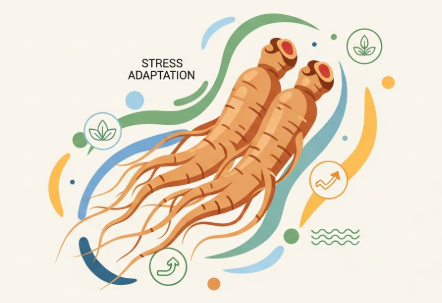
Adaptogens are substances that help the body maintain balance during stress. According to the National Institutes of Health (NIH), adaptogens may support resilience by modulating stress response systems rather than overstimulating them.
Unlike stimulants, ginseng does not force energy output. Instead, it helps normalize physiological processes.
How Ginseng Supports Burnout Recovery Mechanisms
1. Regulation of Stress Hormones
Several studies suggest that ginseng influences cortisol secretion. A review published in Journal of Ginseng Research indicates that ginsenosides may regulate HPA axis activity under chronic stress conditions.
By supporting cortisol balance, ginseng may help reduce exhaustion and emotional overload. Therefore, it fits well into burnout recovery strategies.
2. Cognitive Support and Mental Fatigue Reduction
Burnout often impairs memory, attention, and decision-making. Research indexed in PubMed shows that Panax ginseng may improve working memory and mental performance under stress.
For example, a randomized controlled trial found improved cognitive performance in participants using standardized ginseng extract compared to placebo. These effects were most noticeable during prolonged mental tasks.
3. Energy Metabolism Without Overstimulation
Unlike caffeine, ginseng supports mitochondrial energy production without causing crashes. This makes ginseng for burnout recovery especially relevant for individuals sensitive to stimulants.
Ginseng may improve glucose utilization and oxygen efficiency at the cellular level. Consequently, users often report steadier energy throughout the day.
4. Immune System Support During Chronic Stress
Chronic stress suppresses immune function. Studies from the National Center for Complementary and Integrative Health (NCCIH) suggest that ginseng supports immune modulation.
This effect is important because frequent illness often accompanies burnout. Supporting immune resilience can therefore enhance overall recovery.
Scientific Evidence and Trusted Sources
Current evidence supports cautious and informed use of ginseng. Notably, credible organizations recognize its potential benefits:
- NIH (National Institutes of Health) – Overview of ginseng compounds
https://www.nccih.nih.gov/health/asian-ginseng - PubMed – Peer-reviewed clinical trials
https://pubmed.ncbi.nlm.nih.gov - Journal of Ginseng Research – Mechanistic and clinical studies
https://www.journals.elsevier.com/journal-of-ginseng-research
However, no herbal supplement replaces medical treatment. Instead, ginseng may complement professional care.
How to Use Ginseng Safely for Burnout Recovery
Recommended Forms
Ginseng is available in several forms:
- Standardized extract capsules
- Sliced dried root
- Herbal teas
- Liquid extracts
Standardized extracts are preferred because they provide consistent ginsenoside levels.
Dosage Considerations
Clinical studies commonly use doses between 200–400 mg per day of standardized extract. However, dosage should always be individualized.
Importantly, ginseng should not be used continuously for long periods without breaks. Cycles of 6–8 weeks are commonly recommended.
Who Should Avoid Ginseng
Ginseng is not suitable for everyone. Caution is required for individuals who:
- Have uncontrolled hypertension
- Use anticoagulant medications
- Are pregnant or breastfeeding
- Have hormone-sensitive conditions
Always consult a qualified healthcare professional before starting supplementation.
Comparing Ginseng With Other Burnout Support Options
| Approach | Primary Benefit | Limitation |
|---|---|---|
| Ginseng | Stress adaptation, mental clarity | Requires consistency |
| Caffeine | Immediate alertness | Energy crashes |
| Ashwagandha | Anxiety reduction | Sedative for some |
| Lifestyle changes | Long-term recovery | Requires time |
Ginseng works best when combined with sleep optimization, workload adjustments, and medical guidance.
Integrating Ginseng Into a Holistic Recovery Plan
Burnout recovery requires more than supplements. For best results, combine ginseng use with:
- Regular sleep schedules
- Balanced protein and micronutrient intake
- Mindfulness or stress management techniques
- Professional counseling if needed
This integrative approach aligns with evidence-based functional medicine principles.
Conclusion
Burnout is a serious stress-related condition with physical and psychological consequences. Ginseng for burnout recovery offers a scientifically supported, gentle, and adaptive form of herbal support. Research indicates benefits for stress regulation, cognitive performance, and immune resilience.
However, ginseng is not a cure. It should be used responsibly, with medical awareness, and as part of a broader recovery strategy. When applied correctly, it may support the body’s natural capacity to restore balance and resilience.
This content is for educational purposes only and is not a substitute for professional medical advice. Always consult a licensed healthcare provider before using herbal supplements.
FAQ: Ginseng and Burnout Recovery
Is ginseng clinically proven for burnout?
Burnout-specific trials are limited. However, strong evidence supports ginseng’s effects on stress, fatigue, and cognition.
How long does ginseng take to work?
Many users notice benefits within 2–4 weeks, depending on dosage and individual health status.
Can ginseng replace antidepressants?
No. Ginseng does not replace prescribed mental health treatments.
Is Korean ginseng better than American ginseng?
Korean ginseng is more stimulating, while American ginseng is milder. Choice depends on individual tolerance.
Can I take ginseng daily?
Yes, but cycling and professional supervision are advised.
🇰🇷 Premium Korean Ginseng Online Shop