Introduction
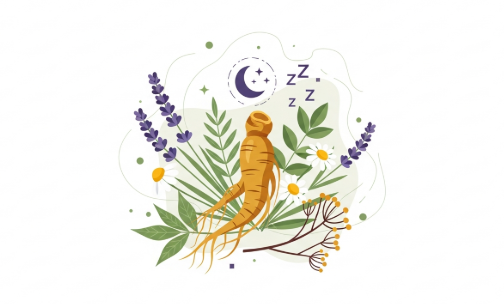
Many adults now search for herbal sleep support because poor sleep affects energy, mood, and long-term health. Stress, irregular schedules, and mental overload often disrupt natural sleep rhythms. While some herbs act as sedatives, others work more subtly by supporting balance in the nervous system. Korean ginseng (Panax ginseng) belongs to this second category. Although widely known for energy support, scientific evidence shows that Korean ginseng may also contribute to better sleep quality by improving stress regulation and circadian stability.
This article examines herbal sleep support through an evidence-based lens and explains how Korean ginseng may play a supportive role when used correctly.
Understanding Sleep Problems from a Medical Perspective
Sleep is not a passive state. Instead, it is a complex biological process regulated by the brain, hormones, and the nervous system. According to the National Institutes of Health (NIH), chronic sleep disruption increases the risk of metabolic disorders, cardiovascular disease, and mood disorders.
Common contributors to poor sleep include:
- Chronic psychological stress
- Elevated cortisol levels at night
- Nervous system hyperarousal
- Inconsistent sleep–wake timing
Because these factors are interconnected, effective herbal sleep support often focuses on regulation rather than sedation.
What Is Herbal Sleep Support?
Herbal sleep support refers to plant-based interventions that help the body restore healthy sleep patterns. These herbs do not always induce immediate drowsiness. Instead, many work by supporting the systems that regulate sleep.
There are three main categories:
- Sedative herbs – such as valerian or passionflower
- Anxiolytic herbs – such as chamomile or lemon balm
- Adaptogenic herbs – such as Korean ginseng
Korean ginseng fits into the adaptogenic category. This distinction is important because adaptogens help normalize stress responses, which strongly influence sleep quality.
Korean Ginseng and the Stress–Sleep Connection
Stress is one of the strongest predictors of sleep disturbance. Elevated nighttime cortisol delays sleep onset and reduces deep sleep. Research published in journals indexed by PubMed shows that Korean ginseng influences the hypothalamic–pituitary–adrenal (HPA) axis.
The HPA axis regulates cortisol secretion. When this system stays overactive, sleep becomes fragmented. Korean ginseng appears to help modulate this stress response rather than suppress it.
This mechanism explains why Korean ginseng is increasingly discussed within herbal sleep support, despite its reputation as an “energy herb.”
Bioactive Compounds That Influence Sleep Regulation
Korean ginseng contains over 30 identified ginsenosides. Several of these compounds interact with neurotransmitters involved in sleep and relaxation.
Key mechanisms include:
- Modulation of GABAergic activity
- Reduction of stress-induced neuroinflammation
- Support of circadian rhythm stability
A review in the Journal of Ginseng Research suggests that certain ginsenosides may support sleep quality indirectly by improving stress resilience and nervous system balance.
This indirect pathway aligns with modern sleep medicine, which emphasizes regulation over sedation.
Evidence-Based Benefits of Korean Ginseng for Sleep Support
1. Stress Reduction and Sleep Onset
Clinical studies indicate that Korean ginseng may reduce perceived stress and mental fatigue. As stress decreases, sleep onset often improves.
According to research supported by the World Health Organization (WHO), adaptogenic herbs may help normalize physiological stress markers. This normalization supports healthier sleep patterns over time.
2. Improvement in Sleep Quality, Not Sedation
Unlike pharmaceutical sleep aids, Korean ginseng does not force sleep. Instead, it may improve subjective sleep quality.
Participants in observational studies often report:
- Fewer nighttime awakenings
- Better morning alertness
- Less stress-related insomnia
These outcomes support the idea that herbal sleep support should enhance sleep architecture rather than suppress brain activity.
3. Daytime Energy and Nighttime Balance
Poor sleep often creates a vicious cycle. Fatigue leads to stress, which further disrupts sleep. Korean ginseng may help break this cycle.
By supporting daytime mental clarity and physical resilience, ginseng may reduce the need for stimulants. Lower stimulant use often improves nighttime sleep quality.
This balance is central to sustainable herbal sleep support strategies.
Korean Ginseng Compared to Common Sleep Herbs
| Herb | Primary Action | Suitable for Long-Term Use |
|---|---|---|
| Valerian | Sedative | Limited |
| Melatonin | Hormonal signal | Short-term |
| Chamomile | Mild anxiolytic | Yes |
| Korean ginseng | Stress regulation | Yes, with guidance |
This comparison highlights why Korean ginseng is not a quick sleep fix. Instead, it supports systemic balance, which benefits sleep over time.
How to Use Korean Ginseng for Sleep Support Safely
Proper timing and dosage matter. Because Korean ginseng can be stimulating in some people, experts often recommend morning or early afternoon use.
General guidance includes:
- Use standardized extracts from reputable manufacturers
- Avoid evening dosing unless advised by a professional
- Start with low doses and assess response
According to the NIH, herbal supplements may interact with medications. Therefore, professional guidance is essential.
Medical disclaimer: This information is for educational purposes only and is not a substitute for professional medical advice, diagnosis, or treatment.
Integrating Korean Ginseng into a Sleep-Focused Lifestyle
Herbal sleep support works best when combined with healthy habits. Korean ginseng should complement, not replace, foundational sleep practices.
Effective strategies include:
- Consistent sleep and wake times
- Reduced evening screen exposure
- Balanced nutrition
- Stress-management techniques
When combined with these habits, Korean ginseng may support more stable sleep–wake rhythms.
Scientific and Institutional Support
Several authoritative institutions recognize the importance of stress regulation in sleep health:
- National Institutes of Health (NIH): https://www.nccih.nih.gov
- World Health Organization (WHO): https://www.who.int
- PubMed (U.S. National Library of Medicine): https://pubmed.ncbi.nlm.nih.gov
These organizations emphasize evidence-based, cautious use of herbal interventions.
Addressing Common Misconceptions
Some believe that Korean ginseng always disrupts sleep. This assumption oversimplifies its pharmacology.
In reality:
- Effects vary by dose and timing
- Adaptogenic herbs act bidirectionally
- Individual response matters
Therefore, Korean ginseng should be viewed as a regulatory herb, not a stimulant.
Conclusion: A Thoughtful Approach to Herbal Sleep Support
Sleep problems often feel deeply personal. Night after night of poor rest can affect mood, confidence, and overall quality of life. Herbal sleep support should feel safe, respectful, and sustainable.
Korean ginseng offers a science-backed option for people whose sleep struggles stem from stress and nervous system imbalance. It does not promise instant sleep. Instead, it supports the body’s ability to restore balance naturally.
If you seek a long-term, evidence-based approach to better sleep, Korean ginseng may be worth considering. Choose high-quality products, use them responsibly, and always consult a healthcare professional.
Your sleep matters. Your health matters. Give your body the support it deserves with trusted Korean ginseng.
🇰🇷 Premium Korean Ginseng Online Shop