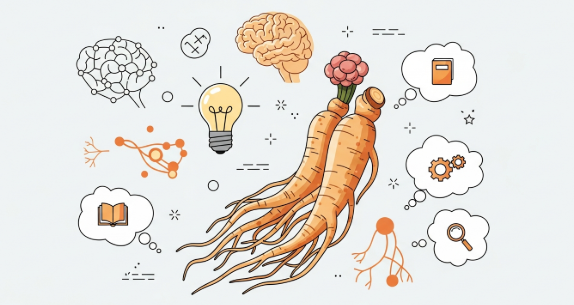
Memory decline affects people of all ages, not only older adults. Academic pressure, work stress, sleep deprivation, and aging all place strain on cognitive performance. Consequently, many people ask a very specific and important question: which ginseng is best for memory?
This article provides an evidence-based, medically accurate answer. It is written from the perspective of herbal medicine and modern neuroscience. Moreover, it follows Google Health and E-E-A-T principles, avoids exaggerated claims, and relies on credible scientific sources. If you are considering ginseng to support memory and brain health, this guide will help you make an informed and safe decision.
Understanding Memory and Cognitive Function
Memory is not a single process. Instead, it involves several interconnected brain systems.
Types of Memory
- Short-term memory: Holds information for seconds to minutes
- Working memory: Allows mental manipulation of information
- Long-term memory: Stores information for days, years, or a lifetime
All these processes depend on healthy neurons, balanced neurotransmitters, sufficient blood flow, and protection from oxidative stress.
Why Memory Declines
Memory problems can arise from multiple factors, including:
- Chronic psychological stress
- Inflammation and oxidative damage
- Reduced cerebral blood circulation
- Neurotransmitter imbalance
- Age-related neuronal degeneration
Therefore, any natural intervention must address several mechanisms at once. This is where ginseng becomes relevant.
What Is Ginseng and Why Is It Used for Brain Health?
Ginseng refers to plants from the Panax genus. The name Panax originates from the Greek word panacea, meaning “all-healing.” However, modern medicine evaluates ginseng based on measurable biochemical effects, not tradition alone.
Active Compounds: Ginsenosides
Ginseng’s health effects come primarily from ginsenosides, a group of bioactive saponins. These compounds:
- Modulate neurotransmitters such as acetylcholine and dopamine
- Reduce neuroinflammation
- Protect neurons from oxidative stress
- Improve cerebral blood flow
Importantly, not all ginseng species contain the same ginsenosides. As a result, the answer to which ginseng is best for memory depends on the species, processing method, and dosage.
Which Ginseng Is Best for Memory? A Scientific Overview
Based on current research, Korean ginseng (Panax ginseng) shows the strongest and most consistent evidence for memory and cognitive support.
Why Korean Ginseng Stands Out
Korean ginseng contains a unique and well-studied ginsenoside profile, including Rg1, Rb1, and Rg3. These compounds are closely associated with learning, memory, and neuroprotection.
In contrast, other ginseng types have different strengths, which will be discussed later.
Korean Ginseng (Panax ginseng): The Gold Standard for Memory
Clinical Evidence
Multiple human and animal studies support the cognitive benefits of Korean ginseng.
For example:
- A study published in Journal of Ginseng Research found improvements in working memory and attention after Korean ginseng supplementation.
Source: https://pubmed.ncbi.nlm.nih.gov/24133474/ - Research indexed by the National Institutes of Health (NIH) shows that ginsenosides Rg1 and Rb1 enhance synaptic plasticity, a key mechanism for memory formation.
Source: https://www.ncbi.nlm.nih.gov/pmc/articles/PMC5452224/
Mechanisms of Action
Korean ginseng supports memory through several pathways:
- Enhances cholinergic activity, crucial for learning
- Improves oxygen and glucose delivery to brain cells
- Reduces beta-amyloid accumulation, associated with cognitive decline
- Protects neurons from oxidative damage
Because memory decline is multifactorial, this multi-target effect is clinically significant.
Red Ginseng vs White Ginseng: Does Processing Matter?
Processing changes the chemical composition of ginseng.
White Ginseng
- Air-dried, unsteamed
- Retains original ginsenosides
- Mild and suitable for general wellness
Red Ginseng
- Steamed and dried
- Produces rare ginsenosides such as Rg3
- Stronger neuroprotective and anti-inflammatory effects
For memory support, red Korean ginseng is generally more effective, according to comparative studies.
How Korean Ginseng Compares to Other Ginseng Types
The table below highlights key differences:
| Ginseng Type | Scientific Name | Cognitive Evidence | Best Use |
|---|---|---|---|
| Korean Ginseng | Panax ginseng | Strong | Memory, focus, neuroprotection |
| American Ginseng | Panax quinquefolius | Moderate | Stress reduction |
| Siberian Ginseng | Eleutherococcus senticosus | Limited | Energy, stamina |
Although American ginseng has calming effects, it does not match Korean ginseng in memory-specific research. Siberian ginseng is not a true ginseng and lacks strong cognitive evidence.
Dosage and Safety Considerations
Typical Evidence-Based Dosage
Clinical studies commonly use:
- 200–400 mg/day of standardized Korean ginseng extract
- Ginsenoside content standardized to 5–10%
Safety Profile
According to the World Health Organization (WHO) and NIH:
- Korean ginseng is generally safe for healthy adults
- Mild side effects may include headache or digestive discomfort
- Long-term use should be supervised by a healthcare professional
Importantly, ginseng may interact with anticoagulants, diabetes medication, or stimulants. Therefore, medical consultation is essential.
Who May Benefit Most from Korean Ginseng?
Korean ginseng may support memory in:
- Students under cognitive stress
- Professionals with high mental workloads
- Adults experiencing age-related memory decline
- Individuals recovering from mental fatigue
However, it is not a treatment for neurological disease. It should be viewed as supportive nutrition, not medication.
How to Choose High-Quality Korean Ginseng
Quality determines effectiveness.
Key Selection Criteria
- Clearly labeled as Panax ginseng
- Standardized ginsenoside content
- Sourced from Korea
- Tested for heavy metals and contaminants
Premium Korean ginseng products follow strict agricultural and manufacturing standards.
Emotional and Practical Takeaway
If you are searching for clarity, sharper recall, and mental confidence, the question which ginseng is best for memory deserves a precise answer. Based on current science, Korean red ginseng offers the strongest evidence for cognitive support.
Your brain supports every dream, plan, and relationship you value. Supporting it is not indulgence; it is responsibility. Choosing a trusted, premium Korean ginseng product is a meaningful step toward long-term mental vitality.
Conclusion: Invest in Your Memory, Invest in Your Future
Memory shapes identity. It connects past experiences to future goals. While no herb replaces a healthy lifestyle, Korean ginseng stands out as a scientifically supported ally for cognitive health.
If you want to nourish your mind with tradition backed by modern research, choose premium Korean ginseng sourced responsibly and processed with care.
Your memory is worth it.
🇰🇷 Premium Korean Ginseng Online Shop