
Introduction
In today’s fast-paced world, immune resilience support has become a central topic in preventive health. Rather than focusing only on avoiding illness, immune resilience emphasizes the body’s ability to adapt, respond, and recover from physical, psychological, and environmental stressors. A resilient immune system does not merely react; it maintains balance over time. Therefore, understanding how nutrition, lifestyle, and targeted supplementation contribute to immune resilience support is essential for long-term health and disease prevention.
This article provides a medically accurate, evidence-based discussion of immune resilience. It integrates insights from immunology, nutrition science, and herbal medicine, while aligning with guidance from authoritative institutions such as the World Health Organization (WHO), the National Institutes of Health (NIH), and peer-reviewed research indexed in PubMed.
What Is Immune Resilience?
Immune resilience refers to the immune system’s capacity to maintain effective defense while avoiding excessive inflammation. In contrast to short-term “immune boosting,” resilience focuses on regulation, adaptability, and recovery.
From an immunological perspective, immune resilience involves:
- Efficient innate immune responses
- Balanced adaptive immunity
- Controlled inflammatory signaling
- Rapid resolution after immune activation
According to the NIH, chronic inflammation and immune dysregulation contribute to aging and many non-communicable diseases. Therefore, immune resilience support targets systemic balance rather than overstimulation.
Key Factors That Influence Immune Resilience Support
Several interconnected factors shape immune resilience. Each factor influences immune cells through distinct but overlapping mechanisms.
1. Nutrition and Micronutrient Adequacy
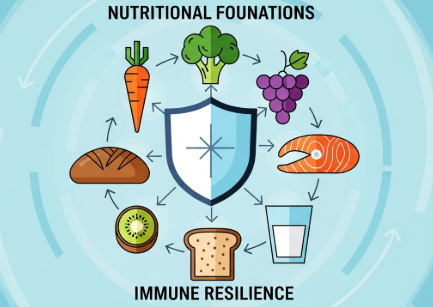
Adequate intake of essential nutrients is foundational for immune resilience support. Immune cells have high metabolic demands, especially during activation.
Key nutrients include:
- Vitamin D: Modulates innate and adaptive immunity
- Vitamin C: Supports epithelial barriers and antioxidant defense
- Zinc: Essential for immune cell development and signaling
- Selenium: Regulates oxidative stress and antibody production
Clinical reviews published in Nutrients and indexed on PubMed highlight that micronutrient deficiencies impair immune regulation rather than simply lowering immunity.
2. Gut Microbiota and Immune Balance
The gut microbiome plays a central role in immune resilience support. Nearly 70% of immune cells reside in gut-associated lymphoid tissue.
A healthy microbiome:
- Trains immune tolerance
- Supports anti-inflammatory signaling
- Enhances pathogen defense
Dietary fiber, fermented foods, and polyphenols support microbial diversity. In contrast, ultra-processed diets reduce beneficial bacterial populations, which may weaken immune resilience over time.
3. Sleep and Circadian Rhythm Regulation
Sleep quality directly affects immune signaling. During deep sleep, cytokine regulation and immune cell trafficking improve.
Evidence from the NIH shows that chronic sleep deprivation:
- Increases inflammatory markers
- Reduces vaccine response
- Impairs immune memory
Therefore, consistent sleep patterns are a non-negotiable component of immune resilience support.
4. Physical Activity and Stress Adaptation
Moderate physical activity enhances immune surveillance. However, excessive training without recovery can suppress immune function.
Balanced exercise:
- Improves circulation of immune cells
- Reduces chronic inflammation
- Enhances stress hormone regulation
Similarly, chronic psychological stress elevates cortisol levels, which can dysregulate immune responses. Mind–body practices such as mindfulness and controlled breathing support immune resilience by restoring neuroimmune balance.
Nutritional Strategies for Immune Resilience Support
A dietary pattern focused on whole, nutrient-dense foods is consistently associated with improved immune regulation.
Immune-Supportive Dietary Components
| Nutrient / Compound | Primary Function | Food Sources |
|---|---|---|
| Vitamin D | Immune modulation | Fatty fish, sunlight |
| Omega-3 fatty acids | Anti-inflammatory signaling | Sardines, flaxseed |
| Polyphenols | Antioxidant defense | Berries, green tea |
| Prebiotic fiber | Gut immune support | Oats, legumes |
Importantly, no single food guarantees immune resilience. Instead, dietary patterns such as the Mediterranean diet show consistent benefits in reducing inflammatory burden, according to WHO-aligned research.
Role of Herbal Medicine in Immune Resilience
Herbal medicine has a long history in supporting immune balance. Modern research now evaluates these traditions through controlled clinical and preclinical studies.
Commonly studied herbs include:
- Echinacea species: Immune signaling modulation
- Astragalus membranaceus: Support for immune adaptability
- Turmeric (curcumin): Inflammatory pathway regulation
These herbs do not act as immune stimulants in the conventional sense. Instead, they influence signaling pathways that contribute to immune resilience support.
Korean Ginseng and Immune Resilience (Brief Overview)
Korean ginseng (Panax ginseng) has been studied for its adaptogenic properties. Limited evidence suggests that ginsenosides may influence immune signaling and stress adaptation.
However, reputable organizations such as the NIH emphasize that ginseng should not replace medical treatment. Its role in immune resilience support remains adjunctive and requires professional guidance.
Evidence-Based Supplements: What the Science Says
Supplements may help address specific deficiencies. However, evidence-based use is essential.
Well-supported options include:
- Vitamin D (in deficient individuals)
- Zinc (short-term, clinically indicated use)
- Probiotics (strain-specific benefits)
According to systematic reviews published in The BMJ, indiscriminate supplementation does not guarantee immune benefits. Therefore, supplementation should be personalized and medically supervised.
Safety, Individualization, and Medical Guidance
Immune resilience support is not one-size-fits-all. Age, chronic conditions, medications, and genetic factors all influence immune responses.
Key safety principles:
- Avoid megadoses of vitamins or herbs
- Monitor interactions with medications
- Consult qualified healthcare professionals
The WHO and NIH consistently stress that immune health strategies should complement, not replace, evidence-based medical care.
Practical Daily Strategies for Immune Resilience Support
To summarize, sustainable immune resilience develops through consistent habits.
Daily actions include:
- Eating a varied, whole-food diet
- Prioritizing sleep and recovery
- Managing stress proactively
- Using supplements judiciously
Over time, these practices enhance immune adaptability rather than forcing short-term responses.
Conclusion
Immune health is not defined by how aggressively the immune system reacts, but by how effectively it maintains balance. Immune resilience support focuses on long-term regulation, recovery, and adaptability. Evidence from nutrition science, immunology, and herbal medicine shows that diet, lifestyle, and targeted interventions work synergistically to support immune balance.
By following evidence-based strategies and consulting healthcare professionals, individuals can build sustainable immune resilience that supports overall health across the lifespan.
Read also: Ginseng for Immunity Booster: Molecular Mechanisms, Clinical Evidence, and Immune Modulation Science