Introduction
Choosing Korean ginseng for hypertension requires more than following trends or traditional beliefs. High blood pressure is a complex cardiovascular condition. Therefore, any herbal support must be selected carefully and supported by scientific evidence. Korean ginseng (Panax ginseng C.A. Meyer) has been widely studied for its potential effects on vascular health, stress regulation, and endothelial function. However, not all ginseng products are equal, and not all are suitable for people with hypertension.
This article provides an evidence-based, medically responsible guide to help you make informed decisions. It explains how Korean ginseng may influence blood pressure, how to choose safe products, and when to consult healthcare professionals.
Understanding Hypertension and Its Health Risks
Hypertension is a chronic condition characterized by persistently elevated blood pressure. Over time, it increases the risk of:
- Heart attack
- Stroke
- Chronic kidney disease
- Vascular damage
- Cognitive decline
According to the World Health Organization (WHO), hypertension is a leading global risk factor for premature death. Lifestyle changes remain the foundation of treatment. However, many patients also seek complementary support, including herbal interventions.
Importantly, herbs should support, not replace, standard medical care.
What Makes Korean Ginseng Unique?
Korean ginseng (Panax ginseng) differs from other ginseng varieties due to its:
- High concentration of ginsenosides
- Traditional processing methods
- Long cultivation period (4–6 years)
- Extensive clinical research background
Ginsenosides are bioactive compounds that influence nitric oxide production, vascular tone, and stress response. These mechanisms are relevant to blood pressure regulation.
However, the effects depend heavily on quality, dosage, and processing method.
Scientific Evidence Linking Korean Ginseng and Blood Pressure
Several peer-reviewed studies have examined Korean ginseng and cardiovascular health.
Key findings include:
- Improved endothelial function
- Enhanced nitric oxide availability
- Reduced oxidative stress
- Mild vasodilation effects
A randomized controlled trial published in Hypertension Research reported that standardized Korean red ginseng improved arterial stiffness in adults with controlled hypertension. Another review indexed in PubMed highlighted its adaptogenic effects on stress-related blood pressure fluctuations.
That said, results are modest, not dramatic. Korean ginseng should never be marketed as a cure for hypertension.
Authoritative sources supporting this research include:
- National Institutes of Health (NIH)
- PubMed Central
- World Health Organization (WHO)
Suggested reading:
Choosing Korean Ginseng for Hypertension: What to Look For
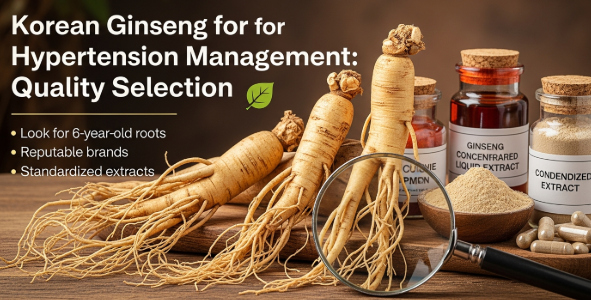
When choosing Korean ginseng for hypertension, quality and safety are essential.
1. Species Verification
Always confirm the product contains:
- Panax ginseng C.A. Meyer
Avoid blends that do not specify species.
2. Processing Type
Different forms may affect blood pressure differently:
- Red ginseng: Heat-processed, often better studied for vascular effects
- White ginseng: Air-dried, milder action
For hypertension, standardized red ginseng extracts are more commonly researched.
3. Standardized Ginsenoside Content
Look for products that clearly state:
- Total ginsenoside percentage
- Batch consistency
This ensures predictable physiological effects.
4. Dosage Transparency
Clinically studied doses typically range between:
- 200–400 mg/day of standardized extract
Avoid excessive doses, which may increase heart rate in sensitive individuals.
Safety Considerations for People with Hypertension
Although Korean ginseng is generally well tolerated, it is not suitable for everyone.
Use caution if you:
- Take antihypertensive medications
- Use blood thinners
- Have arrhythmias
- Are sensitive to stimulatory herbs
Possible side effects include:
- Headache
- Insomnia
- Palpitations (rare)
Therefore, always consult a healthcare professional before starting supplementation.
Comparing Korean Ginseng with Other Herbal Options
| Herb | Evidence for BP | Safety Profile |
|---|---|---|
| Korean ginseng | Moderate | Generally safe when standardized |
| Garlic extract | Strong | Drug interactions possible |
| Hibiscus | Moderate | Diuretic effects |
| Ashwagandha | Indirect | Sedative properties |
Korean ginseng stands out for its adaptogenic nature. It supports stress resilience, which indirectly benefits blood pressure control.
How to Integrate Korean Ginseng into a Hypertension-Friendly Lifestyle
Herbal supplements work best when combined with:
- DASH or Mediterranean diet
- Regular physical activity
- Stress management
- Adequate sleep
Korean ginseng should be viewed as part of a comprehensive cardiovascular strategy, not a standalone solution.
Medical Disclaimer
This article is for educational purposes only. It does not replace professional medical advice, diagnosis, or treatment. Always consult a licensed healthcare provider before using herbal supplements, especially if you have hypertension or take prescription medications.
Conclusion: Making a Confident, Informed Choice
Choosing Korean ginseng for hypertension is a thoughtful process that blends traditional wisdom with modern science. When sourced responsibly, standardized correctly, and used under professional guidance, Korean ginseng may support vascular health and stress regulation.
Your heart works tirelessly every day. Supporting it with safe, evidence-based choices is an act of care, not impulse. Choose quality. Choose transparency. Choose health with intention.
If you are ready to invest in premium, authentic Korean ginseng products crafted with scientific integrity and traditional excellence, explore trusted sources that prioritize purity and safety.
🇰🇷 Premium Korean Ginseng Online Shop