Anxiety affects sleep, focus, and work performance. Many people want a natural option that still respects science. Panax ginseng for anxiety often appears in that search. This article explains what Korean ginseng is, how it works in the stress response, and what the evidence really shows. We will also cover safety, dosing, and how to choose a high-quality product.
Health note: This article is for education only. It is not a substitute for professional medical advice. Always talk with a healthcare professional before starting any supplement, especially if you take medication or have a medical condition.
What Is Korean Ginseng (Panax ginseng)?
Panax ginseng is a perennial root used in East Asian medicine for centuries. People also call it Korean ginseng. The word Panax comes from Greek and means “all-healing.” However, modern practice relies on evidence, not legends.
The root contains active compounds called ginsenosides. These compounds influence the nervous system, immune signaling, and energy metabolism. Because of that, researchers study ginseng for fatigue, cognition, and stress resilience.
Importantly, not all “ginseng” is the same. Panax ginseng differs from American ginseng (Panax quinquefolius) and from Siberian “ginseng” (Eleutherococcus senticosus), which is not a true ginseng. When we discuss panax ginseng for anxiety, we mean the Korean species with standardized ginsenosides.
Key points:
- The active markers are ginsenosides (Rb1, Rg1, Rg3, and others).
- Processing matters. Red ginseng is steamed, then dried. White ginseng is air-dried.
- Quality depends on age, cultivation, and extraction.
How Anxiety Works in the Body
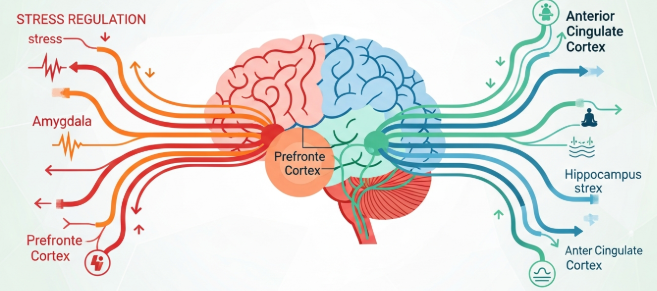
Anxiety is not only a feeling. It involves the hypothalamic-pituitary-adrenal (HPA) axis and the sympathetic nervous system. When stress appears, cortisol and adrenaline rise. Heart rate increases. Attention narrows. This response helps in danger. Yet chronic activation causes problems.
Over time, persistent stress can:
- Disrupt sleep
- Reduce focus and memory
- Increase muscle tension
- Worsen mood and fatigue
Therefore, a helpful intervention should not sedate you. Instead, it should support adaptation to stress. Scientists call such agents adaptogens. Panax ginseng often falls into this category.
Panax Ginseng for Anxiety: What the Evidence Shows
Researchers have explored panax ginseng for anxiety through animal models and human studies. The results suggest stress-modulating and neuroprotective effects rather than simple sedation.
Mechanisms proposed
- HPA axis modulation: Ginsenosides can normalize cortisol responses under stress.
- Neurotransmitter balance: Some ginsenosides influence GABA and serotonin signaling, which relate to calm and mood.
- Anti-inflammatory and antioxidant effects: Chronic stress increases inflammation and oxidative stress. Ginseng may counter these pathways.
What studies report
- Reviews in peer-reviewed journals describe anti-stress and cognitive benefits linked to ginsenosides. See PubMed summaries: https://pubmed.ncbi.nlm.nih.gov/ (search: “Panax ginseng stress ginsenosides”).
- The U.S. National Institutes of Health (NIH) discuss ginseng’s traditional uses and current evidence, including stress and fatigue: https://www.nccih.nih.gov/health/asian-ginseng
- The World Health Organization monographs also describe Panax ginseng and its pharmacology: https://apps.who.int/iris/handle/10665/42052
Importantly, results vary by dose, extract, and study design. Some trials show improved calm focus and reduced stress perception. Others show modest or neutral effects. Therefore, we should avoid exaggerated claims. Still, the direction of evidence supports a role in stress resilience.
Practical takeaway: The goal is not to “erase” anxiety. Instead, Korean ginseng may support the body’s ability to cope with stress. That difference matters.
Korean Ginseng vs. Other Herbal Options
People often compare ginseng with ashwagandha, rhodiola, or chamomile. Each herb works through different pathways.
- Chamomile: Mild calming. Best for sleep and acute tension.
- Ashwagandha: Strong evidence for cortisol reduction. Often sedating for some people.
- Rhodiola: Supports mental endurance. Can feel stimulating.
- Panax ginseng: Balances energy and stress response. Less sedating. More “normalizing.”
Because of that profile, panax ginseng for anxiety fits people who feel tired and stressed at the same time. It can support calm focus during work, not only at night.
How to Use Panax Ginseng Safely
Safety always comes first. Most healthy adults tolerate Panax ginseng well when they use standard doses. Still, side effects can occur.
Typical dosing
- Standardized extract: 200–400 mg per day, often split into two doses.
- Look for products that state ginsenoside content (for example, 5–10%).
- Start low. Then increase slowly if needed.
Timing tips
- Take it earlier in the day. Some people feel more alert.
- Use cycles, such as 8–12 weeks on, then a short break.
Possible side effects
- Insomnia if taken late
- Headache or stomach upset in sensitive users
- Rarely, palpitations or nervousness at high doses
Who should be careful
- People with hypertension or heart rhythm issues
- People who take blood thinners, stimulants, or antidepressants
- Pregnant or breastfeeding individuals
In these cases, consult a healthcare professional first. The NIH emphasizes this caution: https://www.nccih.nih.gov/health/asian-ginseng
What to Look for in a High-Quality Korean Ginseng Product
Quality determines results. Many products use low doses or poor extracts. Therefore, use a checklist.
Choose products that:
- Specify Panax ginseng C.A. Meyer on the label
- State standardized ginsenosides
- Come from Korea with traceable sourcing
- Use third-party testing for purity
- Avoid unnecessary fillers
Prefer:
- Red ginseng extracts for long-term stability
- Clear batch numbers and certificates of analysis
- Brands that publish quality standards
This approach improves your chance of real benefits and reduces risk.
How to Combine Ginseng with Lifestyle Strategies
Supplements work best when they support healthy habits. Anxiety management needs a multi-layered plan.
Consider:
- Sleep hygiene: Fixed bedtimes and dark rooms
- Movement: Walking, resistance training, or yoga
- Nutrition: Stable blood sugar and enough protein
- Breathing or mindfulness: Even five minutes helps
In this context, panax ginseng for anxiety becomes a support tool, not a crutch. It can enhance resilience while you build long-term skills.
Frequently Asked Questions
Is Panax ginseng the same as American ginseng?
No. They share the genus Panax, but their ginsenoside profiles differ. Korean ginseng often feels more stimulating and balancing.
Can I use it with therapy or medication?
Often yes, but always ask your clinician first. Interactions are possible.
How long until I feel effects?
Some people notice changes in 1–2 weeks. For others, it takes 4–8 weeks of consistent use.
Evidence, Responsibility, and Realistic Expectations
Responsible health content avoids hype. No herb replaces medical care. Still, the evidence supports a measured, rational role for Korean ginseng in stress adaptation.
Credible institutions like the NIH, WHO, and peer-reviewed journals on PubMed describe its pharmacology and traditional use. That alignment increases confidence. However, results depend on product quality, dose, and personal biology.
Conclusion: Choosing Korean Ginseng with Confidence
If stress drains your energy and focus, a balanced approach matters. Panax ginseng for anxiety offers a science-informed option that supports calm alertness rather than sedation. Choose a standardized Korean product. Start with a modest dose. Monitor your response. And always involve a healthcare professional when needed.
Most of all, remember this: anxiety does not define you. With the right tools, your nervous system can learn resilience again. High-quality Korean ginseng can become part of that journey—supporting your days with steadier focus and calmer strength.
Take the next step. Choose quality. Choose evidence. And choose care for your long-term well-being.
🇰🇷 Premium Korean Ginseng Online Shop