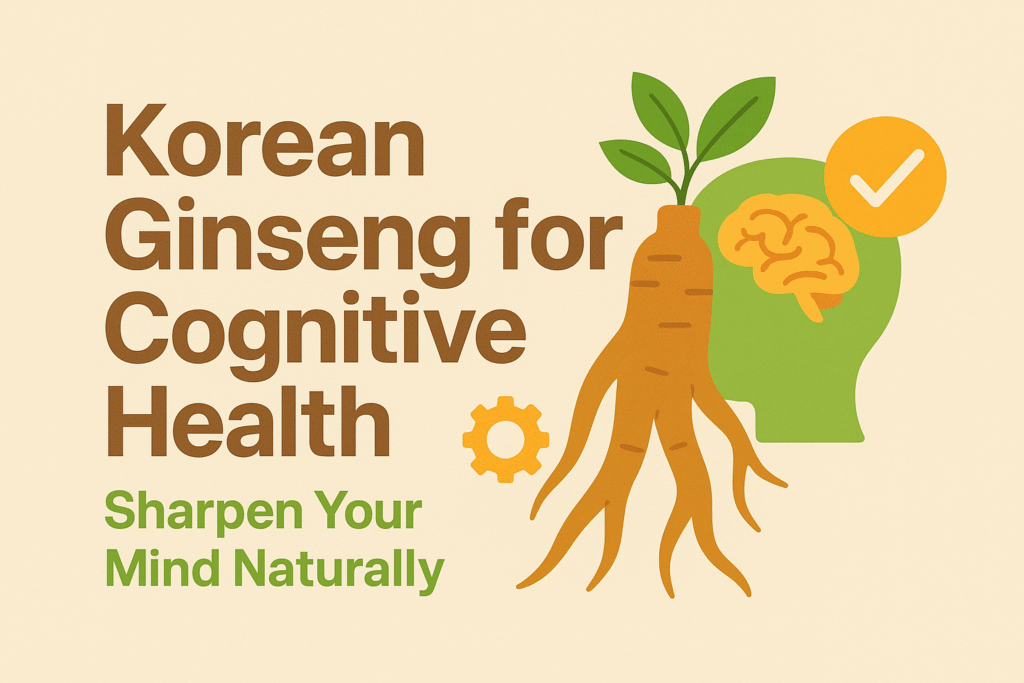
Is ginseng good for focus in stressful situations? This question appears often among professionals, students, and high performers who face constant mental pressure. Stress can blunt attention, slow reaction time, and reduce working memory. Therefore, many people search for a natural option that supports calm, steady focus. Korean ginseng (Panax ginseng C.A. Meyer) has a long history in East Asian medicine. More importantly, modern research now explores how it may support cognitive performance during stress. In this article, we will examine mechanisms, clinical evidence, safety, and practical guidance using a strict evidence-based lens.
Understanding Stress, Focus, and Cognitive Performance
Stress is not always harmful. Short bursts can sharpen alertness. However, chronic stress often impairs focus, memory, and decision-making. Cortisol and other stress hormones can disrupt the prefrontal cortex. As a result, tasks that require sustained attention become harder.
Key cognitive domains affected by stress include:
- Attention and concentration
- Working memory
- Processing speed
- Mental stamina
Because of this, many people look for adaptogens. Adaptogens are substances that help the body adapt to stress. Korean ginseng is one of the most studied adaptogenic herbs.
What Is Korean Ginseng (Panax ginseng)?
Korean ginseng, also called Asian ginseng, comes from the root of Panax ginseng C.A. Meyer. It contains active compounds known as ginsenosides. These compounds influence multiple biological pathways. For example, they affect neurotransmitters, nitric oxide signaling, and stress hormone regulation.
There are two common forms:
- White ginseng: Air-dried root
- Red ginseng: Steamed and dried root, which changes its ginsenoside profile
Both forms are used in research. However, Korean Red Ginseng often receives more clinical attention due to its standardized processing.
Is Ginseng Good for Focus in Stressful Situations? The Biological Rationale
To answer whether is ginseng good for focus in stressful situations, we must first look at mechanisms.
1. Stress Response Modulation
Research suggests that Panax ginseng can modulate the hypothalamic–pituitary–adrenal (HPA) axis. This axis controls cortisol release. By supporting a balanced stress response, ginseng may help prevent stress-related cognitive fatigue.
2. Neurotransmitter Support
Some studies indicate that ginsenosides influence acetylcholine, dopamine, and serotonin pathways. These neurotransmitters play key roles in attention, motivation, and mood. Therefore, balanced signaling can support clearer thinking under pressure.
3. Cerebral Blood Flow and Energy Metabolism
Ginseng may support nitric oxide production and mitochondrial function. In simple terms, this can help brain cells use energy more efficiently. Better energy utilization often translates to improved mental endurance during demanding tasks.
What Does the Science Say? A Review of Clinical Evidence
Several human and animal studies have examined ginseng and cognitive performance. While not all studies focus only on stress, many include mentally demanding conditions.
Cognitive Performance and Mental Fatigue
- A randomized controlled trial published in Psychopharmacology found that Panax ginseng improved aspects of working memory and calmness in healthy volunteers.
Source: https://pubmed.ncbi.nlm.nih.gov/12491029/ - Another study in Journal of Ginseng Research reported improvements in mental performance and reduced fatigue after ginseng supplementation.
Source: https://www.ncbi.nlm.nih.gov/pmc/articles/PMC5452225/
Stress and Adaptogenic Effects
- The National Institutes of Health (NIH) recognizes Panax ginseng as an herb studied for stress and cognitive function.
Source: https://www.nccih.nih.gov/health/asian-ginseng - Reviews in Evidence-Based Complementary and Alternative Medicine describe ginseng as an adaptogen that may help regulate stress responses.
Source: https://www.ncbi.nlm.nih.gov/pmc/articles/PMC3659633/
Although results vary, the overall pattern suggests modest but meaningful benefits. Importantly, these effects are not stimulatory like caffeine. Instead, they appear more stabilizing and supportive.
Comparing Ginseng with Caffeine and Other “Focus” Aids
Many people rely on caffeine for focus. However, caffeine works through central nervous system stimulation. This can lead to jitteriness, crashes, and sleep disruption.
Ginseng vs. Caffeine
- Onset: Caffeine is fast; ginseng is gradual
- Feeling: Caffeine can feel sharp; ginseng feels steadier
- Stress impact: Caffeine may increase anxiety; ginseng may support stress balance
- Tolerance: Caffeine tolerance builds quickly; ginseng appears more stable over time
Ginseng vs. Other Adaptogens (e.g., Rhodiola, Ashwagandha)
- Rhodiola often targets fatigue and mood.
- Ashwagandha focuses more on anxiety and cortisol.
- Korean ginseng shows broader effects on cognition, energy, and stress adaptation.
Therefore, for people asking, “is ginseng good for focus in stressful situations,” the evidence suggests it may be especially useful for sustained, calm performance.
How Long Does It Take to Notice Effects?
Ginseng is not a stimulant. For that reason, effects are usually gradual.
- Some people notice subtle changes within 1–2 weeks.
- More consistent benefits often appear after 4–8 weeks of regular use.
- Clinical studies frequently use 4–12 weeks of supplementation.
Consistency matters. In addition, quality and dosage also matter.
Safety, Dosage, and Who Should Be Careful
Typical Dosages Used in Studies
- Standardized extract: 200–400 mg per day
- Whole root preparations: Varies by product and concentration
Always follow the manufacturer’s instructions. Moreover, consult a healthcare professional before starting.
Safety Profile
According to the NIH and WHO, Panax ginseng is generally safe for most adults when used appropriately.
Sources:
- WHO monographs: https://apps.who.int/iris/handle/10665/42052
- NIH NCCIH: https://www.nccih.nih.gov/health/asian-ginseng
Possible side effects include:
- Insomnia (especially at high doses)
- Headache
- Digestive discomfort
- Nervousness in sensitive individuals
Who Should Consult a Doctor First?
- People with hypertension or heart conditions
- Those taking blood thinners, diabetes medication, or antidepressants
- Pregnant or breastfeeding individuals
This article does not replace medical advice. Always discuss supplements with a qualified healthcare provider.
How to Choose a High-Quality Korean Ginseng Product
Not all ginseng products are equal. Quality determines both safety and effectiveness.
Look for These Criteria:
- Botanical name clearly stated: Panax ginseng C.A. Meyer
- Standardized ginsenoside content
- Third-party testing for purity and contaminants
- Clear dosage information
- Reputable manufacturer with transparent sourcing
Red Flags:
- Vague labels like “ginseng blend” without species
- Unrealistic claims such as “guaranteed instant focus”
- No certificate of analysis or quality assurance
Because you are investing in your brain health, quality should come first.
Practical Tips to Maximize Results
Even the best supplement works better with good habits. To support focus in stressful situations:
- Prioritize sleep and hydration
- Maintain balanced nutrition
- Use stress management techniques such as breathing or short breaks
- Avoid combining ginseng with excessive caffeine
- Track your response over several weeks
In this way, ginseng becomes part of a broader, evidence-based strategy.
Final Verdict: Is Ginseng Good for Focus in Stressful Situations?
Based on current evidence, Korean ginseng appears to offer modest but real support for focus, mental stamina, and stress adaptation. It does not act like a stimulant. Instead, it works through multiple biological pathways that support balanced cognitive performance. Therefore, for people under pressure who want steady, sustainable focus, ginseng is a rational option to consider.
However, results vary. No supplement can replace sleep, nutrition, or medical care. Still, when used responsibly, Korean ginseng can be a valuable part of a performance-focused routine.
Conclusion: How to Choose and Why You Should Act Now
If you often feel mentally drained under pressure, you are not alone. Stress steals clarity, confidence, and momentum. The question “is ginseng good for focus in stressful situations” is not just academic. It is personal. Evidence suggests that Korean ginseng may help you stay sharp, steady, and resilient when demands rise.
Choose a product that is standardized, tested, and transparently sourced. Do not wait until burnout forces you to stop. Your focus is one of your most valuable assets. Protect it, support it, and invest in it today.
If you are ready to support your mind with a premium, science-backed herbal solution, explore high-quality Korean ginseng products now. Your future performance depends on the choices you make today.
🇰🇷 Premium Korean Ginseng Online Shop