Introduction
Many people today ask, can ginseng improve endothelial function naturally, especially as cardiovascular disease remains a leading global health concern. The endothelium plays a central role in vascular tone, nitric oxide production, and inflammatory balance. Therefore, supporting endothelial health is critical for long-term heart and metabolic wellness. Emerging research suggests that Korean red ginseng (Panax ginseng) may positively influence endothelial function through nitric oxide modulation, antioxidant effects, and anti-inflammatory pathways.
In this evidence-based review, we explore the science, clinical data, mechanisms of action, and safety considerations. We also explain how to choose high-quality Korean ginseng products responsibly.
Understanding Endothelial Function and Why It Matters
The endothelium is a thin layer of cells lining blood vessels. It regulates:
- Vascular tone
- Nitric oxide (NO) production
- Blood flow
- Platelet activity
- Inflammatory signaling
When endothelial function declines, nitric oxide availability decreases. As a result, arteries stiffen. Over time, this dysfunction contributes to:
- Hypertension
- Atherosclerosis
- Insulin resistance
- Erectile dysfunction
- Increased cardiovascular risk
According to the National Institutes of Health (NIH), endothelial dysfunction is an early marker of cardiovascular disease.
https://www.ncbi.nlm.nih.gov/books/NBK482253/
Therefore, researchers increasingly study botanical adaptogens like Panax ginseng for vascular support.
Can Ginseng Improve Endothelial Function Naturally? Mechanisms Explained
1. Nitric Oxide Enhancement
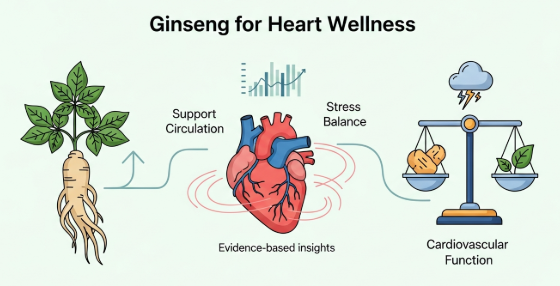
One major mechanism involves nitric oxide synthesis. Nitric oxide relaxes blood vessels. Consequently, it improves vascular dilation.
Ginsenosides, the active compounds in Korean ginseng, stimulate endothelial nitric oxide synthase (eNOS). Studies suggest:
- Increased NO production
- Improved flow-mediated dilation (FMD)
- Reduced arterial stiffness
A clinical study published in the Journal of Ginseng Research reported improved endothelial function after Korean red ginseng supplementation.
https://www.sciencedirect.com/science/article/pii/S1226845316300297
Thus, evidence supports the idea that ginseng may help regulate vascular tone naturally.
2. Antioxidant Protection
Oxidative stress damages endothelial cells. Free radicals reduce nitric oxide bioavailability.
However, Korean red ginseng contains:
- Ginsenosides Rg1, Rb1, Rg3
- Polyphenols
- Polysaccharides
These compounds reduce reactive oxygen species (ROS). Therefore, they protect endothelial integrity.
Research published on PubMed indicates antioxidant effects that support vascular health.
https://pubmed.ncbi.nlm.nih.gov/20016111/
3. Anti-Inflammatory Effects
Chronic inflammation contributes to endothelial dysfunction. Elevated cytokines impair vascular signaling.
Korean ginseng modulates inflammatory mediators such as:
- TNF-α
- IL-6
- NF-κB pathways
As a result, it may reduce endothelial activation and vascular inflammation.
The World Health Organization (WHO) recognizes Panax ginseng as a medicinal plant with immunomodulatory properties.
https://apps.who.int/medicinedocs/en/d/Js2200e/
4. Improvement in Circulation and Microvascular Flow
Some clinical trials show improved peripheral circulation with Korean red ginseng supplementation.
For example:
- Improved flow-mediated dilation
- Enhanced arterial compliance
- Better peripheral blood flow
These effects suggest that when asking, can ginseng improve endothelial function naturally, the answer may involve measurable vascular improvements.
Clinical Evidence Supporting Korean Red Ginseng
Several randomized controlled trials support vascular benefits.
Study Highlights
- Healthy adults: Improved FMD after 8 weeks of Korean red ginseng
- Hypertensive patients: Mild improvement in arterial stiffness
- Metabolic syndrome: Enhanced endothelial markers
A systematic review in Nutrients evaluated ginseng’s cardiovascular effects and found moderate supportive evidence.
https://www.mdpi.com/2072-6643/8/3/158
However, researchers emphasize that dosage, extract standardization, and patient condition influence outcomes.
Therefore, while results are promising, ginseng should complement—not replace—standard cardiovascular care.
How Korean Red Ginseng Differs from Other Ginseng Types
Not all ginseng varieties are equal.
Korean Red Ginseng (Panax ginseng)
- Steamed and dried
- Higher concentration of transformed ginsenosides
- Stronger vasodilatory effects
- Most studied for endothelial health
American Ginseng (Panax quinquefolius)
- More cooling in traditional classification
- Stronger glycemic effects
- Less robust endothelial research
Therefore, when evaluating whether can ginseng improve endothelial function naturally, most clinical evidence focuses on Korean red ginseng.
Safety, Dosage, and Medical Considerations
Although Korean ginseng is generally well tolerated, safety remains important.
Typical Clinical Dosage
- 1–3 grams of root daily
- 200–400 mg standardized extract
- Standardized to 3–6% ginsenosides
However, individual responses vary.
Possible Side Effects
- Mild insomnia
- Gastrointestinal discomfort
- Headache
Who Should Consult a Doctor First?
- Patients on anticoagulants
- Individuals with hypertension
- Pregnant or breastfeeding women
- Those taking diabetes medication
According to the NIH Office of Dietary Supplements, herbal supplements may interact with medications.
https://ods.od.nih.gov/factsheets/Ginseng-HealthProfessional/
Always consult a qualified healthcare provider before starting supplementation.
How to Choose High-Quality Korean Ginseng
Quality determines effectiveness.
Look for:
- Standardized ginsenoside content
- Transparent labeling
- Third-party testing
- Country of origin: Korea
- Proper steaming process (red ginseng)
Avoid products with:
- Artificial fillers
- Unknown sourcing
- Excessive health claims
Because endothelial health affects your heart, product integrity matters.
Practical Ways to Support Endothelial Function Naturally
Ginseng works best as part of a comprehensive strategy.
Combine Korean red ginseng with:
- Regular aerobic exercise
- Mediterranean-style diet
- Adequate sleep
- Stress reduction
- Smoking cessation
Endothelial health responds strongly to lifestyle. Therefore, ginseng should complement healthy habits.
Conclusion: Should You Try Korean Red Ginseng?
So, can ginseng improve endothelial function naturally? Current evidence suggests that Korean red ginseng may enhance nitric oxide production, reduce oxidative stress, and improve vascular function. Clinical trials show promising results, although more large-scale studies are needed.
If you care about your cardiovascular future, protecting your endothelium today matters. Healthy blood vessels support energy, circulation, and long-term vitality. Korean red ginseng offers a scientifically supported, traditional solution.
Choose high-quality, standardized Korean red ginseng. Verify sourcing. Consult your healthcare provider. Then take action.
Your heart works for you every second. Support it with proven botanical science.
Now is the time to invest in your vascular health. Choose premium Korean red ginseng and experience the difference.
🇰🇷 Premium Korean Ginseng Online Shop