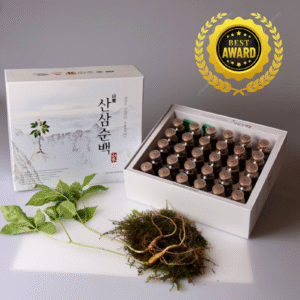
Korean ginseng, scientifically known as Panax ginseng, has been used in traditional Asian wellness practices for centuries. Today, researchers continue to study its active compounds, particularly ginsenosides, to better understand how Korean ginseng may support different aspects of health. One area of scientific interest is prostate health, including research involving benign prostatic hyperplasia, commonly known as BPH.
BPH is a noncancerous enlargement of the prostate that becomes increasingly common with age. Research into nutrition and botanical ingredients has explored whether certain plant compounds may influence biological pathways associated with prostate enlargement, inflammation, oxidative stress, hormone signaling, and cellular growth. Korean ginseng has attracted attention in this field because laboratory and animal studies have identified several potentially relevant biological activities.
One study published in the Saudi Journal of Biological Sciences in 2015 investigated a herbal formula containing Panax ginseng and bee pollen in testosterone induced BPH in male Wistar rats. The researchers reported that the formula reduced the development of prostate enlargement in the animal model. These findings suggest that the combination may influence biological mechanisms involved in experimentally induced prostate enlargement. However, because the study was conducted in rats, the results cannot be directly interpreted as proof that the same effects occur in humans.
Other animal studies have examined Panax ginseng itself. Research published in the Saudi Journal of Biological Sciences in 2018 investigated the effects of Panax ginseng in a testosterone induced BPH rat model. The study reported changes associated with nerve growth factor expression and suggested possible effects related to experimentally induced BPH symptoms. Again, this was preclinical research, so further human research is necessary before drawing conclusions about clinical benefits.
Research has also examined Korean red ginseng. A 2022 study published in the Journal of Ginseng Research investigated Korean red ginseng oil in a testosterone propionate induced BPH model. The researchers reported effects involving several biological markers and proposed possible mechanisms related to five alpha reductase activity, androgen signaling, and cellular proliferation. These findings provide additional scientific interest in Korean red ginseng, but they remain primarily preclinical evidence rather than evidence that Korean red ginseng can treat BPH in people.
A more recent study published in the Chinese Journal of Natural Medicines in 2024 examined Korean red ginseng in relation to experimentally induced BPH. The research focused on androgen receptor signaling and mitochondrial dynamics, including DRP1 mediated mitochondrial fission. The authors reported findings suggesting that Korean red ginseng may influence biological pathways associated with prostate enlargement in their experimental model.
These studies are important because they help researchers understand possible mechanisms. However, laboratory and animal research should not be confused with clinical evidence. A biological effect observed in cells or laboratory animals does not automatically mean that the same effect will occur in humans at commonly consumed doses.
Another area of research concerns alpha adrenergic receptors. A study published in the International Neurourology Journal investigated the influence of Panax ginseng on alpha adrenergic receptors in an experimental BPH model. The results suggested that Panax ginseng might influence alpha one adrenergic receptor activity. This is potentially relevant because alpha adrenergic signaling is involved in smooth muscle function in the lower urinary tract. Nevertheless, experimental findings are not sufficient to establish Korean ginseng as a treatment for prostate conditions.
The broader scientific literature also continues to investigate the possible effects of ginseng on inflammation, oxidative stress, cellular signaling, and metabolic processes. Ginsenosides, the characteristic saponins found in Panax ginseng, are among the compounds receiving significant scientific attention. Different ginsenosides may interact with different molecular pathways, which helps explain why researchers are interested in studying ginseng from several different perspectives.
It is also important to understand the difference between Korean ginseng and other plants commonly called ginseng. Korean ginseng refers to Panax ginseng. American ginseng is Panax quinquefolius, while Siberian ginseng is Eleutherococcus senticosus and is botanically different from true Panax ginseng. Their chemical compositions are not identical, so research on one type should not automatically be applied to another.
Korean ginseng is traditionally used as part of a broader wellness routine, particularly for supporting energy, stamina, vitality, and general wellbeing. Modern research has also investigated possible effects involving cognitive function, immune function, fatigue, and other areas. However, the strength of evidence differs considerably depending on the specific health outcome being studied.
For prostate health specifically, the current evidence presented in these studies is particularly notable for its concentration on laboratory and animal models. Several experimental studies have reported potentially interesting biological effects, but this does not establish that Korean ginseng prevents, reverses, or treats BPH in humans. Well designed human clinical trials are needed to determine whether the findings observed in experimental models translate into meaningful outcomes for people.
This distinction is especially important when reading online claims about herbal supplements. A study title containing words such as treatment, therapeutic effect, inhibition, or protective effect does not necessarily mean that a supplement has been clinically proven to treat a human disease. The type of study, study population, dosage, preparation of the ingredient, duration, and measured outcomes all need to be considered.
The same principle applies to research involving other health conditions. For example, animal studies have investigated American ginseng and experimentally induced diabetic kidney damage. One 2007 study published in the Journal of Agricultural and Food Chemistry examined American ginseng and heat processed American ginseng in diabetic rats. The researchers observed changes in several measures associated with kidney function and advanced glycation end product accumulation. These findings may help researchers understand biological mechanisms, but they should not be presented as proof that American ginseng treats diabetic kidney disease in humans.
For consumers, the practical role of Korean ginseng is therefore better considered within the context of general wellness rather than as a replacement for medical treatment. A person interested in taking Korean ginseng may choose to include it as part of a balanced lifestyle that also includes adequate sleep, regular physical activity, a nutritious diet, stress management, and appropriate medical care.
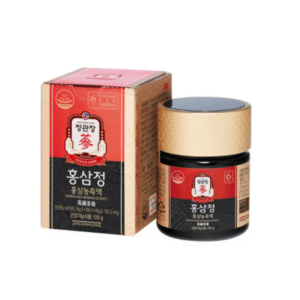
Korean ginseng is available in several forms, including fresh or dried roots, powders, teas, extracts, capsules, and other dietary supplement preparations. The amount and composition of ginsenosides can vary substantially between products. Processing methods can also change the chemical profile of ginseng. Korean red ginseng, for example, is produced through a processing method that differs from the preparation of fresh or white ginseng.
Quality is therefore an important consideration when choosing a ginseng product. Consumers should check the botanical identity, ingredient list, serving information, manufacturer, expiration date, and applicable quality or safety standards. Products should be used according to their labeled directions.
Research on the safety and tolerability of Korean red ginseng has also been conducted in healthy adults. A multicenter, double blind, randomized, placebo controlled trial published in the Journal of Ginseng Research in 2018 investigated the safety and tolerability of Korean red ginseng in healthy adults. Studies such as this are useful because understanding safety is an important part of evaluating any dietary supplement.
People who take prescription medications or have an existing medical condition should discuss supplement use with an appropriate healthcare professional. This is particularly important when considering supplements for a specific health concern or when taking multiple medications.
Overall, scientific research has created an interesting foundation for understanding the potential biological activities of Panax ginseng in relation to prostate health. Experimental studies involving testosterone induced BPH models have reported effects involving pathways such as androgen signaling, alpha adrenergic receptors, cellular proliferation, inflammation, nerve growth factor expression, and mitochondrial function.
At the same time, the available evidence described here should be interpreted carefully. Much of the research is preclinical, and findings from rats or laboratory experiments cannot automatically be translated into human health outcomes. More high quality human clinical research is needed to determine whether Korean ginseng has meaningful effects on prostate related symptoms or prostate enlargement in humans.
Korean ginseng remains an extensively studied traditional botanical ingredient with a long history of use. Its ginsenosides and other compounds continue to be investigated by researchers around the world. For consumers, the most responsible approach is to view Korean ginseng as a potential wellness ingredient while recognizing the current limitations of the evidence and avoiding claims that go beyond what clinical research has demonstrated.
If you are considering Korean ginseng as part of your daily wellness routine, choose a clearly labeled product from a reputable manufacturer and follow the recommended serving instructions. For persistent urinary symptoms, prostate concerns, or other medical issues, professional medical evaluation remains important because dietary supplements should not replace appropriate diagnosis or treatment.

🇰🇷 Premium Korean Ginseng Online Shop | SeoulGinseng.com
We’re a Korea-based online shop dedicated to authentic, premium Korean ginseng
Boost your health naturally with premium Korean ginseng!
🇰🇷 All orders are shipped directly from Korea with free worldwide shipping.
🎁 20% OFF Your Order — Use Code: vip20 — Limited to the First 3 Orders Each Day!