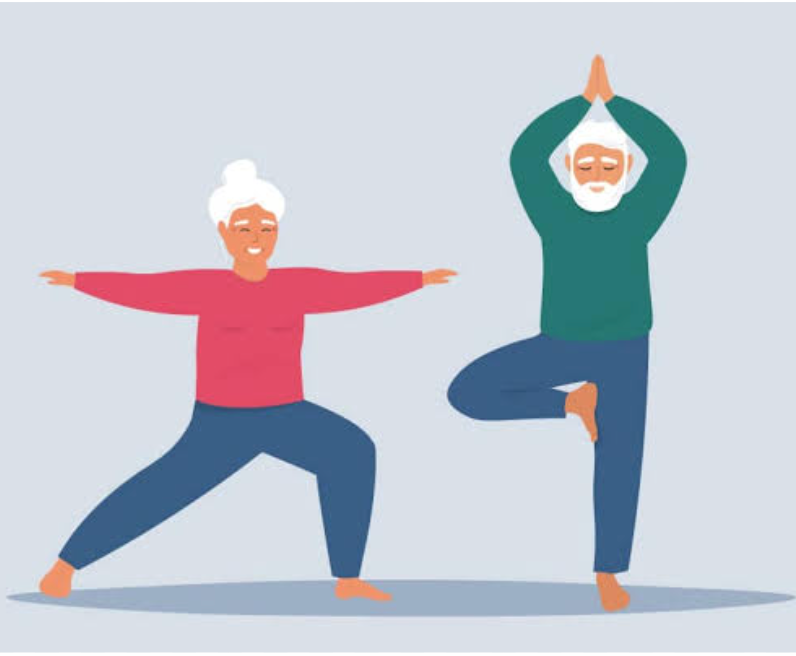
As people age, maintaining balance becomes increasingly important for staying mobile, independent, and confident in everyday life. Balance can change with age because of changes in muscle strength, vision, sensation, reaction time, coordination, and the body’s ability to respond quickly when stability is disrupted.
Balance training can help older adults improve balance, physical function, and the ability to respond to everyday movement challenges. It is also an important part of fall-prevention exercise programs. The strongest evidence supports balance-focused and multicomponent exercise for older adults, particularly those at increased risk of falling. The U.S. Preventive Services Task Force recommends exercise interventions for community-dwelling adults age 65 and older who are at increased risk for falls.
Balance training does not have to mean standing on one foot for long periods. Effective programs can include heel-to-toe walking, controlled weight shifting, getting up from a chair, tai chi, strength exercises, stepping practice, and exercises that challenge the body’s ability to recover from a loss of balance.

For healthy aging, the goal is not simply to “have good balance.” The broader goal is to maintain the ability to walk, turn, climb stairs, get out of a chair, carry objects, react to unexpected obstacles, and perform everyday activities safely and independently.
What Is Balance Training?
Balance training is physical activity designed to improve the body’s ability to maintain or regain stability while standing, walking, changing direction, shifting weight, or responding to movement.
Balance depends on several systems working together:
- Muscles and joints provide strength and physical control.
- The eyes provide information about the surrounding environment.
- The inner ear contributes information about head movement and orientation.
- Sensory receptors in the feet, joints, and muscles provide information about body position.
- The brain integrates these signals and coordinates movement.
- The nervous system produces rapid responses when balance is challenged.
A balance exercise may therefore involve much more than simply standing still.
For example, walking heel-to-toe challenges stability while moving. Standing from a chair requires leg strength, coordination, and postural control. Tai chi combines controlled weight shifting, movement, and body awareness. More advanced reactive balance exercises train the ability to recover after a sudden disturbance.
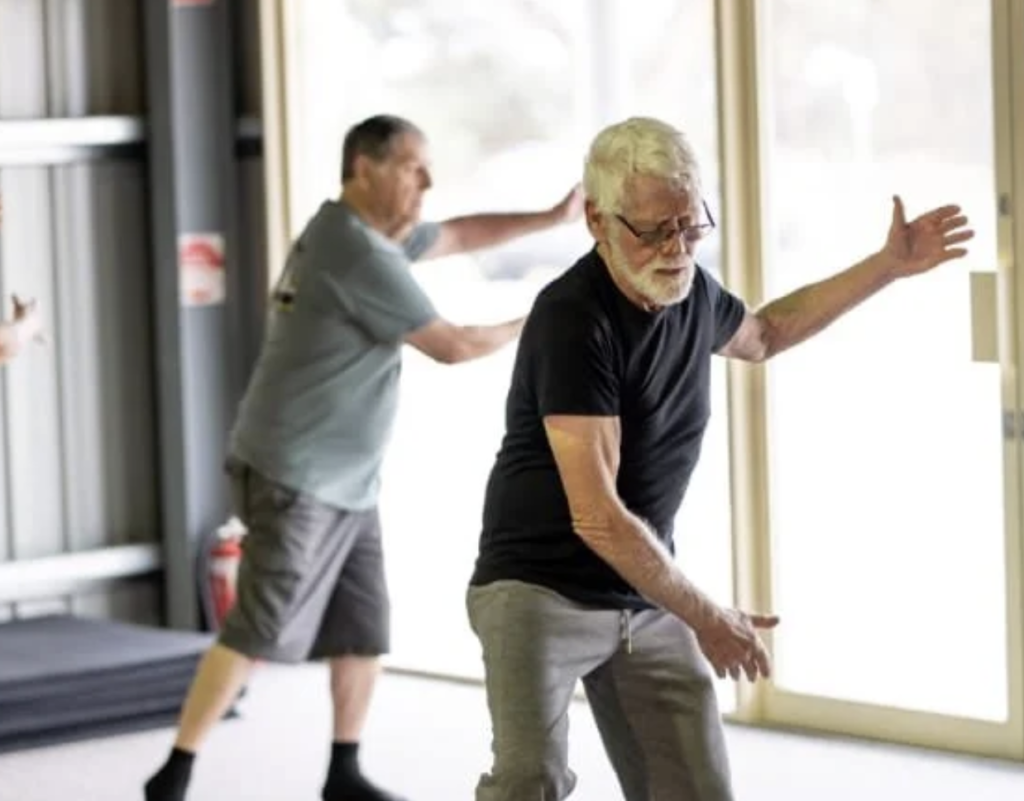
The CDC includes activities such as heel-to-toe walking and standing up from a sitting position among examples of balance activities for adults age 65 and older.
Why Does Balance Matter More With Aging?
Balance matters because everyday life constantly requires the body to control its position while moving.
A person may need to:
- Step over a curb.
- Turn quickly when someone approaches.
- Walk across an uneven sidewalk.
- Get out of a chair.
- Climb stairs.
- Reach into a cabinet.
- Carry groceries.
- Walk on a wet or unfamiliar surface.
- Recover after catching a toe on a rug.
- Move through a crowded room.
A small loss of stability may be harmless when a younger person quickly corrects it. With aging, however, slower reactions, reduced muscle strength, sensory changes, or other factors can make recovery more difficult.
Falls are a major health concern in the United States. The CDC reports that more than 14 million, or about 1 in 4, adults age 65 and older report falling each year. Falls are the leading cause of injury among adults in this age group.
Importantly, falling is not an inevitable part of aging. Many fall-risk factors can be modified, and exercise is one of the better-supported strategies for reducing falls among older adults at increased risk.
What Are the Benefits of Balance Training for Older Adults?
Balance training may improve several aspects of physical function, including balance performance, mobility, coordination, and confidence during movement.
The evidence is strongest when balance training is considered as part of a broader exercise program rather than as an isolated activity.
Better Balance and Postural Control
Research consistently indicates that appropriately designed exercise can improve measures of balance in older adults.
A systematic review and meta-analysis of sensorimotor and proprioceptive exercise programs found significant improvements across several commonly used balance measures, including the Berg Balance Scale, Timed Up and Go test, Tinetti balance scale, functional reach, and single-leg stance. The researchers also noted that the studies varied in quality and training methods.
This means balance training can improve measurable aspects of postural control, although the size of the improvement depends on the type, frequency, duration, and difficulty of the exercise.
Reduced Risk of Falls
Fall prevention is one of the most important reasons balance training is recommended for older adults.
The 2024 USPSTF recommendation found that exercise interventions reduce falls among community-dwelling adults age 65 and older who are at increased risk. In its evidence review, exercise programs were commonly composed of gait, balance, and functional training, with many programs also including strength or resistance training.
Across 29 trials involving 14,475 participants, the USPSTF evidence review found that exercise was associated with a lower rate of falls at the longest follow-up. Exercise was also associated with fewer people experiencing at least one fall and fewer injurious falls. The evidence did not show a significant reduction in fall-related fractures or all-cause mortality.
That distinction is important. Exercise can reduce fall risk, but it should not be described as eliminating the possibility of falling or preventing every serious consequence of a fall.
Better Mobility
Balance and mobility are closely connected.
Walking requires continuous adjustments in body position. Turning, stopping, starting, stepping over objects, and changing speed all require coordination between balance, strength, and sensory information.
Resistance exercise can also contribute to better gait and balance. Research examining resistance training in older adults has found improvements in several measures of balance and functional performance.
For this reason, a well-rounded healthy-aging exercise program generally should not focus on balance alone.
Greater Functional Independence
Functional independence means being able to perform ordinary activities without unnecessary assistance.
Balance contributes to activities such as:
- Dressing.
- Bathing.
- Walking around the home.
- Getting into and out of a car.
- Shopping.
- Preparing meals.
- Using stairs.
- Walking outdoors.
- Participating in social activities.
The CDC notes that regular physical activity can help older adults maintain muscle strength and continue performing day-to-day activities without becoming dependent on others.
Balance training is therefore not merely about improving a laboratory test. Its practical purpose is to help maintain the physical abilities needed for everyday life.
Better Confidence During Movement
Fear of falling can lead some older adults to reduce their activity.
That can create a difficult cycle:
Less activity can contribute to reduced strength and physical capacity, which may make movement more difficult, potentially increasing concern about falling.
Exercise programs can help people become more comfortable with movement while improving physical capabilities. Tai chi, for example, has been studied extensively in older adults. A 2023 systematic review and meta-analysis of 24 randomized controlled trials found that tai chi improved several balance measures and reduced falls in the studied populations.
Confidence, however, should not be confused with assuming that all activities are safe. Good balance training gradually develops physical ability while maintaining appropriate safety.
Can Balance Training Slow the Effects of Aging?
Balance training cannot stop biological aging, but regular physical activity can help maintain physical function as people get older.
The U.S. Physical Activity Guidelines recommend that older adults include multicomponent physical activity that combines aerobic activity, muscle strengthening, and balance training.
This reflects an important principle of healthy aging: physical function is influenced by several abilities at once.
A person may have strong legs but poor balance. Another person may have good cardiovascular fitness but difficulty getting up from a chair. Someone else may have good static balance but struggle to recover after an unexpected trip.
Aging well therefore involves maintaining several forms of physical capacity rather than pursuing a single fitness measure.
What Types of Balance Training Are Best for Older Adults?
There is no single balance exercise that is best for everyone.
The most appropriate exercise depends on current balance ability, strength, mobility, health conditions, previous falls, and experience.
Common forms of balance training include:
Static Balance Exercises
Static balance exercises involve maintaining stability while the body remains relatively still.
Examples include:
- Standing with feet close together.
- Semi-tandem stance.
- Tandem stance.
- Supported single-leg standing.
- Standing while gradually reducing reliance on the hands.
These exercises can be useful for beginners because difficulty can be increased gradually.
A person should generally begin with an appropriate stable support nearby rather than immediately attempting unsupported one-leg standing.
Dynamic Balance Exercises
Dynamic balance involves maintaining stability while moving.
Examples include:
- Heel-to-toe walking.
- Side stepping.
- Backward stepping.
- Controlled marching.
- Step-ups.
- Turning exercises.
- Walking around obstacles.
- Reaching in different directions.
Dynamic exercises are particularly relevant to daily life because people rarely remain perfectly still while performing ordinary activities.
Functional Balance Training
Functional balance exercises combine balance with everyday movements.
Examples include:
- Sit-to-stand exercises.
- Step-ups.
- Reaching from a standing position.
- Picking up an object safely.
- Getting up and walking after sitting.
- Turning and changing direction.
- Carrying a light object while walking.
The USPSTF found that gait, balance, and functional training were among the most common components of exercise programs studied for fall prevention.
Tai Chi
Tai chi uses slow, controlled movements, weight shifting, posture, and coordination.
It can be an appealing option for older adults who prefer a group activity or mind-body exercise.
A 2023 meta-analysis of 24 randomized controlled trials found that tai chi reduced falls and improved several measures of balance in older adults. However, as with any meta-analysis, differences between individual programs and participants mean the results should not be interpreted as proof that every tai chi program will produce the same effect.
Yoga
Yoga can include balance, flexibility, strength, and body-awareness components.
For older adults, modifications may be appropriate. Exercises involving difficult poses or unsupported positions should be adapted to the individual’s ability.
Reactive Balance Training
Reactive balance is the ability to recover after an unexpected disturbance.
For example, if your foot catches on an uneven surface, the body needs to react quickly to prevent a fall.
Reactive balance training can include carefully controlled stepping responses and other exercises designed to challenge recovery reactions.
This type of training should not normally be improvised by someone with significant fall risk. A 2026 systematic review found that perturbation-based balance training reduced falls and injurious falls in community-dwelling adults age 65 and older, but the certainty of evidence for some outcomes was low and researchers emphasized the need for further high-quality studies.
How Often Should Older Adults Do Balance Exercises?
For adults age 65 and older, U.S. guidance recommends including balance activities as part of weekly physical activity, alongside aerobic and muscle-strengthening exercise.
The World Health Organization recommends that older adults with poor mobility perform physical activity that emphasizes balance and fall prevention on at least 3 days per week.
The important point is that balance training does not need to be a long standalone workout.
A practical weekly routine might include:
- Balance practice several days per week.
- Strength training at least 2 days per week.
- Regular walking or other aerobic activity.
- Mobility and flexibility work as appropriate.
The exact amount should be adjusted to the person’s abilities and health conditions.
Older adults who cannot meet the standard activity targets because of chronic conditions should still be as physically active as their abilities and conditions allow.
What Are Good Balance Exercises for Beginners?
Beginners should start with exercises that can be performed safely and controlled.
Exercise 1: Supported Standing
Stand behind a sturdy chair and keep both hands available for support.
Stand upright with your feet comfortably positioned. Gradually reduce the amount of support used if you can do so safely.
The objective is controlled posture rather than standing for a specific amount of time.
Exercise 2: Heel-to-Toe Walking
Walk slowly in a straight line while placing one foot directly or nearly directly in front of the other.
Use a wall, countertop, railing, or another stable support if necessary.
This exercise challenges dynamic balance and coordination.
Exercise 3: Side Stepping
Step slowly to one side, bring the other foot toward it, and repeat.
Sideways movement is useful because daily life does not involve walking only straight ahead.
Exercise 4: Sit-to-Stand
Sit in a sturdy chair and stand up under control. Then slowly sit back down.
This is primarily a functional strength exercise, but it also requires postural control.
If the exercise is difficult, use a higher chair or appropriate hand support.
Exercise 5: Supported Single-Leg Standing
Hold a sturdy support and briefly lift one foot from the floor.
The goal is not to see how long you can stand on one leg. The goal is controlled weight shifting while maintaining safety.
Exercise 6: Controlled Weight Shifting
Stand with appropriate support nearby and gradually shift your weight from side to side or forward and backward.
This can help beginners become more comfortable controlling their center of mass.
How Can You Progress Balance Training?
Balance exercises should become more challenging gradually.
Possible progression can include:
- Increasing the duration of a position.
- Reducing hand support.
- Narrowing the base of support.
- Adding controlled movement.
- Changing direction.
- Adding simple reaching.
- Practicing movement in different environments.
- Eventually introducing more challenging reactive exercises under appropriate supervision.
Progression should not mean making an exercise unnecessarily dangerous.
A useful principle is challenge without losing control.
If an exercise repeatedly causes stumbling, excessive swaying, pain, dizziness, or fear, it may be too difficult at the current level.
Should Balance Training Be Combined With Strength Training?
Yes. For healthy aging, balance training is generally more useful when combined with strength and aerobic activity.
The CDC recommends that adults age 65 and older include aerobic activity, muscle-strengthening activity on at least 2 days per week, and balance activities.
This combination makes practical sense because balance depends partly on the ability to generate and control movement.
Strong legs help with:
- Standing from a chair.
- Climbing stairs.
- Walking.
- Recovering from a trip.
- Controlling the body during changes of direction.
Research also supports the relationship between resistance exercise and balance. Meta-analyses have reported improvements in several balance measures following resistance exercise in older adults.
However, strength training should not automatically replace balance-specific practice. Different forms of exercise address different physical abilities.
Does Walking Improve Balance?
Walking is excellent physical activity, but ordinary walking does not necessarily provide enough balance challenge for everyone.
Walking supports cardiovascular fitness, muscular endurance, mobility, and general physical activity. However, a person can walk regularly and still have difficulty with narrow-base positions, rapid turns, uneven surfaces, or recovering from an unexpected disturbance.
For this reason, older adults may benefit from combining walking with specific balance and strength exercises.
The CDC specifically recommends a combination of aerobic, muscle-strengthening, and balance activities for older adults.
Is Balance Training Enough to Prevent Falls?
No.
Balance training is important, but falls usually have multiple contributing factors.
The CDC identifies several fall-risk factors, including lower-body weakness, difficulty walking and balancing, vision problems, certain medications, foot problems, and hazards in the home.
A comprehensive fall-prevention approach may therefore involve:
- Exercise.
- Strength training.
- Balance and gait training.
- Vision care.
- Medication review.
- Appropriate footwear.
- Home safety.
- Management of relevant medical conditions.
- Assessment of dizziness or blood-pressure-related symptoms when appropriate.
The CDC’s STEADI initiative uses a similar framework: screen for fall risk, assess modifiable risk factors, and intervene with appropriate strategies.
What Is the Connection Between Balance, Vision, and Aging?
Vision provides important information for maintaining orientation and navigating the environment.
Changes in vision can therefore contribute to difficulty moving safely.
The CDC notes that vision impairment is associated with fall risk and recommends appropriate eye care, safe footwear, strength and balance exercises, and home-safety measures for older adults.
This does not mean that balance problems are caused only by poor eyesight. Balance is a multisystem process involving vision, the vestibular system, sensory feedback, strength, coordination, and the nervous system.
When several of these systems become less effective simultaneously, maintaining stability can become more difficult.
How Do Medications Affect Balance and Falls?
Some medications can increase fall risk by causing side effects such as dizziness, drowsiness, confusion, changes in blood pressure, or impaired coordination.
The CDC specifically highlights medication-related fall risk in its STEADI resources and recommends medication review when appropriate.
Older adults should not stop prescription medications on their own.
If dizziness, unusual sleepiness, weakness, blurred vision, or balance problems begin after starting or changing a medication, discuss the symptoms with a healthcare professional or pharmacist.
Medication review can be particularly important when a person takes multiple medications.
Does Nutrition Matter for Balance and Healthy Aging?
Nutrition does not replace balance exercise, but adequate nutrition supports the muscles, bones, nervous system, and overall physical capacity needed for movement.
A balanced diet for older adults generally includes adequate:
- Protein.
- Fruits and vegetables.
- Whole grains.
- Healthy fats.
- Calcium-rich foods or appropriate alternatives.
- Vitamin D from food, sunlight exposure where appropriate, or supplementation when medically indicated.
- Fluids.
Nutrition needs vary considerably between individuals.
Vitamin D is sometimes discussed specifically in connection with falls, but supplementation should not be presented as a universal fall-prevention strategy. The 2024 USPSTF recommendation on exercise and multifactorial interventions did not address vitamin D as part of its current recommendation and noted that evidence questions around supplementation require separate consideration.
The practical priority is an adequate overall diet and individualized management of nutritional deficiencies rather than relying on a single supplement.
Can Balance Training Improve Brain Health?
Physical activity is associated with benefits for brain health, and some forms of balance-focused exercise, such as tai chi, have been studied in relation to cognitive and psychological outcomes.
A systematic review of systematic reviews found that tai chi research in older adults reported improvements across a number of physical, psychological, cognitive, and quality-of-life outcomes, although some pooled findings were inconclusive and additional high-quality research was recommended.
It would therefore be too strong to say that balance training prevents dementia or guarantees better cognitive health.
A more accurate conclusion is that regular physical activity, including activities that combine movement, coordination, and balance, can be part of a broader healthy-aging lifestyle.
What Is the Difference Between Static and Dynamic Balance?
Static balance is the ability to maintain stability while the body is relatively stationary.
Examples include standing with the feet together or maintaining a supported single-leg position.
Dynamic balance is the ability to maintain stability while moving.
Examples include walking, turning, stepping sideways, reaching, or changing direction.
Both matter in daily life.
Someone may perform well during a stationary balance test but still lose balance when turning quickly. Conversely, someone may walk comfortably but have difficulty maintaining a narrow stance.
Effective balance programs therefore often use several types of movement.
What Is Proprioception and Why Does It Matter?
Proprioception is the body’s ability to sense the position and movement of its body parts.
For example, you do not need to look constantly at your feet to know where your legs are positioned while walking.
Information from muscles, joints, skin, and other sensory receptors contributes to this internal sense of body position.
Proprioceptive and sensorimotor exercise has been studied as a way of improving balance in older adults. A systematic review and meta-analysis found significant improvements in multiple balance outcomes following these types of interventions, although the included studies were generally of only fair methodological quality.
This is another reason balance is more complex than simply having strong muscles.
Does Tai Chi Help With Balance and Falls?
Yes. Research suggests that tai chi can improve balance and may reduce falls in older adults.
A systematic review and meta-analysis of 24 randomized controlled trials reported lower fall risk and improvements in several balance and mobility measures among older adults participating in tai chi programs.
Tai chi may be particularly appealing because it combines balance, controlled movement, coordination, and weight shifting in a relatively low-impact format.
However, people with significant mobility limitations or high fall risk may need an adapted program and should not assume that every class is appropriate for them.
Can Balance Training Be Done at Home?
Yes, many basic balance exercises can be performed at home.
However, the environment should be arranged to reduce the possibility of falling.
A safer home setup may include:
- A sturdy chair or countertop for support.
- Adequate lighting.
- Clear walking space.
- No loose rugs or clutter nearby.
- Supportive footwear.
- A second person nearby if the exercise is difficult or the person has substantial fall risk.
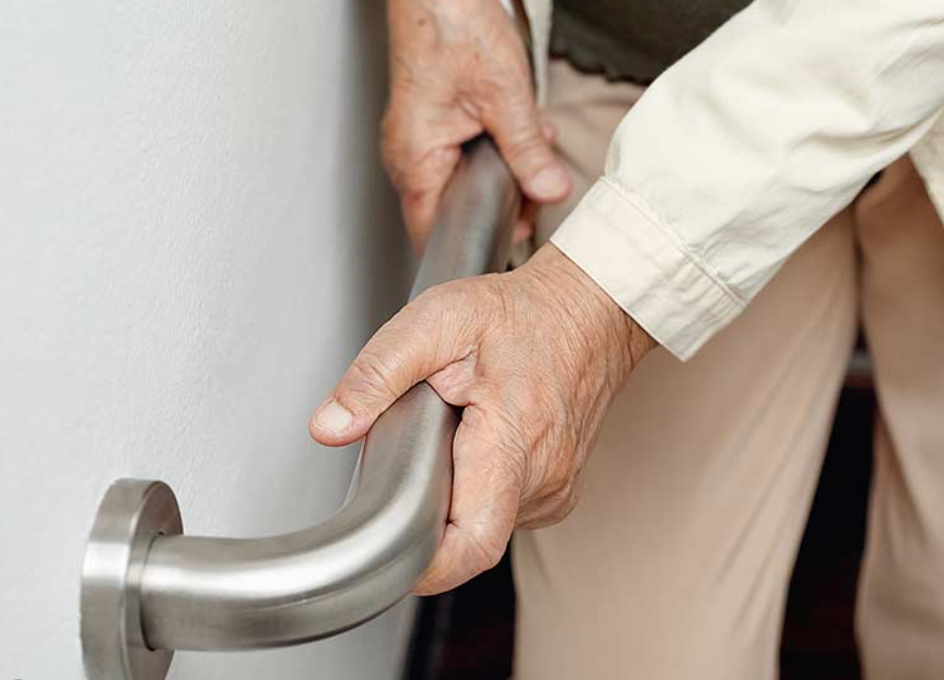
The CDC recommends addressing home hazards such as loose rugs, clutter, poor lighting, and unsafe stairs as part of fall prevention.
A person who already has significant balance problems may benefit from assessment by a physical therapist before attempting challenging exercises independently.
A Simple Beginner Balance Routine
A basic routine can be built around several movement categories.
Beginner Level
Start with:
- Supported standing.
- Gentle weight shifting.
- Side stepping.
- Sit-to-stand.
- Slow marching while holding stable support.
- Short periods of heel-to-toe walking with support available.
Perform movements slowly and focus on control.
Intermediate Level
As control improves, consider:
- Less hand support.
- Longer heel-to-toe walking.
- Controlled turns.
- Step-ups.
- Reaching while standing.
- More challenging weight shifts.
- Tai chi or another supervised balance class.
Advanced Level
More challenging exercises might include:
- Faster controlled direction changes.
- More complex stepping patterns.
- Reduced visual input under professional supervision.
- Reactive stepping.
- Perturbation-based balance exercises.
- Sport-specific balance activities.
Advanced balance exercises should not be treated as a competition. A more difficult exercise is not automatically more beneficial if it creates unnecessary fall risk.
A Practical Weekly Healthy-Aging Exercise Plan
A balanced week might look like this:
Monday
Walking or another aerobic activity plus short balance practice.
Tuesday
Strength training involving the major muscle groups.
Wednesday
Walking plus balance exercises or tai chi.
Thursday
Recovery, light activity, or mobility work.
Friday
Strength training plus short balance practice.
Saturday
Walking, recreational activity, dancing, or another enjoyable form of movement.
Sunday
Light activity and optional balance practice.
This is an example rather than a medical prescription.
The U.S. guidelines emphasize at least 150 minutes of moderate-intensity aerobic activity per week for adults, muscle-strengthening activity on at least 2 days per week, and multicomponent activity including balance for older adults.
People with chronic conditions, significant mobility limitations, recent injuries, or other health concerns may require a modified plan.
Common Mistakes in Balance Training
Trying to Stand on One Leg Immediately
Single-leg standing can be useful, but it is not a requirement for beginners.
Starting with an exercise that is too difficult can increase the chance of losing balance.
Training Balance Without Strength
Balance depends partly on the ability to generate and control movement.
A comprehensive program should usually include strength training as well as balance practice.
Practicing Only While Standing Still
Daily life involves walking, turning, reaching, stepping, and changing direction.
Dynamic and functional balance exercises can therefore be important additions.
Exercising Without a Safe Support
People sometimes assume that using a chair or countertop means an exercise is less effective.
For someone at risk of falling, stable support can make training safer and allow appropriate practice.
Progressing Too Quickly
Balance adaptations take time.
Increasing difficulty before a person has adequate control can turn useful exercise into unnecessary risk.
Ignoring Dizziness
Dizziness is not simply a sign of poor balance.
New, persistent, severe, or unexplained dizziness should be medically evaluated rather than treated solely with balance exercises. The National Institute on Aging recommends seeking medical evaluation when an older adult thinks they have a balance problem.
Treating Balance as the Only Fall Risk
Exercise is important, but vision, medications, footwear, home hazards, medical conditions, and other factors may also contribute to falls.
Common Misconceptions About Balance and Aging
Myth: Losing Balance Is Just a Normal Part of Getting Older
Some changes in physical function occur with aging, but substantial or worsening balance problems should not simply be dismissed as inevitable.
Balance problems can have many causes, and some can be addressed.
Myth: You Need to Do Difficult Exercises to Improve Balance
Not necessarily.
Effective training should be appropriately challenging, but difficulty should match the person’s ability.
Myth: Walking Alone Is Enough
Walking is valuable, but it does not necessarily challenge all aspects of balance.
Adding strength and balance-specific activities can provide a more complete exercise program.
Myth: Balance Training Is Only for People Over 65
No.
Balance is useful throughout adulthood. Building strength, coordination, and movement skills earlier in life can support physical function later.
Myth: Balance Training Prevents All Falls
No exercise can guarantee that a person will never fall.
The evidence supports exercise as a fall-prevention strategy, particularly among older adults at increased risk, but falls have multiple causes and can still occur.
Myth: More Exercise Is Always Better
More physical activity can provide additional benefits, but excessive difficulty, poor recovery, or unsafe exercise can increase injury risk.
The appropriate amount depends on the person’s health, fitness, and goals.
Who Should Be Especially Careful With Balance Exercises?
People should use additional caution if they:
- Have fallen recently.
- Frequently feel unsteady.
- Have significant dizziness.
- Have unexplained fainting or near-fainting.
- Have a new neurological symptom.
- Have severe vision problems.
- Have significant weakness.
- Have a recent surgery or injury.
- Have a medical condition that limits exercise.
- Take medications that may affect alertness or blood pressure.
- Cannot safely stand without substantial support.
People with significant balance problems may benefit from evaluation by a physician or physical therapist.
The USPSTF recommendation specifically concerns community-dwelling adults age 65 and older who are at increased risk for falls. It does not apply to every person with every medical condition, and some neurological or complex conditions require more specialized care.
When Should an Older Adult Talk to a Healthcare Professional?
An evaluation is appropriate when balance problems are new, worsening, recurrent, or interfering with daily life.
It is particularly important to seek medical attention after:
- Repeated falls.
- A fall causing significant injury.
- New or severe dizziness.
- Fainting or near-fainting.
- Sudden weakness.
- New difficulty walking.
- New vision changes.
- New numbness or neurological symptoms.
- A major change in coordination.
The National Institute on Aging advises older adults who think they have a balance problem to schedule an appointment with a healthcare professional.
A healthcare professional may assess gait, balance, vision, medications, blood pressure, strength, and other possible contributors.
How Can Families Help Older Adults With Balance Training?
Family members can support healthy aging without making the older adult feel incapable.
Helpful strategies include:
- Encourage regular physical activity.
- Help create a safe exercise area.
- Remove obvious household hazards.
- Encourage appropriate footwear.
- Offer transportation to exercise classes.
- Ask whether the person has experienced falls or unsteadiness.
- Encourage medical evaluation when balance changes.
- Support gradual progress rather than demanding difficult exercises.
The objective should be to preserve independence rather than unnecessarily restrict activity.
What Does the Evidence Actually Show?
The overall evidence supports exercise as an important component of fall prevention and physical-function maintenance in older adults.
The 2024 USPSTF review is particularly important because it evaluated randomized trials and found that exercise interventions reduced falls among community-dwelling older adults at increased risk. Most programs included gait, balance, and functional training, and many also incorporated strength training.
Research on specific forms of balance training is also encouraging:
- Sensorimotor and proprioceptive exercise has improved several balance measures in meta-analysis, although study quality was generally fair.
- Tai chi has been associated with improved balance and fewer falls in randomized-trial meta-analysis.
- Reactive balance training has shown reductions in falls, although some evidence remains limited and training can produce more minor adverse events than control conditions.
- Resistance exercise can improve several measures of balance and physical function.
At the same time, research does not establish one universal balance exercise, one perfect training schedule, or one program that is appropriate for every older adult.
The evidence supports a broader principle: regular, appropriately challenging, multicomponent physical activity is an important part of healthy aging, and balance training deserves a specific place within that program.
Frequently Asked Questions
What is balance training for older adults?
Balance training is exercise that helps a person maintain or regain stability while standing or moving. It can include heel-to-toe walking, weight shifting, sit-to-stand movements, tai chi, stepping exercises, and other activities that challenge postural control.
Is balance training good for aging?
Yes. Balance training can help maintain balance and physical function as people age. It is also an important component of exercise programs designed to reduce falls in older adults at increased risk.
How often should seniors do balance exercises?
Older adults should include balance activities as part of their regular physical activity. The World Health Organization recommends balance-focused activity at least 3 days per week for older adults with poor mobility, while U.S. guidelines recommend including balance activities as part of multicomponent exercise.
What is the best exercise for balance in older adults?
There is no single best exercise for everyone. Effective options include functional balance exercises, strength training, tai chi, gait exercises, and appropriately progressed reactive balance exercises. The best choice depends on ability, health status, fall risk, and personal preference.
Does balance training reduce falls?
Yes. Evidence from randomized trials indicates that exercise interventions can reduce falls among community-dwelling adults age 65 and older who are at increased risk.
Can you improve balance after age 60?
Yes. Research shows that older adults can improve several measures of balance and physical function through appropriately designed exercise programs. Improvements are not limited to younger adults.
Is walking enough to improve balance?
Walking is valuable physical activity, but it may not challenge every aspect of balance. Adding balance-specific and strength exercises can provide a more comprehensive approach to healthy aging.
Does tai chi improve balance in seniors?
Research suggests that tai chi can improve several measures of balance and reduce falls in older adults. A meta-analysis of 24 randomized controlled trials found benefits for falls and multiple balance-related outcomes.
Can balance exercises be done at home?
Yes. Basic exercises such as supported standing, weight shifting, side stepping, and sit-to-stand movements can be performed at home. The exercise area should be free of hazards and have stable support available.
Should older adults do balance training every day?
Not necessarily. Balance activities can be included frequently, but the appropriate schedule depends on the person’s ability and the difficulty of the exercises. For older adults with poor mobility, WHO recommends balance-focused activity at least 3 days per week.
What if an older person is already afraid of falling?
Fear of falling should be taken seriously, but avoiding all activity can reduce physical capacity. A gradual, supervised exercise program can help build physical ability and confidence while maintaining safety. A physical therapist or other qualified professional can help determine an appropriate starting level.
What should someone do if balance suddenly gets worse?
New or worsening balance problems should not automatically be treated as an exercise issue. Medical evaluation may be appropriate, particularly when balance changes are accompanied by dizziness, fainting, weakness, numbness, vision changes, or difficulty walking.
A Practical Takeaway for Healthy Aging
Balance is a trainable component of physical function, and maintaining it becomes increasingly valuable with age.
For most older adults, the goal should not be to perform impressive balancing tricks. A more useful goal is to maintain the physical abilities needed for everyday independence.
A well-rounded approach includes:
- Regular walking or other aerobic activity.
- Strength training at least twice a week.
- Balance practice several days a week.
- Functional movements such as sit-to-stand and stepping.
- Gradual progression.
- Appropriate footwear and a safe environment.
- Regular attention to vision and medication-related fall risks.
- Medical evaluation when balance problems are new or significant.
The evidence does not support the idea that balance training can eliminate all falls or stop aging. It does support balance and multicomponent exercise as practical tools for maintaining physical function and reducing fall risk in appropriate older adults.
Healthy aging is not simply about living longer. It also involves preserving the ability to move, adapt, participate, and remain as independent as possible. Balance training is one part of that larger picture.
Related Topical Cluster
1. Strength Training for Older Adults: Benefits, Safety, and Beginner Exercises
Search intent: Learn why strength training matters with aging and how to start safely.
Primary keyword: strength training for older adults
Suggested anchor text: strength training for older adults
Why it is relevant: Strength is closely connected with balance, mobility, sit-to-stand ability, and fall prevention.
2. Walking and Healthy Aging: How Much Walking Do Older Adults Need?
Search intent: Understand how walking contributes to healthy aging and physical activity.
Primary keyword: walking and healthy aging
Suggested anchor text: walking and healthy aging
Why it is relevant: Walking provides aerobic activity and mobility benefits but can be complemented by balance-specific exercise.
3. Exercises to Prevent Falls in Older Adults
Search intent: Find practical evidence-based exercises that may reduce fall risk.
Primary keyword: exercises to prevent falls in older adults
Suggested anchor text: exercises to prevent falls
Why it is relevant: This is a closely related practical application of balance and functional training.
4. Tai Chi for Older Adults: Benefits, Balance, and Fall Prevention
Search intent: Determine whether tai chi is useful for balance and healthy aging.
Primary keyword: tai chi for older adults
Suggested anchor text: tai chi for older adults
Why it is relevant: Tai chi is one of the most studied mind-body activities for balance and falls.
5. Fall Prevention for Seniors: A Complete Home Safety Guide
Search intent: Understand how to reduce environmental and lifestyle fall risks.
Primary keyword: fall prevention for seniors
Suggested anchor text: fall prevention for seniors
Why it is relevant: Exercise is only one part of fall prevention; home hazards, vision, medications, and footwear also matter.
6. How to Improve Mobility as You Age
Search intent: Learn how to preserve walking, flexibility, strength, and everyday movement.
Primary keyword: improve mobility as you age
Suggested anchor text: improve mobility as you age
Why it is relevant: Mobility and balance are closely interconnected components of physical independence.
7. Exercise and Healthy Aging: What the Research Shows
Search intent: Understand how regular physical activity affects aging and long-term function.
Primary keyword: exercise and healthy aging
Suggested anchor text: exercise and healthy aging
Why it is relevant: Provides broader context for balance training within an overall physical activity program.
8. How to Maintain Muscle Strength After 60
Search intent: Find practical strategies for maintaining muscle and physical capacity later in life.
Primary keyword: maintain muscle strength after 60
Suggested anchor text: maintain muscle strength after 60
Why it is relevant: Lower-body strength contributes to mobility, balance, and the ability to recover from instability.
9. Vision and Fall Risk in Older Adults
Search intent: Understand the relationship between eyesight and falling.
Primary keyword: vision and fall risk in older adults
Suggested anchor text: vision and fall risk
Why it is relevant: Vision is an important component of balance and environmental awareness.
10. How to Stay Independent as You Get Older
Search intent: Learn how exercise and lifestyle habits can support physical independence.
Primary keyword: how to stay independent as you age
Suggested anchor text: staying independent as you age
Why it is relevant: Independence is the practical outcome connecting balance, strength, mobility, and fall prevention.

🇰🇷 Premium Korean Ginseng Online Shop
We’re a Korea-based online shop dedicated to authentic, premium Korean ginseng
Boost your health naturally with premium Korean ginseng!
🇰🇷 All orders are shipped directly from Korea with free worldwide shipping.
🎁 20% OFF Your Order — Use Code: vip20 at Checkout— Limited to the First 3 Orders Each Day!