
You’re not alone if you’ve ever felt that familiar afternoon crash—your focus slips, your body feels slow, and your brain fog thickens just when you need clarity the most. Whether you’re a busy professional juggling deadlines, a parent navigating endless tasks, or someone simply trying to stay energized without overrelying on caffeine, modern fatigue is real.
This is where ginseng supplements for energy are increasingly showing up in conversations. Used for centuries in traditional Asian medicine and backed by growing scientific research, ginseng offers a more sustainable approach to energy—one that works with your body rather than pushing it into overdrive.
Before we go deeper, let’s ground everything in safety and evidence.
Important Health Disclaimer
The information provided in this article is for educational purposes only and is not a substitute for professional medical advice, diagnosis, or treatment. Always consult with your physician or another qualified health provider before starting any new dietary supplement—especially if you are pregnant, nursing, taking medications (including blood thinners, diabetes drugs, stimulants, or immunosuppressants), or have a health condition.
Understanding Energy: It’s More Than Just Feeling “Awake”
Energy isn’t only about alertness. It’s a combination of physical stamina, mental clarity, and the ability to stay resilient under stress.
Mitochondria: Your Cellular Power Plants
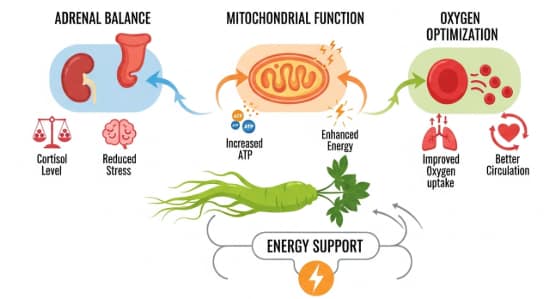
Your cells’ mitochondria produce ATP, the molecule that fuels everything from muscle contraction to brain activity. When ATP production slows, fatigue kicks in.
Some studies suggest that compounds in ginseng—particularly ginsenosides—may influence mitochondrial function and support more efficient energy production. A review in the Journal of the International Society of Sports Nutrition found that Panax ginseng may enhance exercise performance partly through its impact on oxidative metabolism.
The Stress–Energy Connection: How Cortisol Drains Your Tank
Chronic stress elevates cortisol, which:
- Wears down the adrenal system
- Disrupts sleep patterns
- Reduces mental stamina
- Creates persistent fatigue
But what if your energy source could also help you manage stress?
This is where ginseng’s role as an adaptogen becomes crucial.
The Science of Sustained Energy: How Ginseng Actually Works
Ginseng helps build energy from the ground up, not just by stimulating you—but by supporting the systems that create and sustain vitality.
Ginsenosides: The Active Drivers of Cellular Vitality
The star compounds in Panax ginseng are ginsenosides, which:
- Support ATP generation
- Reduce oxidative stress
- Improve blood flow, delivering oxygen to muscles
- Influence neurotransmitters tied to mental energy
A study in the Journal of Ginseng Research found that ginsenosides contribute to improved psychomotor performance and reduced mental fatigue.
Supporting Adrenal Function & Balancing Stress Hormones
Unlike caffeine, which jolts your system, ginseng affects the HPA axis—your body’s stress-response network.
This may:
- Support healthier cortisol rhythms
- Reduce stress-induced fatigue
- Improve emotional resilience
- Promote steadier daily energy
This is why many people consider ginseng an adaptogen for energy and focus.
Enhancing Oxygen Utilization and Physical Performance
Several studies—including those in the Journal of Pharmacological Sciences—have linked ginseng supplementation with:
- Improved aerobic endurance
- Better oxygen uptake
- Reduced perceived exertion during exercise
For athletes seeking Panax ginseng for stamina, this makes it a compelling natural option.
Choosing Your Ginseng: A Guide to Supplements
Not all ginseng is the same—and different types support energy in different ways.
The Main Contenders: Korean (Panax) vs. American vs. Siberian Ginseng
Here’s a simple breakdown:
1. Korean (Panax) Ginseng
- Best choice for energy, stamina, and performance
- Rich in energizing ginsenosides
- Common in sports and active lifestyle supplements
- Often recommended as the best ginseng for fatigue
2. American Ginseng
- Calming and restorative
- Good for stress-related tiredness
- Supports mental clarity more than physical stamina
3. Siberian Ginseng (Eleuthero)
- Not a true ginseng but a potent adaptogen
- Supports endurance and recovery
- Popular in athletic and anti-fatigue formulas
If your goal is Korean ginseng energy boost, look specifically for Panax ginseng on the label.
Decoding the Label: Standardized Extracts, Dosage, and Forms
When choosing a high-quality supplement, look for:
- Standardization: 3–7% ginsenosides
- Third-party testing: USP, NSF, or ConsumerLab
- Clear species labeling: e.g., Panax ginseng, not just “ginseng”
- Forms available:
- Capsules: best for convenience
- Tinctures: rapid absorption
- Powders: easy to mix
- Energy blends: include other adaptogens
What to Avoid:
- Products with unclear ginsenoside levels
- Overly cheap “proprietary blends” with no transparency
Your Action Plan: Integrating Ginseng for Optimal Energy
You don’t need an extreme overhaul—just smart, consistent use.
Timing and Cycling: When and How to Take It
Most people take ginseng:
- Morning → for daytime energy
- Early afternoon → for endurance without affecting sleep
Avoid taking it at night to prevent insomnia.
Typical dosage:
- 200–400 mg/day of standardized extract
- Start low, increase gradually
Cycling:
- 6–8 weeks on
- 1–2 weeks off
Helps maintain sensitivity and prevent diminishing effects.
Synergy Stacking: Combining Ginseng with Rhodiola, Cordyceps, or B-Vitamins
Ginseng pairs well with other energy-enhancing ingredients:
- Rhodiola Rosea → mental clarity, stress resilience
- Cordyceps → oxygen uptake, athletic performance
- B-Complex vitamins → cellular energy metabolism
- L-Theanine → calm focus without jitteriness
These combinations appear in many natural energy supplements designed to combat burnout naturally.
Realistic Expectations & Important Safety Notes
How It Differs from a Caffeine Buzz
Ginseng energy feels:
- Smooth, gradual
- Long-lasting
- Stress-balancing
- No jitters
- No crash
Caffeine energy is:
- Fast
- Intense
- Short-lived
- Often followed by a slump
Comparison Box: Ginseng vs. Caffeine
GINSENG ENERGY:
- Supports cortisol balance
- Steady and sustained
- Cellular-level support
- Helps with mental clarity
- No dependency risk

CAFFEINE ENERGY:
- Quick stimulation
- Short-term alertness
- Can raise stress hormones
- Potential crashes
- Can cause dependency
Who Should Be Cautious?
Avoid or consult your doctor if you:
- Have hypertension
- Take diabetes medications
- Are on blood thinners (e.g., warfarin)
- Have autoimmune conditions
- Are pregnant or breastfeeding
Possible side effects:
- Mild insomnia
- Digestive discomfort
- Headache (usually dose-related)
Conclusion
In a world full of quick fixes and energy crashes, ginseng supplements for energy offer a more balanced, sustainable path. By supporting cellular vitality, adrenal health, stress resilience, and oxygen utilization, ginseng helps create the kind of energy that lasts—not the kind that spikes and burns out.
When combined with healthy habits like consistent sleep, balanced nutrition, movement, and stress management, ginseng becomes a powerful tool for building long-term stamina and mental clarity.
Frequently Asked Questions (FAQ)
1. How long before I feel the effects?
Most people notice benefits in 1–2 weeks, with full effects in 4–6 weeks.
2. Can I take ginseng with coffee?
Yes, but start slowly. Ginseng may smooth out caffeine’s spike, but taking both together can be overstimulating for some.
3. Is ginseng a stimulant?
Not in the traditional sense. It supports energy production and stress balance without forcing stimulation.
4. Best time of day to take it?
Morning or early afternoon. Avoid nighttime use.
5. What’s a standard starting dose?
Most adults begin with 200 mg/day of standardized Panax ginseng.
🇰🇷 Premium Korean Ginseng Online Shop


