
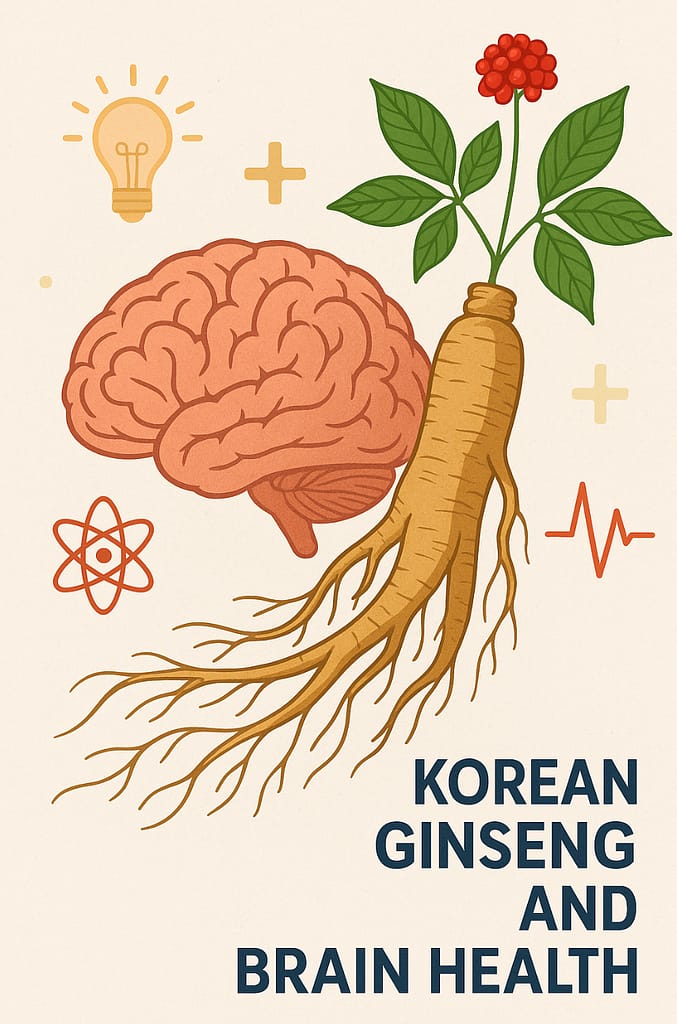
Can Ginseng Help With Brain Fog and Lack of Focus?
If you often feel mentally cloudy, distracted, or slow to think, you are not alone. Many people ask, can ginseng help with brain fog and lack of focus—especially when fatigue, stress, or long work hours drain mental energy. This question comes up often in clinics and wellness research. Importantly, the form most studied is Korean ginseng (Panax ginseng), not all “ginseng” products on the shelf.
Brain fog is not a diagnosis. However, it describes symptoms like poor concentration, slow processing, forgetfulness, and low mental stamina. These symptoms can appear during stress, sleep debt, illness recovery, or intense cognitive load. Because Korean ginseng is classified as an adaptogen, researchers have explored whether it may support mental performance under stress.
In this article, we examine the science. We also explain mechanisms, review safety, and show how to choose a quality product. Throughout, we use cautious, evidence-based language. This content does not replace medical advice. If symptoms persist, consult a healthcare professional.
What Is Brain Fog and Why Does Focus Decline?
Brain fog is a cluster of cognitive complaints, not a disease. Common features include:
- Reduced attention span
- Slower thinking speed
- Memory lapses
- Mental fatigue
- Trouble multitasking
Several factors can contribute. For example:
- Stress and poor sleep can impair attention networks.
- Inflammation or oxidative stress can affect neurons.
- Blood sugar swings can reduce mental clarity.
- Certain medications or illnesses can also play a role.
Therefore, any supplement should be viewed as supportive, not curative. Lifestyle foundations still matter most. Still, many people search for botanical options with clinical data. This is where Korean ginseng enters the discussion.
Korean Ginseng (Panax ginseng): What Makes It Different?
Not all “ginseng” is the same. The species used in most cognitive studies is Panax ginseng C.A. Meyer, often called Korean ginseng or Asian ginseng. Its key bioactive compounds are ginsenosides.
Key points:
- Panax ginseng ≠ American ginseng ≠ Siberian ginseng.
Siberian “ginseng” (Eleutherococcus) is not a true ginseng. - Korean red ginseng is steamed and dried. This process changes ginsenoside profiles.
- Standardization matters because ginsenoside content varies widely across products.
The World Health Organization (WHO) recognizes Panax ginseng as a traditional medicinal plant. You can see this in the WHO monograph:
https://apps.who.int/iris/handle/10665/42052
Can Ginseng Help With Brain Fog and Lack of Focus? What the Evidence Says
So, can ginseng help with brain fog and lack of focus in a measurable way? Research suggests potential benefits, especially for attention and mental fatigue. However, effects are modest and depend on dose, extract, and individual response.
1) Cognitive performance and attention
Several randomized controlled trials have examined Panax ginseng and cognitive tasks. For instance:
- A review in Journal of Ginseng Research summarizes human trials showing improvements in aspects of working memory and attention after ginseng supplementation.
https://www.ncbi.nlm.nih.gov/pmc/articles/PMC3659612/ - Another review in Nutrients discusses ginseng’s neuroprotective and cognitive-support roles, including anti-fatigue effects.
https://www.mdpi.com/2072-6643/11/5/1021
Importantly, these studies do not claim cures. Instead, they suggest support for mental performance, especially under stress or fatigue.
2) Mental fatigue and stress resilience
Korean ginseng is often described as an adaptogen. This term means it may help the body adapt to stress rather than overstimulate it. According to the NIH’s National Center for Complementary and Integrative Health (NCCIH), ginseng has been studied for fatigue and cognitive function:
https://www.nccih.nih.gov/health/ginseng
Some trials report reduced subjective fatigue and better mental endurance during demanding tasks. This is relevant because mental fatigue often drives brain fog.
3) What this means in practice
- Benefits are supportive, not dramatic.
- Effects often appear gradually, not instantly.
- Results vary by extract quality and dose.
So, while evidence supports potential cognitive support, ginseng should be seen as part of a broader strategy that includes sleep, nutrition, and stress management.
How Might Korean Ginseng Work in the Brain?
Researchers propose several mechanisms. None are fully proven, but together they help explain observed effects.
• Neurotransmitter modulation
Some ginsenosides may influence acetylcholine and dopamine pathways, which are involved in attention and motivation.
• Anti-fatigue and energy metabolism support
Studies suggest ginseng may support mitochondrial function and reduce perceived fatigue. Less fatigue often means clearer thinking.
• Antioxidant and anti-inflammatory actions
Oxidative stress and inflammation can impair neurons. Ginseng shows antioxidant properties in laboratory and animal studies.
• Cerebral blood flow support
Some data suggest improved endothelial function and microcirculation. Better blood flow can support brain energy delivery.
Because brain fog is multifactorial, this multi-pathway profile is clinically interesting. However, it still does not replace medical evaluation for persistent symptoms.
Safety, Side Effects, and Who Should Be Careful
Korean ginseng is generally well tolerated when used appropriately. Still, safety matters.
Possible side effects include:
- Insomnia or jitteriness (especially at high doses)
- Digestive upset
- Headache
- Changes in blood pressure or blood sugar
You should consult a healthcare professional if you:
- Are pregnant or breastfeeding
- Have diabetes, hypertension, or autoimmune disease
- Take blood thinners, stimulants, or antidepressants
- Have chronic medical conditions
The NIH cautions that herbal supplements can interact with medications:
https://www.nccih.nih.gov/health/herbal-medicine
Therefore, treat ginseng like any bioactive substance, not like a candy or energy drink.
Medical disclaimer: This article is for educational purposes only. It does not diagnose, treat, cure, or prevent any disease. Always consult a qualified healthcare professional before starting any supplement, especially if you have medical conditions or take medications.
How to Choose a High-Quality Korean Ginseng Product
Quality determines results. Many disappointing outcomes come from under-dosed or poorly standardized products.
Use this checklist:
- Species clearly listed: Panax ginseng C.A. Meyer
- Standardized extract: Look for ginsenoside content (often 5–20%)
- Form: Red ginseng extracts are common in clinical studies
- Third-party testing: For purity and contaminants
- Transparent sourcing: Prefer reputable Korean producers
Avoid products that:
- Do not list ginsenoside content
- Make disease-cure claims
- Hide behind “proprietary blends” without amounts
Remember, supplements support health. They do not replace diagnosis or treatment.
Practical Expectations: Who Might Benefit Most?
Korean ginseng may be most relevant for:
- Professionals with mental fatigue and stress load
- Students during periods of intense study
- Adults with age-related decline in mental stamina
- People seeking steady, non-jittery cognitive support
However, if brain fog is new, severe, or worsening, seek medical evaluation. Conditions like anemia, thyroid disease, sleep apnea, depression, or medication effects must be ruled out first.
Frequently Asked Question: Can Ginseng Help With Brain Fog and Lack of Focus Long Term?
This question deserves a careful answer. Can ginseng help with brain fog and lack of focus over time? Evidence suggests it may support cognitive performance and reduce mental fatigue when used consistently and appropriately. Still, it is not a cure. Think of it as nutritional and adaptogenic support within a comprehensive health plan.
Choosing a Smarter Path to Clearer Thinking
So, can ginseng help with brain fog and lack of focus? The best scientific answer is yes, it may help support mental clarity, attention, and fatigue resistance, especially when stress and workload strain your cognitive system. Clinical studies on Korean ginseng (Panax ginseng) show modest but meaningful benefits in attention, working memory, and mental endurance. At the same time, responsible experts agree that it is not a magic fix.
If you want better focus, start with sleep, nutrition, and stress control. Then, if you choose a supplement, choose a standardized, high-quality Korean ginseng from a reputable source. This decision is not just about performance. It is about respecting your brain, your health, and your long-term energy.
If you are tired of feeling foggy, unmotivated, and mentally drained, you deserve better support. You deserve clarity that builds, not crashes. Choose wisely. Choose quality. And take the first step today toward steadier focus and stronger mental stamina—with premium Korean ginseng you can trust.
🇰🇷 Premium Korean Ginseng Online Shop


