
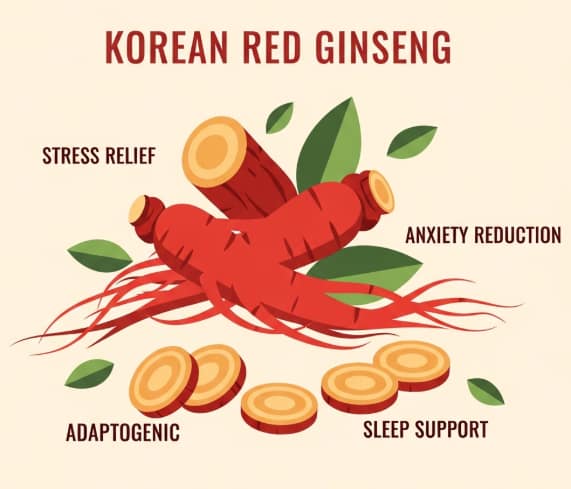
A Scientific Deep-Dive Into Adaptogens, Cortisol, and Mental Health
Anxiety, stress, and insomnia are no longer occasional problems — they are global epidemics. The modern nervous system is under constant pressure: blue light overstimulation, deadlines, dopamine burnout, and 24/7 stress signals.
While pharmaceutical solutions like benzodiazepines and sleeping pills remain common, they come with risks: tolerance, dependence, cognitive impairment, and withdrawal.
This is why adaptogenic herbs like Korean Red Ginseng have gained scientific interest as a natural way to support the brain without sedation.
But the real question is—not just whether it works, but how and why.
Let’s explore what the research tells us.
🧠 What Makes Korean Red Ginseng Different?
Unlike raw white ginseng, Korean Red Ginseng is steamed & aged, increasing its active compounds:
- Rg1 (cognitive stimulant)
- Rb1 (calming & anti-anxiety)
- Rg3 (sleep + anti-inflammatory)
- Compound K (gut + brain availability)
This balance is why ginseng is classified as a bidirectional adaptogen — meaning it can calm OR energize as needed.
⚠️ How Stress Impacts Your Nervous System
Chronic stress activates the HPA axis, which leads to:
- High cortisol levels
- Anxiety & mood imbalance
- Sleep disruption & cortisol spikes at night
- Neuroinflammation
- Impaired memory and concentration
Over time, this contributes to burnout, depression, and immune dysfunction.
📊 Evidence: Korean Ginseng for Anxiety
Modern studies suggest ginseng helps regulate:
✔ Cortisol & stress hormones
✔ Neurotransmitters (GABA, serotonin, dopamine)
✔ HPA-axis response
✔ Neuroinflammation & oxidative stress
Key Clinical Study:
A randomized controlled trial found that ginseng reduced anxiety symptoms and improved calmness in participants after 8 weeks compared to placebo.
Another study showed it modulated GABA receptors in a way similar to anti-anxiety medications — but without dependence or cognitive impairment.
😴 Does Korean Ginseng Actually Improve Sleep?
Unlike sedatives, ginseng does not forcibly shut down the nervous system.
Instead, it supports:
- Better sleep onset
- Deeper non-REM sleep
- Reduced night waking
- Normalization of circadian hormones
- Stress resilience before bedtime
In animal models, red ginseng increased slow-wave sleep and influenced GABA receptor activity similar to natural sleep mechanisms.
In humans, trials have shown improved sleep quality and daytime function.
🧬 Adaptogens vs Sedatives: Why Ginseng Is Safer
| Sedatives | Korean Red Ginseng | |
|---|---|---|
| Effect | Forces sleep by depressing CNS | Regulates stress + sleep pathways naturally |
| Risk | Dependence, tolerance | Low risk when used properly |
| Brain Impact | Suppresses | Supports homeostasis |
| Next-Day Effects | Fatigue / fog | Improved cognitive focus |
🧍♂️ Who Benefits Most From Korean Ginseng?
✔ People with stress-related insomnia
✔ High-cortisol individuals (night owls, burnout)
✔ Anxiety-prone personalities
✔ Students / professionals under cognitive load
✔ Perimenopause / hormonal imbalance
✔ People avoiding pharmaceuticals
⚠️ Dosage, Safety & Side Effects
📌 Typical clinical dose: 300–1000 mg extract daily (standardized ginsenosides)
📌 Should not be combined with stimulants or alcohol
📌 Not recommended during pregnancy without medical supervision
📌 People on psychiatric medication should consult a doctor
Korean Red Ginseng is considered well tolerated in trials up to 12 weeks.
🧠 Final Thoughts
Korean Red Ginseng is not a sedative — it is a neuroendocrine regulator.
Instead of masking symptoms, it supports:
✔ Cortisol reduction
✔ Neurotransmitter balance
✔ Stress resilience
✔ Improved sleep architecture
✔ Overall nervous system stability
This makes it a promising option for people seeking science-based, non-sedative anxiety and sleep support.
🛒 Where to Buy Authentic Korean Red Ginseng
🇰🇷 Premium Korean Ginseng Online Shop


