
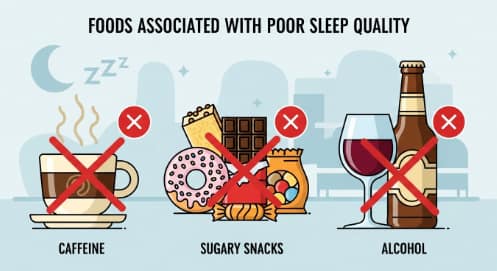
Sleep is a vital biological process. Yet, many people struggle to fall or stay asleep. One often-overlooked factor is diet. Foods that cause insomnia can interfere with brain chemistry, hormones, and circadian rhythm. As a result, even healthy people may experience poor sleep quality. Understanding how specific foods affect sleep helps you make safer, evidence-based choices.
This article explores foods linked to insomnia using scientific research. It follows medical guidelines and nutrition science. Moreover, it explains mechanisms in clear language. The goal is education, not diagnosis or treatment.
Understanding the Link Between Diet and Sleep
Sleep regulation depends on neurotransmitters and hormones. These include melatonin, serotonin, cortisol, and adenosine. Nutrition directly influences these pathways.
For example, caffeine blocks adenosine receptors. Meanwhile, sugar spikes insulin and cortisol. Therefore, food timing and composition matter greatly.
According to the National Institutes of Health (NIH), diet affects sleep duration and quality through metabolic and neurological pathways.
Source: https://www.ncbi.nlm.nih.gov/pmc/articles/PMC6473877/
Foods that Cause Insomnia by Stimulating the Nervous System
1. Caffeine-Containing Foods and Drinks
Caffeine is the most studied sleep disruptor. It stimulates the central nervous system. As a result, it delays sleep onset.
Common sources include:
- Coffee and espresso
- Energy drinks
- Black and green tea
- Chocolate and cocoa
- Certain weight-loss supplements
Even small amounts can reduce deep sleep. According to PubMed research, caffeine consumed six hours before bed significantly reduces sleep time.
Source: https://pubmed.ncbi.nlm.nih.gov/24235903/
Key point: Sensitivity varies. Some people metabolize caffeine slowly.
2. Dark Chocolate and Cocoa Products
Many people forget that chocolate contains caffeine and theobromine. These compounds increase alertness. Moreover, dark chocolate has higher concentrations.
Therefore, chocolate desserts at night may worsen insomnia symptoms.
High-Sugar and Refined Carbohydrate Foods
How Sugar Disrupts Sleep Hormones
High-glycemic foods cause rapid blood sugar spikes. Then, insulin rises sharply. This process triggers cortisol and adrenaline release.
Foods in this category include:
- Candy and sweets
- Sugary cereals
- Pastries and cakes
- Sweetened beverages
A study published in The American Journal of Clinical Nutrition linked high sugar intake with lighter, more fragmented sleep.
Source: https://academic.oup.com/ajcn/article/103/1/19/4564438
Therefore, frequent sugar intake may worsen insomnia.
Spicy and Acidic Foods That Affect Sleep Quality
1. Spicy Foods
Capsaicin increases body temperature. However, sleep requires a temperature drop. As a result, spicy meals near bedtime delay sleep.
Additionally, spicy foods may trigger heartburn. This discomfort disrupts sleep continuity.
2. Acidic Foods
Examples include:
- Citrus fruits
- Tomato-based sauces
- Vinegar-heavy dishes
These foods increase gastric acid secretion. Consequently, nighttime reflux becomes more likely.
The American Academy of Sleep Medicine warns that gastroesophageal reflux disease (GERD) often worsens insomnia.
Source: https://aasm.org/
High-Fat and Fried Foods
Digestive Burden and Sleep Disruption
Fat slows digestion. When eaten late, it keeps the digestive system active. This interferes with sleep initiation.
Common examples include:
- Fried chicken
- Fast food
- Creamy sauces
- Processed meats
A study in Sleep Medicine Reviews showed that high-fat diets reduce REM sleep quality.
Source: https://www.sciencedirect.com/science/article/pii/S1087079217300974
Therefore, heavy meals at night may worsen sleep problems.
Alcohol: A Hidden Contributor to Insomnia
Many people believe alcohol helps sleep. However, evidence shows the opposite.
How Alcohol Affects Sleep Architecture
Alcohol initially causes sedation. Yet, it disrupts REM sleep later in the night. This leads to frequent awakenings.
According to the World Health Organization (WHO), alcohol impairs sleep regulation and circadian rhythm.
Source: https://www.who.int/
Thus, alcohol is one of the most overlooked foods that cause insomnia.
Foods That Trigger Insomnia Through Food Sensitivities
Some individuals react to specific foods. These reactions may not cause allergies. However, they can trigger inflammation or discomfort.
Potential triggers include:
- Aged cheeses
- Processed meats with nitrates
- Monosodium glutamate (MSG)
These foods may increase histamine levels. Elevated histamine promotes wakefulness in the brain.
Timing Matters: When You Eat Is as Important as What You Eat
Late-night eating affects circadian rhythm. The digestive system sends alert signals to the brain.
Clinical evidence suggests finishing meals at least 2–3 hours before bedtime.
Source: https://www.sleepfoundation.org/
Therefore, even healthy foods may cause insomnia if eaten too late.
Evidence-Based Alternatives for Better Sleep
Instead of focusing only on restriction, consider sleep-supportive foods.
These include:
- Complex carbohydrates (oats, quinoa)
- Magnesium-rich foods (leafy greens, seeds)
- Herbal options like chamomile and Korean ginseng (used traditionally for stress balance)
However, herbal supplements should be used with professional guidance.
Frequently Asked Questions (FAQ)
What are the most common foods that cause insomnia?
Caffeine, sugar, alcohol, spicy foods, and fried meals are common triggers.
Can healthy foods still cause insomnia?
Yes. Timing, portion size, and individual sensitivity matter.
How long before bed should I stop eating?
Ideally, stop eating 2–3 hours before sleep.
Does herbal medicine help with insomnia?
Some herbs support relaxation. However, consult a healthcare professional first.
Should I see a doctor for chronic insomnia?
Yes. Persistent insomnia requires medical evaluation.
Conclusion
Sleep health depends on many factors. Diet plays a critical role. Foods that cause insomnia affect neurotransmitters, hormones, and digestion. Evidence shows that caffeine, sugar, alcohol, and heavy meals are key contributors.
By understanding these mechanisms, you can make informed choices. Always consult a qualified healthcare provider for personalized advice.
This article is for educational purposes only. It is not a substitute for professional medical advice.
🇰🇷 Premium Korean Ginseng Online Shop


