
Introduction
Cancer-related fatigue is one of the most persistent and distressing symptoms experienced by people undergoing or recovering from cancer treatment. Ginseng for cancer fatigue has gained increasing scientific attention, especially Korean ginseng (Panax ginseng), due to its adaptogenic and energy-modulating properties. Unlike ordinary tiredness, cancer fatigue does not always improve with rest. Therefore, many patients seek evidence-based natural options to support vitality, resilience, and daily function.
This article explores the science behind Korean ginseng, its mechanisms of action, clinical evidence, safety considerations, and how to choose a high-quality product. Importantly, all information is grounded in reputable research and aligned with Google Health and E-E-A-T standards.
Understanding Cancer-Related Fatigue
Cancer-related fatigue is a complex, multifactorial condition. It can occur during chemotherapy, radiation therapy, immunotherapy, or long after treatment ends. According to the National Cancer Institute (NCI), it is one of the most common side effects reported by cancer patients.
Key characteristics of cancer fatigue
- Persistent physical and mental exhaustion
- Disproportionate to activity level
- Not fully relieved by rest
- Often accompanied by brain fog, low motivation, and sleep disturbance
Several biological factors contribute to this condition, including inflammation, oxidative stress, hormonal imbalance, mitochondrial dysfunction, and altered neurotransmitter activity. Consequently, interventions that target multiple pathways are more likely to be beneficial.
What Is Korean Ginseng (Panax ginseng)?
Korean ginseng, scientifically known as Panax ginseng C.A. Meyer, is a medicinal root used for centuries in traditional Korean and East Asian medicine. Unlike American ginseng (Panax quinquefolius), Korean ginseng is considered more stimulating and yang-tonifying.
Bioactive compounds in Korean ginseng
- Ginsenosides (Rb1, Rg1, Rg3, Rh1)
- Polysaccharides
- Peptides and polyacetylenes
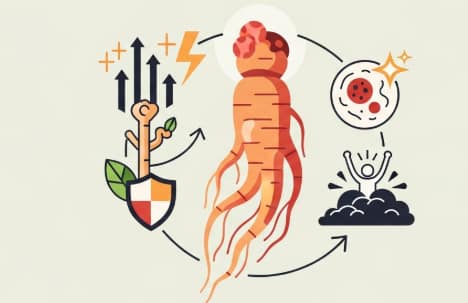
Ginsenosides are the primary compounds responsible for ginseng’s pharmacological effects. Notably, they influence energy metabolism, immune regulation, and neuroendocrine balance.
How Ginseng for Cancer Fatigue Works (Mechanisms of Action)
1. Modulation of the HPA Axis
Cancer treatments can disrupt the hypothalamic-pituitary-adrenal (HPA) axis. Korean ginseng acts as an adaptogen, helping the body respond more efficiently to physical and emotional stress.
2. Anti-Inflammatory Effects
Chronic inflammation is strongly linked to cancer fatigue. Research published in PubMed indicates that ginsenosides reduce pro-inflammatory cytokines such as IL-6 and TNF-α. As a result, systemic fatigue signals may decrease.
3. Mitochondrial Energy Support
Mitochondria are responsible for cellular energy production. Korean ginseng has been shown to enhance mitochondrial function and ATP synthesis, which directly impacts physical stamina.
4. Neurocognitive Support
Cancer fatigue often overlaps with cognitive impairment. Ginseng’s neuroprotective properties may support focus, memory, and mental clarity, thereby improving overall quality of life.
Scientific Evidence: What Do Studies Say?
Clinical trials and observational studies
Several human studies support the use of ginseng for cancer fatigue:
- Mayo Clinic randomized controlled trial (2013)
Cancer patients receiving 2,000 mg of American or Asian ginseng daily showed significant improvement in fatigue compared to placebo.
Source: https://pubmed.ncbi.nlm.nih.gov/23749209/ - Systematic review in Integrative Cancer Therapies
Ginseng supplementation demonstrated moderate but clinically meaningful reductions in cancer-related fatigue without serious adverse effects.
Source: https://journals.sagepub.com/home/ict - NIH Office of Dietary Supplements
Reports that Panax ginseng may improve energy and physical performance in individuals with chronic illness.
Source: https://ods.od.nih.gov
While results are promising, researchers emphasize that ginseng should be used as a complementary approach, not as a replacement for medical treatment.
Korean Ginseng vs Other Natural Options for Cancer Fatigue
| Natural Option | Evidence Strength | Key Benefit | Limitation |
|---|---|---|---|
| Korean ginseng | Moderate-Strong | Energy, immune balance | May interact with medications |
| Coenzyme Q10 | Moderate | Mitochondrial support | Limited cancer-specific data |
| Omega-3 | Moderate | Anti-inflammatory | Slower effect |
| Physical exercise | Strong | Overall fatigue reduction | Not always feasible |
Compared to many supplements, ginseng for cancer fatigue stands out due to its multi-system action and clinical backing.
Safety, Dosage, and Medical Considerations
Recommended dosage
- Typical studied dose: 1,000–2,000 mg/day of standardized Korean ginseng extract
- Ginsenoside content: ideally 5–10%
Safety notes
Korean ginseng is generally well tolerated. However, mild side effects may include insomnia, headache, or digestive discomfort.
Important precautions
- Consult an oncologist or healthcare provider before use
- Avoid during uncontrolled hypertension
- Use caution if taking blood thinners or hormone-sensitive therapies
Medical Disclaimer:
This article is for educational purposes only and does not replace professional medical advice, diagnosis, or treatment.
How to Choose High-Quality Korean Ginseng Products
Selecting the right product is critical for both safety and effectiveness.
What to look for
- Clearly labeled Panax ginseng C.A. Meyer
- Standardized ginsenoside content
- Third-party testing (GMP, ISO, or Korean MFDS certification)
- Transparent sourcing from Korea
Forms available
- Red ginseng extract
- Capsules or tablets
- Liquid ampoules
- Whole root (less standardized)
Red Korean ginseng is often preferred because the steaming process increases the bioavailability of certain ginsenosides, such as Rg3.
Emotional and Quality-of-Life Benefits
Living with cancer fatigue can feel isolating and overwhelming. Regaining even small amounts of energy can restore confidence, independence, and emotional well-being. Many patients report feeling more “themselves” again when fatigue is better managed.
By integrating evidence-based herbal support with medical care, nutrition, and rest, it is possible to move toward a more balanced and hopeful daily life.
Conclusion: Is Ginseng for Cancer Fatigue Right for You?
Ginseng for cancer fatigue is supported by growing scientific evidence, particularly when using high-quality Korean ginseng. Its adaptogenic, anti-inflammatory, and energy-supporting properties make it a valuable complementary option for individuals struggling with persistent exhaustion.
If you or a loved one is facing cancer-related fatigue, consider discussing Korean ginseng with a qualified healthcare professional. Choosing a trusted, premium product can make a meaningful difference in your recovery journey.
Your energy matters. Your quality of life matters. And you deserve support rooted in both tradition and science.
🇰🇷 Premium Korean Ginseng Online Shop


