
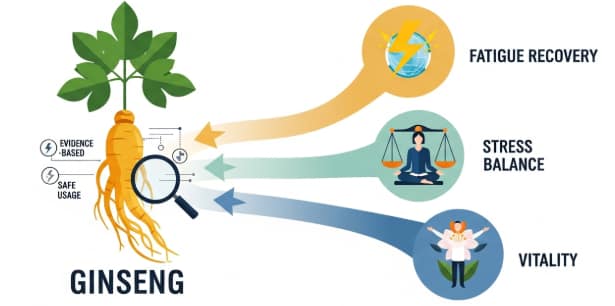
Fatigue is one of the most common health complaints worldwide. It affects physical stamina, mental focus, and emotional balance. In many cases, people seek natural approaches before turning to medication. One herbal remedy that has gained strong scientific attention is ginseng for fatigue recovery.
Ginseng has been used for centuries in East Asian medicine. Today, modern research helps explain why it may support energy restoration and resilience. This article explores the evidence, mechanisms, safety, and proper use of ginseng with a medical and scientific perspective.
Understanding Fatigue: More Than Just Feeling Tired
Fatigue is not the same as ordinary tiredness. It often persists despite rest. Moreover, it can be physical, mental, or both.
Common causes include:
- Chronic stress
- Poor sleep quality
- Nutrient deficiencies
- Inflammatory conditions
- Metabolic imbalance
- Mental overload
According to the World Health Organization (WHO), fatigue can significantly impair quality of life and productivity. Therefore, addressing its root causes is essential.
Natural adaptogens, such as ginseng, are often studied because they help the body adapt to stress rather than forcing stimulation.
What Is Ginseng? A Medicinal Overview
Ginseng refers mainly to plants from the Panax genus. The most researched types include:
- Panax ginseng (Korean or Asian ginseng)
- Panax quinquefolius (American ginseng)
The term Panax means “all-healing.” This reflects its traditional use for restoring balance and vitality.
The primary active compounds are ginsenosides. These bioactive molecules influence energy metabolism, immune regulation, and stress response.
Institutions such as the National Institutes of Health (NIH) recognize ginseng as one of the most studied herbal medicines.
Ginseng for Fatigue Recovery: What Science Says
Clinical Evidence and Research Findings
Several clinical trials have examined ginseng for fatigue recovery, particularly in people with chronic fatigue, cancer-related fatigue, and stress-induced exhaustion.
Key findings include:
- Reduced subjective fatigue scores
- Improved mental alertness
- Better physical endurance
- Enhanced quality of life
A randomized controlled trial published in Journal of Ginseng Research found that standardized Korean red ginseng significantly reduced fatigue symptoms compared to placebo.
(Source: https://www.ncbi.nlm.nih.gov/pmc/articles/PMC5452229/)
Similarly, studies indexed on PubMed report improved energy metabolism through mitochondrial support.
(Source: https://pubmed.ncbi.nlm.nih.gov)
These results suggest a supportive role, not a cure.
How Ginseng Supports Energy Recovery Mechanisms
1. Adaptogenic Stress Regulation
Ginseng is classified as an adaptogen. Adaptogens help regulate the hypothalamic-pituitary-adrenal (HPA) axis. As a result, stress hormones become more balanced.
Lower cortisol fluctuations may reduce energy crashes.
2. Cellular Energy Production
Ginsenosides support ATP synthesis in mitochondria. Consequently, cells may produce energy more efficiently.
This mechanism is crucial for fatigue related to metabolic stress.
3. Anti-Inflammatory Effects
Chronic inflammation often contributes to long-term fatigue. Ginseng demonstrates anti-inflammatory activity by modulating cytokine expression.
According to research from NIH, reduced inflammation correlates with improved vitality.
4. Neuroprotective Support
Mental fatigue often accompanies physical exhaustion. Ginseng supports neurotransmitter balance and cerebral blood flow, which may enhance focus and motivation.
Types of Ginseng and Their Fatigue-Related Uses
Not all ginseng products act the same way.
Korean Red Ginseng
- Traditionally steamed and dried
- Higher concentration of specific ginsenosides
- Often used for physical and mental fatigue
American Ginseng
- Milder and more cooling
- Often preferred for stress-related fatigue
White Ginseng
- Air-dried, less processed
- Contains lower ginsenoside levels
Choosing the right type depends on individual constitution and health goals.
Proper Dosage and Safe Usage Guidelines
Recommended Dosage
Most clinical studies use:
- 200–400 mg of standardized extract daily
- Or 1–2 grams of dried root
However, dosage varies based on product quality and formulation.
Safety Considerations
Ginseng is generally safe for healthy adults. Still, caution is necessary.
Potential side effects include:
- Insomnia if taken late in the day
- Digestive discomfort
- Headache in sensitive individuals
People who should consult a healthcare professional first:
- Pregnant or breastfeeding individuals
- People with autoimmune disorders
- Those taking blood thinners or diabetes medication
According to NIH Office of Dietary Supplements, professional guidance ensures safe integration.
(Source: https://ods.od.nih.gov)
Comparing Ginseng With Other Natural Fatigue Remedies
| Remedy | Primary Action | Evidence Level |
|---|---|---|
| Ginseng | Adaptogenic, metabolic | Strong |
| Ashwagandha | Stress reduction | Moderate |
| Rhodiola | Mental endurance | Moderate |
| Caffeine | Stimulation | Short-term |
Unlike stimulants, ginseng does not cause sudden energy spikes. Instead, it supports gradual recovery.
Who May Benefit Most From Ginseng?
Ginseng for fatigue recovery may be particularly helpful for:
- Professionals under chronic stress
- Adults with mental exhaustion
- Individuals recovering from illness
- People experiencing age-related fatigue
However, it should not replace medical evaluation for persistent fatigue.
Integrating Ginseng Into a Healthy Lifestyle
Ginseng works best when combined with:
- Balanced nutrition
- Adequate sleep
- Stress management
- Regular physical activity
Moreover, quality matters. Always choose products tested for purity and standardized ginsenoside content.
Conclusion: Is Ginseng a Reliable Option for Fatigue Recovery?
Scientific evidence supports ginseng as a complementary approach to fatigue management. Its adaptogenic, anti-inflammatory, and metabolic benefits align with modern understanding of fatigue physiology.
Still, it is not a miracle cure. Responsible use, medical consultation, and lifestyle balance remain essential.
Disclaimer: This article is for educational purposes only and does not replace professional medical advice. Always consult a qualified healthcare provider before starting any supplement.
Frequently Asked Questions (FAQ)
Is ginseng safe for long-term use?
Most studies suggest safety for up to 12 weeks. Long-term use should be supervised by a healthcare professional.
How long does ginseng take to work for fatigue?
Many people notice benefits after 2–4 weeks of consistent use.
Can ginseng replace sleep or rest?
No. Ginseng supports recovery but cannot replace sleep or proper rest.
Is ginseng suitable for mental fatigue?
Yes. Research indicates benefits for cognitive performance and mental stamina.
🇰🇷 Premium Korean Ginseng Online Shop


