
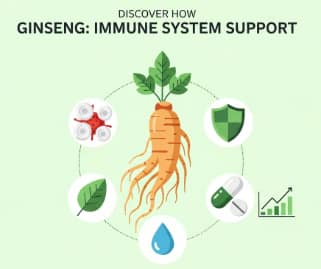
Ginseng for immune system support has gained popularity among people seeking to strengthen their body’s defenses. Many traditional medicine systems value Panax ginseng (often simply called “ginseng”) for its purported ability to enhance immunity and overall well-being. In this article, we examine current scientific evidence on how ginseng might support immune health. We explore mechanisms, human studies, practical use, and safety — while protecting you from exaggerated claims.
What is Ginseng and How Does It Work
- Ginseng basics: Panax ginseng is a plant whose root has been used for centuries in Asian traditional medicine. Its biologically active constituents include compounds such as ginsenosides and polysaccharides. PubMed+2MDPI+2
- Mechanisms of immune modulation: Laboratory and animal studies suggest ginseng components can influence multiple immune pathways. For example, ginsenosides may activate signaling pathways (like MAPK, PI3K/Akt, STAT) that regulate immune cell behavior. SpringerLink+1
- Cell types affected: Research points to effects on innate immunity (macrophages, natural killer (NK) cells, dendritic cells) and adaptive immunity (T cells, B cells). PubMed+2JKom+2
- Functional outcomes: Effects may include enhanced phagocytosis (ability of immune cells to engulf pathogens), increased NK-cell activity, elevated cytokine production, and higher counts of white blood cells or lymphocytes in some studies. PMC+2PubMed+2
In short, ginseng appears to support a balanced — or regulated — immune response rather than overstimulate it.
Evidence from Human Studies
Clinical Trials
Here’s what clinical research in humans shows about the use of ginseng for immune support:
- A randomized, controlled trial on healthy adults who took the ginseng polysaccharide preparation (Y-75) daily for up to 14 weeks found a 35–40% increase in NK-cell cytotoxic activity compared with baseline. Additionally, phagocytic activity rose significantly, and serum levels of the immune mediator TNF-α increased. The study reported no serious adverse events. PubMed+1
- In a double-blind RCT among 100 healthy adults taking daily doses of 2 g of another form of ginseng (Korean Red Ginseng, or “KRG”) for eight weeks, researchers observed increases in total white blood cell count, T-cells (CD3+, CD4+, CD8+), and B-cells — compared with placebo. PubMed
- A recent review of ginseng supplementation studies found improvements in immune parameters such as CD3+, CD4+, and CD8+ lymphocyte counts in some studies, but quality of evidence varied (many rated low or very low). Frontiers+1
What the Evidence Means
- The human evidence supports that ginseng can modulate immune function in healthy individuals.
- Effects include better function of innate immune cells and modest increases in adaptive immune cells.
- However, evidence is not conclusive. Many trials are small, limited in duration, or have methodological constraints. A systematic review noted that while immune modulation seems promising, there is no conclusive proof that ginseng “treats” or “prevents” any specific disease. PubMed+1
- Thus, ginseng may support immune resilience — but it is not a substitute for vaccines, healthy lifestyle, or medical treatments.
Potential Benefits of Ginseng for Immune System Support
Based on existing research and traditional use, here are some potential benefits:
- Better innate immune response: Enhanced NK-cell activity, increased phagocytosis by macrophages, and more robust first-line defense against pathogens.
- Balanced adaptive immunity: Rise in T and B lymphocyte counts, potentially supporting better immune readiness.
- Immune regulation (modulation): Ginseng may help regulate immune response — reducing risk of under-responsive immunity, especially in periods of stress, fatigue or seasonal challenge.
- Support for overall well-being and resilience: As an adaptogen, ginseng may help the body resist stressors that weaken immunity (e.g. poor sleep, fatigue, environmental stress). SpringerLink+1
Risks, Limitations, and Safety Considerations
Before using ginseng for immune support, you should know potential limitations and risks:
- Evidence is limited and inconsistent. While many studies show positive immune effects, others show small or no effect — especially in acute or stress-induced immune challenge contexts. For example, a small crossover trial in sedentary men found only limited effects of ginseng on immune response to exercise stress. PubMed+1
- Quality of studies varies. Some trials suffer from small sample sizes, short duration, unclear blinding or other methodological weaknesses. PubMed+1
- Not a replacement for medical care. Ginseng is not proven to prevent or treat infectious diseases, autoimmune disorders, or other illnesses.
- Possible interactions. As ginseng can modulate immune activity, it might not be appropriate for people with certain immune conditions (e.g. autoimmune diseases) or those taking immunosuppressive therapy.
- Need for standardization. Different ginseng products vary in active components (ginsenoside content, polysaccharides, extraction method). This variation affects potency and safety. PubMed+1
Importantly: always consult a qualified healthcare professional before using ginseng — especially if you have chronic illness, take medications, or have a suppressed or overactive immune system.
How to Use Ginseng Safely and Effectively
If you consider using ginseng for immune system support, here are practical, cautious guidelines:
✔️ What to look for
- Standardized product from reputable brand (specifying ginsenoside/polysaccharide content).
- Clear dosage instructions — many clinical trials used around 1–2 g/day (or equivalent extracts) for several weeks.
- Avoid combining multiple strong immune-modulating herbs or supplements without professional advice.
📆 Suggested regimen approach
| Goal | Suggestion |
|---|---|
| General immune maintenance (healthy adult) | 1–2 g standard ginseng extract per day, for 6–12 weeks |
| Periods of stress/fatigue | Use at low to moderate dose, monitor response |
| Not recommended / use with caution | During pregnancy, autoimmune disorder, or ongoing immune therapy — consult a doctor first |
✅ Lifestyle factors to combine
Ginseng alone is not enough. Immune health benefits more from:
- Balanced diet rich in fruits, vegetables, protein.
- Adequate sleep and regular physical activity.
- Stress management and hygiene practices.
Limitations of Current Research and What’s Unknown
Despite promising findings, there remain important research gaps:
- Many clinical trials are small or short-term. Larger, long-term studies are needed.
- There is no consensus on optimal dose, preparation type (raw root, extract, red ginseng, polysaccharide fraction), or duration.
- Effects in specific groups (elderly, immunocompromised, children) are under-studied.
- The long-term safety in high doses is not well documented.
Therefore, while ginseng may support immune function, it should not be viewed as a magic bullet.
Conclusion
Ginseng for immune system support offers a promising, evidence-based approach to enhancing immune resilience. Clinical studies suggest that standardized ginseng extracts can modestly boost natural killer-cell activity, support T/B cell populations, and enhance innate immunity. However, the evidence remains limited, and ginseng should be considered a complementary option, not a treatment. Use with care, choose high-quality products, and always discuss with a healthcare professional — especially when you have underlying health conditions or take other medications.
⚠️ Note: This article is for informational purposes only and does not substitute professional medical advice.
Frequently Asked Questions (FAQ)
Q: Can ginseng prevent infections such as colds or flu?
A: There is no strong evidence that ginseng alone can prevent infections. Some studies show improved immune parameters, but none convincingly demonstrate prevention of specific diseases.
Q: Is ginseng safe for long-term use?
A: Limited data from human studies suggest ginseng is generally well tolerated for several weeks to a few months. However, long-term safety — especially at high doses — is not well established.
Q: Which form of ginseng is best for immunity (raw, red, extract)?
A: Many human studies used standardized extracts (e.g., polysaccharide fraction or red ginseng tablets). These may offer more consistent effects than raw root.
Q: Can I take ginseng with a vaccine to boost response?
A: Some early research (e.g., with red ginseng) suggests potential to help maintain antibody levels after vaccination. MDPI+1 However, evidence is preliminary. Always follow vaccination guidance from health authorities.
Q: Who should avoid ginseng?
A: People with autoimmune disorders, people on immunosuppressants, pregnant or breastfeeding women, and those with chronic illnesses should consult a doctor before use.
🇰🇷 Premium Korean Ginseng Online Shop


