
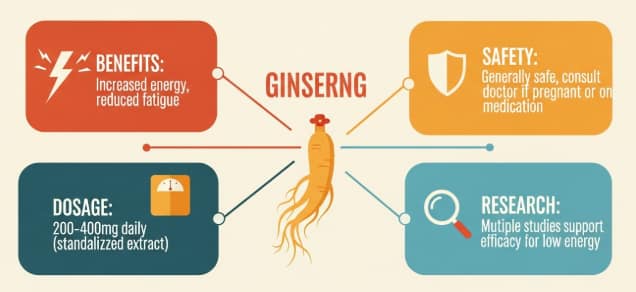
Low energy is one of the most common health complaints worldwide. Many people report persistent fatigue despite adequate sleep and nutrition. As a result, interest in natural approaches has increased. One herbal option frequently discussed is ginseng for low energy levels. This article examines ginseng through an evidence-based, medical lens, following Google Health and E-E-A-T principles.
This content is for educational purposes only and is not a substitute for professional medical advice.
Introduction: Understanding Ginseng for Low Energy Levels
Ginseng for low energy levels has been used for centuries in traditional medicine, especially in East Asia. Today, modern research investigates whether these traditional claims align with clinical evidence. Low energy can result from stress, poor sleep, nutritional deficiencies, chronic illness, or aging. Therefore, it is important to evaluate whether ginseng supports energy in a safe and scientifically credible way.
What Is Ginseng? A Scientific Overview
Ginseng refers mainly to plants from the Panax genus. The term Panax means “all-healing,” although modern medicine avoids such absolute claims.
Common Types of Ginseng
- Panax ginseng (Korean or Asian ginseng)
- Panax quinquefolius (American ginseng)
Both contain active compounds called ginsenosides, which influence energy metabolism, stress response, and immune signaling.
According to the National Institutes of Health (NIH), ginsenosides interact with the hypothalamic-pituitary-adrenal (HPA) axis, which regulates energy and stress response.
Source: https://www.nccih.nih.gov/health/ginseng
Why Do People Experience Low Energy Levels?
Low energy is not a disease. Instead, it is a symptom with many potential causes. Therefore, addressing fatigue requires understanding underlying factors.
Common Contributors to Low Energy
- Chronic psychological stress
- Poor sleep quality
- Iron or vitamin B12 deficiency
- Sedentary lifestyle
- Hormonal changes
- Chronic inflammation
Because ginseng acts as an adaptogen, researchers study its role in improving the body’s resilience to stress rather than acting as a stimulant.
How Ginseng Supports Energy at the Cellular Level
Unlike caffeine, ginseng does not overstimulate the nervous system. Instead, it appears to support energy production through multiple biological pathways.
Key Mechanisms
- Supports mitochondrial function
- Regulates cortisol levels
- Enhances glucose uptake efficiency
- Modulates inflammatory markers
A review published in Journal of Ginseng Research reported that ginsenosides may improve ATP production and reduce oxidative stress, which are both relevant to fatigue.
Source: https://www.sciencedirect.com/journal/journal-of-ginseng-research
Therefore, ginseng for low energy levels works through balance rather than stimulation.
Clinical Evidence: What Research Says About Ginseng and Fatigue
Several human studies have examined ginseng in the context of fatigue.
Key Findings from Research
- A randomized controlled trial in PLOS One showed reduced fatigue scores in participants using Panax ginseng.
- Cancer-related fatigue studies suggest modest benefits when used alongside conventional care.
- A meta-analysis in Nutrients found improvements in perceived energy and mental performance.
However, researchers consistently note that results vary depending on dosage, extract quality, and individual health status.
Source:
https://pubmed.ncbi.nlm.nih.gov
https://www.mdpi.com/journal/nutrients
Ginseng vs. Other Natural Energy Approaches
Many people compare ginseng to other fatigue remedies. Understanding differences helps set realistic expectations.
Comparison Overview
| Approach | Primary Action | Risk Profile |
|---|---|---|
| Ginseng | Adaptogenic support | Low when used properly |
| Caffeine | Nervous system stimulant | Risk of dependency |
| Iron | Corrects deficiency | Only if deficient |
| CoQ10 | Mitochondrial support | Generally safe |
Therefore, ginseng for low energy levels may be appropriate for individuals seeking sustained energy without stimulants.
Safe Dosage and Responsible Use
Safety is essential when discussing herbal medicine.
General Usage Guidelines
- Typical dose: 200–400 mg standardized extract daily
- Use cycles of 6–12 weeks, followed by a break
- Choose products standardized to ginsenoside content
The World Health Organization (WHO) recognizes ginseng as generally safe when used appropriately.
Source: https://www.who.int
However, dosage should always be individualized.
Potential Side Effects and Interactions
Although ginseng is considered safe for most adults, side effects can occur.
Possible Side Effects
- Headache
- Digestive discomfort
- Sleep disturbances at high doses
Who Should Be Cautious
- Pregnant or breastfeeding individuals
- People with autoimmune conditions
- Individuals taking blood-thinning medication
Therefore, consultation with a healthcare professional is strongly recommended.
Choosing High-Quality Ginseng Products
Product quality significantly affects effectiveness and safety.
What to Look For
- Clear labeling of Panax species
- Standardized ginsenoside percentage
- Third-party testing
- Transparent sourcing
Avoid products making exaggerated claims such as “instant energy cure.” These claims are inconsistent with medical guidelines.
Practical Tips for Maximizing Benefits
To support results, ginseng should be part of a broader lifestyle strategy.
Complementary Practices
- Balanced nutrition
- Regular physical activity
- Stress management
- Adequate sleep
When combined with healthy habits, ginseng for low energy levels may support overall vitality.
Conclusion: Is Ginseng Right for Low Energy Levels?
Scientific evidence suggests that ginseng may help improve perceived energy and reduce fatigue in certain populations. However, it is not a cure-all. Its benefits appear modest and work best as part of a comprehensive health plan.
Always remember that persistent fatigue requires medical evaluation. Ginseng should support, not replace, professional care.
Frequently Asked Questions (FAQ)
Is ginseng effective for chronic fatigue?
Some studies show benefits, but results vary. Medical evaluation is essential.
How long does ginseng take to work?
Many users report changes within 2–4 weeks.
Can ginseng replace caffeine?
It does not act like caffeine. It supports balanced energy instead.
Is ginseng safe for daily use?
Short-term daily use is generally safe under professional guidance.
Should I consult a doctor before using ginseng?
Yes. This is especially important if you have medical conditions.
Medical Disclaimer:
This article is for informational purposes only and does not replace professional medical advice. Always consult a qualified healthcare provider before using herbal supplements.
🇰🇷 Premium Korean Ginseng Online Shop


