
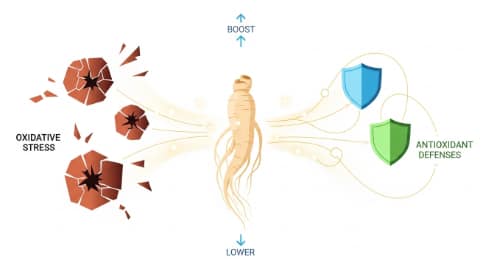
Ginseng for reducing oxidative stress has attracted growing scientific interest as oxidative stress lies at the heart of many chronic diseases and aging processes. In this article, we examine how Panax ginseng (and its active compounds) may help modulate oxidative stress through antioxidant pathways, and what current evidence supports or limits its use.
Oxidative stress happens when reactive oxygen species (ROS) overwhelm the body’s antioxidant defenses. Over time, this imbalance can damage lipids, proteins, and DNA. Ginseng research suggests that regular intake might help restore antioxidant capacity — but results vary across studies. Below, we explore mechanisms, evidence, safe use and practical considerations.
What is Oxidative Stress and Why It Matters
- Definition: Oxidative stress arises when the production of reactive oxygen species (ROS) outpaces the body’s antioxidant defenses. ROS — such as superoxide, hydrogen peroxide, or hydroxyl radicals — can damage cellular components.
- Health relevance: Persistent oxidative stress contributes to aging, inflammation, metabolic disorders (like insulin resistance), cardiovascular disease, neurodegeneration, and organ damage. MDPI+1
- Natural defense: The body relies on antioxidant enzymes (like superoxide dismutase — SOD; catalase — CAT; glutathione peroxidase — GPx) and non-enzymatic antioxidants (e.g. glutathione, vitamins C and E) to neutralize ROS. With age or stress, these systems often weaken. PubMed+1
Because oxidative stress underlies many chronic conditions, safe nutritional strategies to support antioxidant capacity — such as herbal adaptogens like ginseng — are of considerable interest.
How Ginseng Works Biochemically: Mechanisms of Action
Research suggests several overlapping mechanisms through which ginseng (and its bioactive constituents, notably ginsenosides) may help reduce oxidative stress. Key mechanisms include:
- Boosting antioxidant enzyme activity: Studies show that ginseng enhances the activity of endogenous antioxidant enzymes, such as SOD, CAT, GPx, and glutathione reductase (GR). This helps the body scavenge and neutralize ROS more effectively. PubMed+2MDPI+2
- Increasing non-enzymatic antioxidants: Ginseng intake has been associated with higher levels of glutathione (GSH) and other small-molecule antioxidants, strengthening the overall antioxidant buffer capacity. PubMed+1
- Modulating oxidative stress signaling pathways: Certain ginsenosides (e.g., Rg1, Rb1, Re) can activate cellular defense pathways, such as the Nrf2/ARE pathway, which regulates antioxidant gene expression and supports resistance against oxidative injury. MDPI+1
- Protecting mitochondria and promoting mitophagy: In some experimental models, ginseng reduces mitochondrial ROS, improves mitochondrial quality control (e.g., via mitophagy), and enhances insulin signaling — potentially relevant in metabolic and age-related disorders. MDPI
- Reducing lipid peroxidation and oxidative damage to biomolecules: By limiting ROS, ginseng may decrease lipid peroxidation (a marker of membrane damage) and oxidative damage to proteins and DNA. SpringerLink+2ScienceDirect+2
Overall, ginseng’s antioxidant and adaptogenic properties appear to support multiple defense mechanisms against oxidative stress — not just scavenging free radicals, but also enhancing the body’s intrinsic protective systems.
What Clinical and Experimental Evidence Shows
Animal & Cell Studies
- A landmark preclinical study found that aged rats given water extract of Korean red ginseng had significantly lower markers of lipid peroxidation and higher levels of enzymatic and non-enzymatic antioxidants compared with untreated aged rats. This suggests ginseng can restore antioxidant capacity in vivo. PubMed+1
- In vitro, a fraction of ginseng root (fraction F3) showed strong protective effects against hydrogen-peroxide-induced oxidative damage in retinal cells. It increased activities of antioxidant enzymes (SOD, CAT, GPx) and reduced reactive oxygen species (ROS). MDPI
- Additional preclinical works report that ginseng mitigates oxidative stress in the liver, kidney, heart, lungs and other organs — pointing to systemic antioxidant effects. MDPI+1
Human Clinical Trials & Meta-Analysis
A 2023 meta-analysis of randomized controlled trials (RCTs) examined ginseng’s effects on oxidative stress biomarkers in humans. The pooled results from 12 RCTs (15 effect sizes) showed:
- Significant reduction of serum malondialdehyde (MDA), an oxidative damage marker. PubMed
- Significant increases in total antioxidant capacity (TAC), SOD activity, glutathione (GSH), and glutathione reductase (GR). PubMed
- For glutathione peroxidase (GPx) and catalase (CAT), they observed significant increases only when ginseng supplementation lasted more than four weeks. PubMed
Moreover, in a randomized, double-blind placebo-controlled trial with healthy adults (aged 20–65), supplementation with Korean red ginseng improved markers: lowered oxidized LDL, reduced lymphocyte DNA damage, and increased plasma antioxidant enzyme activity. SpringerLink
Other experimental studies showed that ginseng may support metabolic health by reducing oxidative stress-driven insulin resistance or tissue damage. MDPI+1
Practical Use: Dosage and Forms
If you consider using ginseng for reducing oxidative stress, these practical points may help:
| Form of Ginseng | Typical Use / Dose (in studies) | Notes |
|---|---|---|
| Water extracts (e.g. Korean red ginseng extract) | Doses vary; many studies use standardized extracts daily for ≥ 4 weeks | Standardization matters — look for ginsenoside content |
| Raw or powdered root / supplements (standardized) | Follow manufacturer’s instructions; often divided doses | Bioavailability and absorption may vary |
| Duration: ≥ 4 weeks | Many clinical effects emerged after several weeks of continuous intake | Short-term use might show little benefit |
Because ginsenoside content can vary widely depending on species, processing, and extraction method, selecting a standardized, quality-controlled ginseng product is wise.
Safety, Precautions, and When to Consult a Doctor
While ginseng is generally considered safe for most healthy adults, some important precautions apply:
- Potential interactions: Ginseng may interact with medications (e.g., anticoagulants, blood pressure medicines).
- Side effects: Possible mild side effects include insomnia, digestive upset, headaches, or nervousness.
- Not for certain populations: Pregnant or breastfeeding women, individuals with hormone-sensitive conditions, or severe chronic diseases should consult a healthcare professional before using.
- Not a substitute for medical care: Ginseng should not replace conventional treatment for oxidative stress–related diseases or chronic conditions.
Disclaimer: This article is for educational purposes only and does not replace professional medical advice. Always consult a qualified healthcare provider before starting any herbal supplement.
Conclusion
Current evidence supports that ginseng — particularly standardized Panax ginseng preparations — can help reduce oxidative stress by enhancing endogenous antioxidant defenses, reducing oxidative damage markers, and supporting cellular resilience. Both preclinical and clinical studies indicate beneficial effects, though results depend on dose, duration, and formulation.
Ginseng for reducing oxidative stress represents a promising complementary strategy — yet it is not a magic bullet. Longer-term, high-quality clinical trials are still needed to define optimal dosing, standardize formulations, and confirm long-term safety.
If you consider using ginseng, choose high-quality, standardized products, use consistently, and ideally combine with a healthy lifestyle (balanced diet, regular exercise, stress management).
FAQ
Q1: Does ginseng completely prevent oxidative damage?
No. While ginseng supports antioxidant defenses, it cannot completely block all oxidative processes. It may lower oxidative stress but cannot guarantee full protection against all sources of oxidative damage.
Q2: How long should I take ginseng to see antioxidant benefits?
Clinical trials often observed significant changes in oxidative stress markers after 4–12 weeks of continuous supplementation. Shorter periods may yield weaker or no measurable benefit.
Q3: Can I use any ginseng product for antioxidant effects?
Not all ginseng products are the same. For best results, use standardized preparations with known ginsenoside content, ideally from reputable producers.
Q4: Is ginseng safe for everyone?
Most healthy adults tolerate ginseng well. However, certain people — such as pregnant women, individuals on specific medications, or people with chronic conditions — should consult a healthcare professional before use.
Q5: Can I rely on ginseng instead of antioxidant-rich diet and lifestyle changes?
No. Ginseng may complement—but not replace—a healthy diet, regular exercise, and other lifestyle habits that naturally reduce oxidative stress.
🇰🇷 Premium Korean Ginseng Online Shop


