Introduction
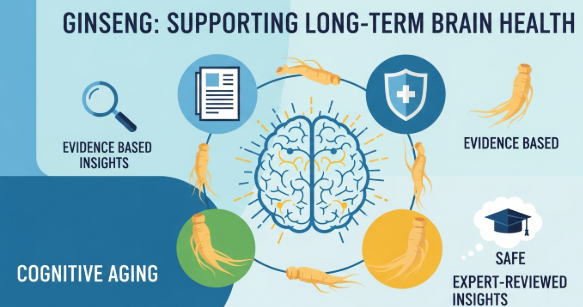
Ginseng for supporting long-term brain health has become a growing topic in preventive nutrition and herbal medicine. As populations age, many people seek natural ways to protect memory, focus, and cognitive resilience. Therefore, researchers have increasingly examined ginseng, especially Panax ginseng, for its potential neuroprotective effects. This article explores the science behind ginseng, explains how it may support brain health over time, and discusses safety considerations using evidence-based guidance.
Understanding Ginseng and Its Active Compounds
Ginseng is a perennial plant used for centuries in traditional Asian medicine. Today, modern research focuses on its bioactive compounds, known as ginsenosides.
Key bioactive components
Ginsenosides may influence brain health through several mechanisms:
- Modulating neurotransmitter activity
- Supporting cerebral blood flow
- Reducing oxidative stress in neural tissue
- Influencing neuroinflammatory pathways
According to the National Institutes of Health (NIH), these compounds interact with multiple biological systems rather than targeting a single pathway. This multi-target action explains why ginseng is studied for long-term brain support rather than short-term stimulation.
Source: https://www.nccih.nih.gov/health/asian-ginseng
Ginseng for Supporting Long-Term Brain Health: What Science Says
Several peer-reviewed studies suggest that ginseng for supporting long-term brain health may play a role in maintaining cognitive function as people age.
Cognitive performance and memory
Clinical trials published in PubMed indicate that standardized ginseng extracts may help support:
- Working memory
- Attention span
- Mental processing speed
For example, a randomized controlled trial in Journal of Ginseng Research reported improved cognitive performance in healthy adults after consistent supplementation. Importantly, researchers emphasized that benefits appeared gradually, supporting long-term use rather than immediate effects.
Source: https://pubmed.ncbi.nlm.nih.gov/
Neuroprotection and aging
As the brain ages, oxidative stress and inflammation increase. Studies suggest ginsenosides may help counter these processes. Therefore, ginseng is often discussed as part of a long-term cognitive wellness strategy rather than a treatment for disease.
Mechanisms That Support Brain Health Over Time
Understanding how ginseng works helps explain why it is linked to long-term cognitive support.
Antioxidant activity
The brain consumes high levels of oxygen, which increases oxidative stress. Ginseng contains antioxidant compounds that may help neutralize free radicals. As a result, neuronal cells may experience less cumulative damage over time.
Anti-inflammatory pathways
Chronic neuroinflammation is associated with cognitive decline. Research suggests ginsenosides may modulate inflammatory markers in the central nervous system. Consequently, this effect may support healthier brain aging.
Support for cerebral circulation
Healthy blood flow delivers oxygen and nutrients to brain tissue. Some studies show that ginseng may support vascular function, which indirectly benefits cognitive performance.
Comparing Ginseng With Other Brain-Supporting Herbs
Many herbs are marketed for brain health. However, ginseng stands out due to the depth of scientific research.
| Herb | Primary Focus | Evidence Strength |
|---|---|---|
| Ginseng | Cognitive longevity, stress adaptation | Strong clinical research |
| Ginkgo biloba | Blood flow, memory | Moderate evidence |
| Bacopa monnieri | Learning, memory | Growing evidence |
| Rhodiola rosea | Fatigue, stress | Limited long-term data |
While each herb has unique properties, ginseng for supporting long-term brain health benefits from broader clinical evaluation and standardized extracts.
Safety, Dosage, and Responsible Use
Is ginseng safe for long-term use?
The World Health Organization (WHO) recognizes Panax ginseng as generally safe when used appropriately. However, long-term use should follow evidence-based guidelines.
General safety considerations
- Use standardized extracts from reputable sources
- Avoid excessive dosages
- Monitor for mild side effects such as headache or digestive discomfort
According to the European Medicines Agency (EMA), ginseng may interact with certain medications, including anticoagulants. Therefore, professional guidance is essential.
Source: https://www.ema.europa.eu/
Important disclaimer
This article is for educational purposes only. It is not a substitute for professional medical advice, diagnosis, or treatment. Always consult a qualified healthcare provider before starting any herbal supplement.
Who May Benefit Most From Ginseng?
Ginseng is not intended to treat neurological disease. Instead, it may support brain health in specific populations.
Potentially suitable groups
- Adults experiencing age-related cognitive changes
- Individuals under chronic mental stress
- People seeking preventive cognitive support
However, pregnant individuals and those with chronic conditions should seek medical advice before use.
Choosing High-Quality Ginseng Products
Product quality significantly affects safety and effectiveness.
What to look for
- Clear labeling of Panax ginseng species
- Standardized ginsenoside content
- Third-party testing and certifications
Reputable manufacturers often provide transparent sourcing and quality assurance details.
Long-Term Brain Health Requires a Holistic Approach
Although ginseng for supporting long-term brain health shows promise, it should be part of a broader lifestyle strategy.
Evidence-based brain health habits
- Balanced nutrition rich in antioxidants
- Regular physical activity
- Adequate sleep and stress management
- Cognitive stimulation
Herbal supplements work best when combined with these proven practices.
Conclusion
Scientific evidence suggests that ginseng may support brain health through antioxidant, anti-inflammatory, and neuroprotective mechanisms. While it is not a cure or treatment, ginseng for supporting long-term brain health may serve as a complementary tool within a healthy lifestyle. Responsible use, product quality, and professional guidance remain essential for safe and effective supplementation.
Frequently Asked Questions (FAQ)
Is ginseng proven to prevent cognitive decline?
No. Research suggests supportive effects, but it does not prove prevention or treatment of cognitive disorders.
How long does it take to notice benefits?
Most studies report gradual effects after consistent use over several weeks.
Can ginseng be taken daily?
Many studies involve daily use. However, dosage and duration should be discussed with a healthcare professional.
Does ginseng replace a healthy diet?
No. Supplements complement but do not replace balanced nutrition and healthy habits.
🇰🇷 Premium Korean Ginseng Online Shop