
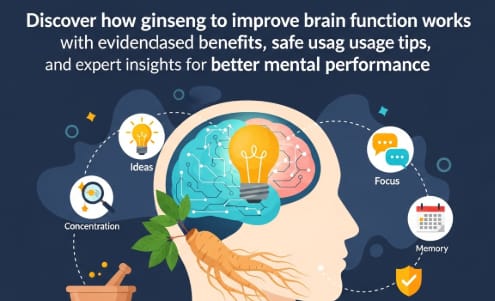
Ginseng has long been valued in traditional Asian medicine, especially for supporting mental clarity and vitality. Today, modern research explores ginseng to improve brain function, highlighting its role in memory, focus, and overall cognitive performance. In this article, you’ll learn evidence-based benefits, how ginseng supports brain health, and how to use it safely.
What Makes Ginseng Beneficial for the Brain?
Ginseng contains active compounds called ginsenosides, which support brain function through several mechanisms. These compounds help protect nerve cells, reduce inflammation, and regulate neurotransmitters. Scientists note that ginseng may help maintain mental performance as people age, although results depend on dose, duration, and the type of ginseng used.
Several studies published on PubMed, the National Institutes of Health (NIH) website, and respected journals suggest that the herb may support mood, memory, and attention. Although promising, ginseng is not a cure for neurological or psychiatric conditions. It should be viewed as a complementary option, not a replacement for medical treatment.
How Ginseng to Improve Brain Function Works
Research suggests that ginseng influences the brain in multiple ways. The combined effects may help people who want better focus, productivity, or mental stamina.
1. Supports Memory Formation
Ginseng may increase acetylcholine levels, a critical neurotransmitter for memory. In a controlled trial reported in the Journal of Ginseng Research, participants taking ginseng showed improvements in working memory and recall.
2. Enhances Mental Focus
Some ginsenosides help balance neurotransmitters such as dopamine and norepinephrine. These chemicals regulate attention and alertness. Many people report clearer thinking and improved concentration after taking ginseng consistently.
3. Reduces Mental Fatigue
Several studies note that ginseng helps reduce perceived fatigue. This effect may help students, professionals, and anyone experiencing demanding mental workloads. Because fatigue affects concentration, this benefit naturally supports improved brain performance.
4. Protects Brain Cells
Ginseng has antioxidant properties that help reduce oxidative stress in the brain. According to research referenced by the World Health Organization (WHO) and NIH, antioxidants may support long-term brain health.
Types of Ginseng and Which Is Best for Cognitive Support
You’ll find several ginseng varieties, and each offers unique benefits. When choosing ginseng to improve brain function, these types are most common:
🔸 Korean Red Ginseng (Panax ginseng)
This is the most researched type for cognitive performance. It undergoes steaming and drying, increasing its ginsenoside concentration.
🔸 American Ginseng (Panax quinquefolius)
Gentler than Korean ginseng. It may help improve calmness, mental clarity, and mood.
🔸 Siberian Ginseng (Eleutherococcus senticosus)
Not a true ginseng but often used for energy and endurance. Less evidence supports its role in cognitive enhancement.
Most studies about brain function focus on Korean Red Ginseng, making it the preferred choice for cognitive support.
Evidence-Based Benefits of Using Ginseng for Brain Health
1. Improves Working Memory
Participants in cognitive tests who consumed Korean Red Ginseng showed significant improvements in working memory tasks.
2. Enhances Reaction Time
Some studies show quicker response times in individuals after taking ginseng supplements for several weeks.
3. Supports Mood Stability
Ginseng may help regulate the HPA (hypothalamic-pituitary-adrenal) axis, supporting better stress response and emotional balance.
4. Helps Maintain Cognitive Health with Age
While not a treatment for neurodegenerative diseases, antioxidants in ginseng may help protect aging brain cells.
How to Use Ginseng Safely
If you’re considering ginseng to improve brain function, use it wisely and safely.
Recommended Forms
- Capsules or softgels
- Powder (often added to smoothies or tea)
- Liquid extract
- Traditional ginseng slices
Typical Dosage
- 200–400 mg standardized extract per day
- Always follow product labels
- Higher doses should only be used with medical advice
Who Should Avoid or Limit Ginseng?
- Pregnant or breastfeeding women
- Individuals with blood pressure disorders
- People taking anticoagulants or diabetes medications
- Anyone with hormone-sensitive illnesses
Always consult a healthcare professional, especially if you take medications or have medical conditions.
Potential Side Effects
Ginseng is generally safe when used in appropriate doses. However, some people may experience:
- Insomnia
- Digestive discomfort
- Headache
- Mild nervousness
- Changes in blood pressure
Start with a low dose to see how your body responds.
Best Ways to Include Ginseng in Your Routine
Here are simple ways to gain the brain-supporting benefits of ginseng:
Daily Practices
- Add ginseng powder to warm tea
- Use ginseng energy shots before mentally demanding tasks
- Take standardized capsules with breakfast
- Add ginseng to smoothies for an energizing boost
Combine With Other Brain-Support Supplements
- Ginkgo biloba
- Omega-3 fatty acids
- Vitamin B complex
Always check with a health professional before combining supplements.
Comparison: Ginseng vs. Other Brain Support Herbs
| Herb | Main Benefit | Best For |
|---|---|---|
| Ginseng | Memory, focus, fatigue reduction | Students, professionals |
| Ginkgo biloba | Circulation, memory | Older adults |
| Ashwagandha | Stress reduction | High-stress individuals |
| Rhodiola rosea | Energy and endurance | Athletes and workers |
Ginseng stands out for its multi-functional cognitive and energy-supporting effects.
Frequently Asked Questions (FAQ)
1. How long does ginseng take to improve brain function?
Most people notice benefits within 2–4 weeks of consistent use.
2. Can I take ginseng every day?
Yes, daily use is generally considered safe. Ask your doctor for personalized advice.
3. Is ginseng safe for older adults?
Yes, it may help support cognitive performance. However, monitor for medication interactions.
4. Can teenagers use ginseng to support concentration?
It may be safe in small doses, but teens should consult a healthcare provider first.
5. Should ginseng be taken with food?
Yes, taking it with meals helps minimize stomach discomfort.
Conclusion
Ginseng is one of the most researched herbs for cognitive support. When used responsibly, ginseng to improve brain function can be a helpful addition to daily wellness routines. While it offers many benefits—such as improved memory, reduced fatigue, and enhanced focus—it should never replace medical evaluation or professional advice.
If you plan to incorporate ginseng into your wellness routine, choose reputable products and consult a healthcare professional to ensure safety.
🇰🇷 Premium Korean Ginseng Online Shop


