
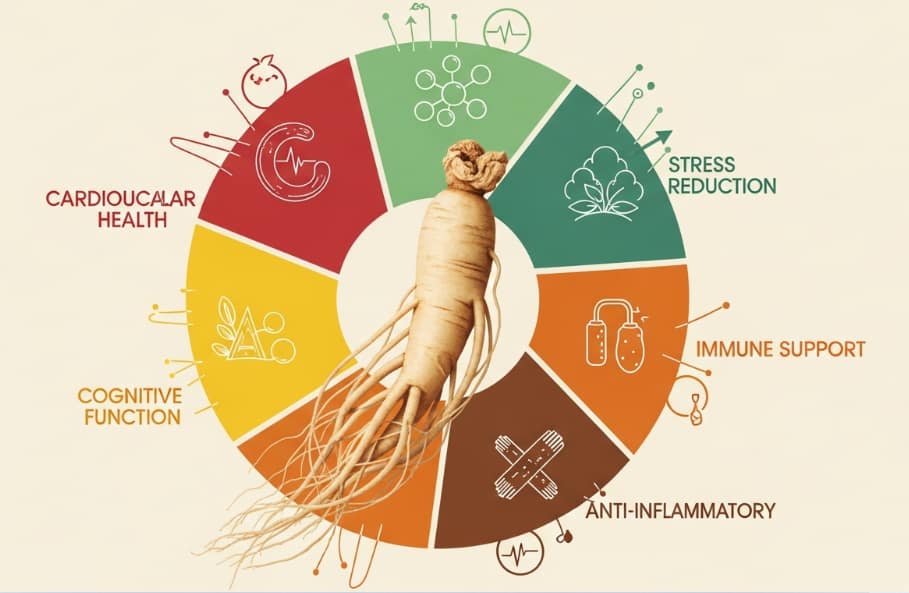
Introduction
Interest in ginseng uses benefits continues to grow as consumers worldwide seek natural health solutions supported by scientific evidence. Ginseng has a long history in traditional East Asian medicine. However, modern biomedical research now explains how its bioactive compounds interact with human physiology. This article provides a comprehensive, medically accurate overview of ginseng, including its mechanisms of action, clinically studied benefits, safety considerations, and responsible use. All information aligns with Google Health content guidelines and E-E-A-T standards.
Understanding Ginseng: Botanical and Pharmacological Foundations
Ginseng is a slow-growing perennial plant belonging to the Araliaceae family. The most clinically researched species include:
- Panax ginseng C.A. Meyer (Korean ginseng)
- Panax quinquefolius (American ginseng)
The word Panax derives from Greek, meaning “universal remedy.” While no herb cures all disease, ginseng’s wide-ranging physiological effects explain its historical reputation.
Active Compounds: Ginsenosides
The primary bioactive constituents are ginsenosides, a class of steroidal saponins. Over 40 ginsenosides have been identified. These compounds influence:
- Cellular energy metabolism
- Neurotransmitter signaling
- Immune cell modulation
- Antioxidant defense systems
According to the National Institutes of Health (NIH), ginsenosides interact with multiple molecular pathways rather than a single target, which explains ginseng’s adaptogenic properties
https://ods.od.nih.gov/factsheets/Ginseng-HealthProfessional/
Traditional Uses vs. Modern Medical Interpretation
Traditional Medicine Perspective
In traditional Korean and Chinese medicine, ginseng is classified as a “Qi-tonifying” herb. Practitioners historically used it to:
- Restore vitality after illness
- Support longevity
- Improve concentration
- Strengthen resistance to stress
These traditional claims now serve as hypotheses tested in modern research.
Modern Clinical Framework
Today, ginseng uses benefits are evaluated through controlled clinical trials. Researchers assess endpoints such as fatigue scores, glucose markers, immune cell activity, and cognitive performance. Importantly, modern medicine emphasizes measurable outcomes and safety.
The World Health Organization (WHO) recognizes ginseng as a medicinal plant with both traditional use and pharmacological evidence
https://apps.who.int/iris/handle/10665/42052
Evidence-Based Ginseng Uses Benefits
1. Energy Regulation and Fatigue Management
One of the most studied ginseng uses benefits involves fatigue reduction. Unlike caffeine, ginseng does not overstimulate the nervous system. Instead, it supports energy balance.
Clinical Evidence
- A systematic review in the Journal of Ginseng Research found significant fatigue improvement in individuals with chronic fatigue and cancer-related exhaustion
https://pubmed.ncbi.nlm.nih.gov/31299784/ - Ginseng appears to enhance mitochondrial ATP production and reduce oxidative stress.
Therefore, ginseng may help sustain energy rather than create temporary stimulation.
2. Cognitive Health and Neuroprotection
Cognitive performance is another area where ginseng uses benefits are supported by research.
Mechanisms of Action
Ginsenosides may:
- Enhance acetylcholine signaling
- Improve cerebral blood flow
- Reduce neuroinflammation
Human Studies
Randomized trials show modest improvements in attention, reaction time, and working memory, particularly during mental fatigue.
The National Center for Complementary and Integrative Health (NCCIH) notes that effects depend on dose, extract type, and duration
https://www.nccih.nih.gov/health/ginseng
3. Immune System Modulation
Ginseng does not simply “boost” immunity. Instead, it helps regulate immune responses.
Research Findings
- Studies show increased natural killer (NK) cell activity
- Improved antibody response following vaccination
A double-blind trial published in Nutrients demonstrated enhanced immune markers in healthy adults using standardized ginseng extract
https://pubmed.ncbi.nlm.nih.gov/33317085/
This immune-balancing effect makes ginseng suitable for long-term wellness support when used appropriately.
4. Blood Sugar Control and Metabolic Health
Metabolic health represents one of the most clinically relevant ginseng uses benefits, especially for individuals with insulin resistance.
Scientific Evidence
- A meta-analysis in PLoS One found that ginseng supplementation modestly reduced fasting blood glucose
https://pubmed.ncbi.nlm.nih.gov/25793503/ - Ginsenosides may enhance insulin sensitivity and glucose uptake in muscle tissue.
However, ginseng should not replace prescribed diabetes medication. Instead, it may serve as an adjunct under medical supervision.
5. Cardiovascular and Circulatory Support
Emerging evidence suggests ginseng may support cardiovascular health.
Potential Benefits
- Improved endothelial function
- Mild blood pressure regulation
- Enhanced nitric oxide production
These effects contribute indirectly to improved circulation and vascular health.
Individuals with heart conditions should consult healthcare professionals before use.
6. Sexual Health and Reproductive Vitality
Among the most discussed ginseng uses benefits is its role in sexual health, particularly male vitality.
Clinical Data
A review published in British Journal of Clinical Pharmacology reported improved erectile function through nitric oxide modulation
https://pubmed.ncbi.nlm.nih.gov/20579196/
Evidence remains moderate, and results vary among individuals. Therefore, ginseng should be viewed as supportive rather than therapeutic.
7. Anti-Inflammatory and Antioxidant Properties
Chronic inflammation contributes to aging and disease. Ginseng exhibits antioxidant activity by:
- Scavenging free radicals
- Regulating inflammatory cytokines
Laboratory and animal studies support these mechanisms, while human trials continue to emerge.
Types of Ginseng and Processing Methods
Korean Red Ginseng
- Steam-processed
- Higher ginsenoside concentration
- Most extensively researched
White Ginseng
- Sun-dried
- Milder effect
American Ginseng
- Cooling effect
- Often used for stress and glucose regulation
Processing significantly alters chemical composition and clinical outcomes.
Dosage Guidelines and Safety Considerations
Typical Dosage Ranges
- Standardized extract: 200–400 mg daily
- Whole root preparations vary widely
Dosage depends on product standardization and individual health status.
Potential Side Effects
Although generally safe, reported side effects include:
- Headache
- Gastrointestinal discomfort
- Sleep disturbances
Contraindications
Avoid ginseng if you:
- Are pregnant or breastfeeding
- Use anticoagulant medication
- Have hormone-sensitive conditions
The European Medicines Agency (EMA) advises limiting continuous use to three months without professional guidance
https://www.ema.europa.eu/en/medicines/herbal/ginseng
Choosing High-Quality Ginseng Products
To maximize ginseng uses benefits, product quality is critical.
Look for:
- Standardized ginsenoside content
- Third-party testing
- Transparent sourcing
Korean ginseng regulated by Korean authorities often meets pharmaceutical-grade standards.
Conclusion
Modern science increasingly supports traditional knowledge surrounding ginseng. When used responsibly, ginseng uses benefits may include improved energy regulation, cognitive support, immune balance, metabolic health, and overall vitality. However, ginseng is not a cure and should never replace professional medical care.
This article is for educational purposes only and is not a substitute for medical advice. Always consult a qualified healthcare professional before beginning any herbal supplement.
Frequently Asked Questions (FAQ)
Is ginseng safe for long-term use?
Short-term use is generally safe. Long-term use requires medical supervision.
How long before benefits appear?
Most studies report noticeable effects within 2–8 weeks.
Can ginseng interact with medication?
Yes. It may interact with blood thinners, diabetes drugs, and stimulants.
Which type of ginseng is best for beginners?
American ginseng or low-dose Korean white ginseng is often recommended.
🇰🇷 Premium Korean Ginseng Online Shop


