
Introduction
Managing cholesterol levels is a central strategy for reducing cardiovascular risk. For this reason, many people now seek a herbal cholesterol treatment as a complementary approach to diet, exercise, and medical care. Herbal medicine has a long history in lipid management, yet modern use must rely on scientific evidence, safety data, and clinical context. This article provides a comprehensive, evidence-based review of herbal options for cholesterol management, aligned with current medical guidelines and Google Health standards.
Understanding Cholesterol and Cardiovascular Risk
Cholesterol is a lipid molecule essential for hormone synthesis, cell membranes, and bile acids. However, elevated low-density lipoprotein (LDL) cholesterol increases atherosclerotic risk.
Key cholesterol markers
- LDL cholesterol: Primary contributor to plaque formation
- HDL cholesterol: Supports reverse cholesterol transport
- Triglycerides: Associated with metabolic and cardiovascular risk
According to the World Health Organization, dyslipidemia is a major modifiable risk factor for heart disease. Therefore, effective cholesterol management remains a global public health priority.
What Is an Evidence-Based Herbal Cholesterol Treatment?
A scientifically grounded herbal cholesterol treatment uses plant-derived compounds that demonstrate lipid-lowering or cardioprotective effects in human or high-quality animal studies. Importantly, these herbs should complement, not replace, standard care.
Evidence-based evaluation focuses on:
- Clinical trial data
- Mechanisms of action
- Safety and dosage consistency
Institutions such as the National Institutes of Health and databases like PubMed provide peer-reviewed research supporting or refuting herbal claims.
Key Herbs Studied for Cholesterol Management
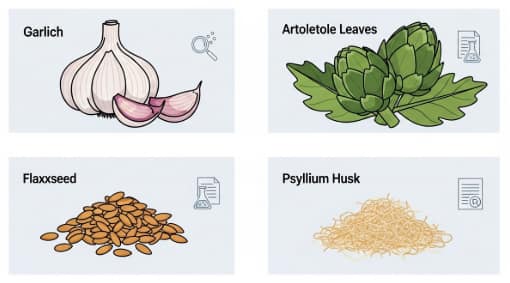
Garlic (Allium sativum)
Garlic contains sulfur compounds such as allicin, which may inhibit hepatic cholesterol synthesis.
Evidence highlights
- Meta-analyses show modest LDL reduction
- Effects appear stronger with standardized extracts
- Benefits are additive to lifestyle changes
Garlic remains one of the most studied options in herbal cholesterol treatment research.
Artichoke Leaf Extract
Artichoke leaves contain cynarin and luteolin, compounds linked to bile acid excretion.
Clinical findings
- Reduction in total cholesterol in mild hypercholesterolemia
- Improved lipid metabolism with 6–12 weeks of use
Moreover, artichoke extract is generally well tolerated when standardized products are used.
Red Yeast Rice: Benefits and Cautions
Red yeast rice contains monacolin K, a compound structurally identical to lovastatin.
Advantages
- Significant LDL reduction
- Strong clinical evidence
Limitations
- Variable monacolin content
- Potential liver and muscle toxicity
For this reason, the U.S. Food and Drug Administration advises caution. Red yeast rice should only be used under medical supervision.
Dietary Fiber and Herbal Synergy
Soluble fiber plays a critical role in cholesterol reduction by binding bile acids in the gut.
Fiber-rich herbal sources
- Psyllium husk
- Flaxseed
- Fenugreek
When combined with an herbal cholesterol treatment, fiber improves LDL reduction and metabolic outcomes. Additionally, fiber enhances gut microbiota diversity, which indirectly supports lipid regulation.
Mechanisms of Action: How Herbs Influence Cholesterol
Herbal compounds act through multiple pathways:
| Mechanism | Effect on Cholesterol |
|---|---|
| HMG-CoA reductase inhibition | Reduced cholesterol synthesis |
| Increased bile acid excretion | Lower circulating LDL |
| Antioxidant activity | Reduced LDL oxidation |
| Improved insulin sensitivity | Better lipid metabolism |
This multimodal action explains why herbal strategies often complement pharmaceutical therapy rather than replace it.
Safety, Quality, and Clinical Considerations
Despite their natural origin, herbs are bioactive substances. Therefore, safety assessment is essential.
Key safety principles
- Use standardized extracts
- Avoid combining herbs with statins without guidance
- Monitor liver enzymes if using potent products
The European Society of Cardiology emphasizes that natural therapies should align with evidence-based cardiovascular prevention strategies.
Herbal Cholesterol Treatment vs Conventional Therapy
Herbal approaches differ from statins in strength and predictability.
Comparison overview
- Statins: Strong LDL reduction, robust outcome data
- Herbal options: Mild to moderate effect, supportive role
Thus, herbal cholesterol treatment strategies suit individuals with borderline elevations or those seeking adjunctive lifestyle support.
Lifestyle Integration for Optimal Results
Herbs are most effective when integrated into a broader lifestyle plan.
Key supportive strategies include:
- Mediterranean-style diet
- Regular aerobic exercise
- Weight management
- Smoking cessation
According to the American Heart Association, combined lifestyle interventions reduce cardiovascular risk more effectively than single approaches.
A Note on Korean Ginseng
Korean ginseng has been explored for metabolic health due to its ginsenosides. Some studies suggest indirect cholesterol benefits through improved insulin sensitivity and anti-inflammatory effects. However, evidence remains limited, and its role in herbal cholesterol treatment should be considered supportive rather than primary.
Conclusion
A well-designed herbal cholesterol treatment can support lipid management when guided by science, quality control, and professional supervision. Garlic, artichoke leaf, soluble fiber, and other botanicals show modest yet meaningful benefits. However, these approaches work best alongside evidence-based medical care and healthy lifestyle habits. Always consult a qualified healthcare professional before starting any herbal regimen, especially if you have cardiovascular disease or use prescription medications.
Read also: Ginseng and Cholesterol: Evidence-Based Benefits of Korean Ginseng for Heart Health