
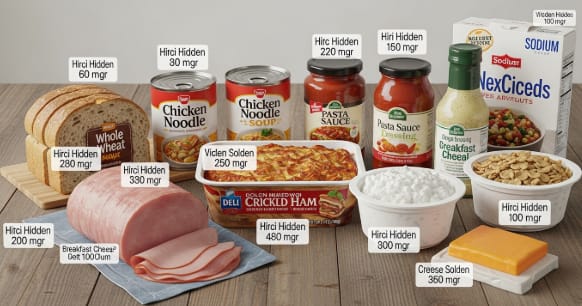
High blood pressure (hypertension) affects millions of people worldwide, and one of the biggest contributors is high sodium intake. While most people know that salty snacks and fast food contain a lot of sodium, what many don’t realize is that more than 70% of dietary sodium comes from hidden sources—foods that don’t taste salty at all.
Understanding these hidden sodium foods is essential for preventing hypertension, improving blood vessel function, and reducing long-term risks such as heart disease, stroke, and kidney failure.
Why Sodium Raises Blood Pressure: The Scientific Explanation
Sodium affects blood pressure through several physiological mechanisms:
1. Fluid Retention
Sodium pulls water into the bloodstream.
When sodium levels rise, the body retains more fluid, increasing blood volume, which raises blood pressure.
2. Vascular Stiffness
Excess sodium disrupts endothelial function (the inner lining of blood vessels), leading to:
- Reduced nitric oxide production
- Increased arterial stiffness
- Narrower blood vessel diameter
All of these increase hypertension risk.
3. Hormonal Responses
High sodium intake triggers changes in:
- Renin–angiotensin–aldosterone system (RAAS)
- Sympathetic nervous system
Both systems further elevate blood pressure.
Top Hidden Sodium Foods That Raise Blood Pressure
These foods often seem harmless — but they contain surprisingly high sodium levels due to processing, preservatives, and flavor enhancers.
1. Bread and Bakery Products
Bread doesn’t taste salty, yet it contributes significantly to daily sodium intake.
- 1 slice of commercial bread: 120–200 mg sodium
- Bagels and croissants can contain up to 400 mg each
Bread is a daily staple—making its sodium content more impactful than you think.
2. Breakfast Cereals
Many breakfast cereals are high in sodium, even “healthy” ones.
- Some contain 200–300 mg per serving
Cereals use sodium for flavor, crispiness, and preservation.
3. Processed Meats (the #1 hidden source)
Includes:
- Sausages
- Bacon
- Ham
- Chicken nuggets
- Deli meats
These often contain 800–1,200 mg per serving, due to curing agents like sodium nitrate, sodium phosphate, and salt brine.
4. Cheese
Cheese contains sodium for fermentation and preservation.
- Cheddar: 180–200 mg per slice
- Feta: 300–350 mg per serving
- Processed cheese: up to 500 mg per slice
5. Salad Dressings and Sauces
Even small amounts are high in sodium.
- Soy sauce: 1,000 mg per tablespoon
- Teriyaki sauce: 600–800 mg
- Ranch dressing: 250 mg per 2 tbsp
Many people underestimate condiment sodium.
6. Canned Vegetables and Soups
Salt is used as a preservative.
- Canned soup: 700–1,100 mg per serving
- Canned vegetables: 200–400 mg per half cup
“Healthy” vegetable soups can still be extremely salty.
7. Instant Noodles
One pack contains:
- 1,700–2,200 mg sodium
(almost the entire daily limit)
The seasoning packet is the main culprit.
8. Frozen Meals
Frozen pizza, pasta, and ready-to-eat meals contain preservatives like:
- sodium phosphate
- sodium benzoate
- sodium bicarbonate
A single meal may contain 1,200–1,800 mg sodium.
How to Protect Yourself from Hidden Sodium Sources
✔ Always read nutrition labels
Look for:
- “Sodium” or “Na”
- Anything with “sodium–” in the ingredients list
✔ Choose low-sodium or no-salt-added versions
Especially for canned vegetables, sauces, and soups.
✔ Increase potassium intake
Potassium counteracts sodium’s effect on blood pressure.
Found in bananas, spinach, potatoes, beans, and avocados.
✔ Choose whole foods over processed foods
Fresh vegetables, fruits, nuts, lean meats, and whole grains help maintain better cardiovascular health.
✔ Consider herbal support
Korean Red Ginseng may support:
- vascular relaxation
- improved circulation
- reduced inflammation
- better metabolic health
This makes it a helpful addition to a heart-friendly lifestyle.
Conclusion
Hidden sodium sources are one of the biggest reasons people unknowingly consume too much salt and develop hypertension. By recognizing these foods and choosing healthier alternatives, you can significantly protect your heart and maintain healthy blood pressure levels.


