
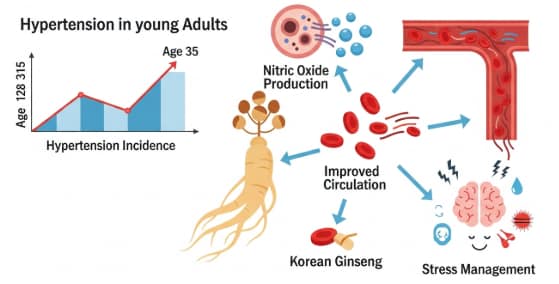
For decades, hypertension was considered a condition affecting mostly older adults. But today, hypertension in young adults—even those in their 20s and early 30s—is increasing at a concerning rate. Sedentary lifestyles, high-sodium diets, stress, obesity, poor sleep, and early metabolic dysfunction are major contributors. Even more alarming, many young individuals are unaware they have high blood pressure, increasing the risk of early cardiovascular disease.
This article explores the science behind early-onset hypertension, the risk factors, early symptoms, long-term consequences, and how Korean ginseng (Panax ginseng) may serve as a supportive natural option for heart and vascular health.
⭐ Why Hypertension Is Increasing Among Young Adults
According to recent global data, hypertension in people aged 18–39 has risen significantly. Several physiological and lifestyle factors contribute:
1. Obesity and Early Insulin Resistance
Young adults are experiencing higher rates of abdominal obesity and metabolic syndrome.
This leads to:
- Increased systemic inflammation
- Poor insulin sensitivity
- Overactive sympathetic nervous system
- RAAS (Renin–Angiotensin–Aldosterone System) overactivation
All of these elevate blood pressure.
2. High Sodium Intake and Ultraprocessed Foods
Instant noodles, fast food, fried snacks, and packaged foods contain excessive sodium and preservatives, impairing endothelial function and increasing fluid retention.
3. Chronic Stress and Hyperstimulation of the Nervous System
Young adults face high academic, social, and professional stress.
Stress raises:
- Adrenaline
- Cortisol
- Heart rate
- Blood vessel constriction
This persistent sympathetic activation elevates blood pressure.
4. Sedentary Digital Lifestyle
Hours spent sitting for gaming, scrolling, studying, or working reduce circulation and weaken cardiovascular conditioning.
5. Low-Quality Sleep
Late-night screen exposure, sleep deprivation, and irregular sleep cycles disrupt:
- Autonomic balance
- Hormonal regulation
- Vascular relaxation
Poor sleep is directly linked to hypertension in young adults.
🔎 Scientific Signs of Hypertension in Young Adults
Hypertension in youth often goes undetected. But subtle physiological signs may appear:
• Frequent headaches (especially morning headaches)
Due to impaired cerebral autoregulation.
• Fatigue and reduced exercise tolerance
Caused by increased cardiac workload and early endothelial dysfunction.
• Heart palpitations
Hypertension can affect the heart’s electrical system, especially in young adults with stress-related sympathetic dominance.
• Blurred vision or eye strain
Early microvascular changes may occur in the retina.
• Chest tightness or discomfort
Though less common, this may indicate early cardiac strain.
• Difficulty concentrating
Linked to impaired cerebral blood flow and autonomic imbalance.
⚠️ Long-Term Risks of Early Hypertension
Hypertension that starts young is far more dangerous because it persists for decades. Research shows young-onset hypertension significantly increases the risk of:
- Left ventricular hypertrophy
- Coronary artery disease
- Stroke
- Kidney dysfunction
- Erectile dysfunction
- Early cognitive decline
- Premature mortality
This makes prevention and early management urgently important.
🌿 How Korean Ginseng May Support Cardiovascular Health in Young Adults
Korean ginseng (Panax ginseng) contains ginsenosides—bioactive compounds that provide multiple cardiovascular benefits supported by research.
1. Enhances Nitric Oxide (NO) Production
Ginsenosides (Rg1, Rb1, Rg3) stimulate eNOS, promoting vasodilation, improving blood flow, and supporting healthy blood pressure.
2. Reduces Oxidative Stress
Young adults with unhealthy diets accumulate oxidative damage early.
Ginseng reduces:
- ROS (reactive oxygen species)
- Lipid peroxidation
- Inflammation
Helping protect arteries and endothelial tissue.
3. Supports Stress Regulation and the HPA Axis
As an adaptogen, ginseng stabilizes cortisol levels and improves stress resilience—critical for young adults who experience chronic stress-induced blood pressure spikes.
4. Improves Metabolic Function
Ginseng may support:
- Better glucose metabolism
- Improved insulin sensitivity
- Lower systemic inflammation
All of which are strongly linked to early hypertension.
5. Enhances Overall Circulation and Vascular Elasticity
Through improved nitric oxide activity, antioxidative effects, and enhanced arterial flexibility.
Note: Ginseng is not a substitute for medical treatment but can be a scientifically supported complementary approach.
🥗 How Young Adults Can Manage Hypertension Naturally
- Reduce sodium and processed foods
- Maintain a healthy body weight
- Exercise 30 minutes daily
- Manage stress through breathing, meditation, or exercise
- Improve sleep hygiene
- Avoid smoking and excessive alcohol
- Monitor blood pressure regularly even at a young age


