
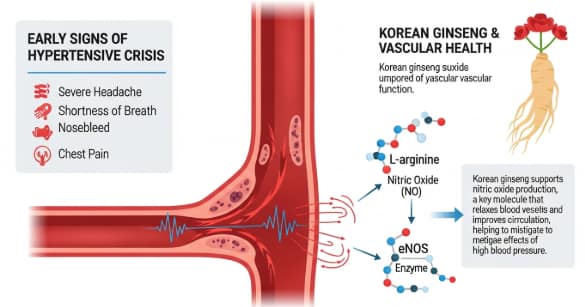
A hypertensive crisis is a severe and dangerous rise in blood pressure, typically defined as ≥180/120 mmHg, requiring immediate attention. Unlike chronic hypertension that develops gradually, a hypertensive crisis occurs suddenly — and the consequences can be life-threatening if not managed quickly. It dramatically increases the risk of stroke, acute heart failure, aortic dissection, kidney injury, and permanent organ damage within minutes to hours.
This article breaks down the scientific mechanisms behind hypertensive crisis, its warning signs, the difference between urgency and emergency, and how lifestyle + natural support like Korean ginseng may help promote healthier vascular function in long-term blood pressure management.
⭐ What Is a Hypertensive Crisis?
A hypertensive crisis refers to an abrupt and extreme elevation in blood pressure. It has two categories:
1. Hypertensive Urgency
- BP ≥180/120 mmHg
- No acute target-organ damage
- Symptoms may be mild or moderate
- Requires immediate outpatient treatment to prevent progression
2. Hypertensive Emergency
- BP ≥180/120 mmHg
- With signs of organ damage, such as:
- Neurological impairment (stroke symptoms)
- Acute pulmonary edema
- Acute kidney injury
- Aortic dissection
- Heart failure
- Requires emergency room treatment and intravenous medication
A hypertensive emergency can lead to disability or death if treatment is delayed.
🔎 Scientific Mechanisms Behind Hypertensive Crisis
A sudden spike in blood pressure typically occurs due to:
1. Sudden vasoconstriction
Overactivity of the sympathetic nervous system causes arteries to constrict rapidly, raising systemic vascular resistance.
2. Dysregulation of the renin–angiotensin–aldosterone system (RAAS)
Excess angiotensin II triggers intense vasoconstriction and sodium retention.
3. Endothelial dysfunction
Reduction of nitric oxide (NO) results in stiff and non-responsive arteries.
4. Inflammatory response and oxidative stress
These processes damage arteries, making them more reactive to pressure changes.
5. Poor medication adherence
One of the most common causes — missing doses of antihypertensives can trigger a crisis in high-risk individuals.
🚨 Warning Signs of a Hypertensive Crisis
These symptoms indicate immediate danger:
• Severe headache
Often described as the “worst headache of my life.”
• Chest pain
May indicate myocardial ischemia or aortic dissection.
• Shortness of breath
Possible pulmonary edema.
• Neurological symptoms
- Confusion
- Slurred speech
- Vision loss
- Seizures
- Numbness or paralysis
These suggest a potential stroke.
• Severe anxiety or sense of impending doom
• Nausea and vomiting
Often related to increased intracranial pressure.
• Decreased urine output
Risk of acute kidney injury.
If these signs appear alongside extremely high BP, immediate emergency care is necessary.
❤️ Long-Term Effects of Hypertensive Crisis on the Body
Without treatment, hypertensive crisis can cause:
- Hemorrhagic or ischemic stroke
- Heart failure or myocardial infarction
- Aortic aneurysm or dissection
- Retinal damage (vision loss)
- Chronic kidney disease
- Permanent cognitive impairment
Because of this, early prevention is essential.
🌿 Can Korean Ginseng Support Long-Term Blood Pressure Health? A Scientific Look
Panax ginseng is not a treatment for hypertensive crisis.
However, scientific studies suggest it may support long-term cardiovascular function, helping reduce the risk of severe blood pressure fluctuations.
1. Promotes Nitric Oxide (NO) Production
Ginsenosides such as Rg1 and Rb1 enhance endothelial nitric oxide synthase (eNOS).
Benefits:
- Vasodilation
- Reduced vascular stiffness
- Healthier arterial tone
2. Reduces Oxidative Stress
Hypertension is deeply linked to oxidative damage.
Ginseng’s antioxidant effects help protect blood vessel walls.
3. Balances Stress and Sympathetic Activity
As an adaptogen, ginseng reduces excess cortisol and sympathetic overactivation — both common triggers of hypertensive spikes.
4. Supports Better Lipid and Metabolic Profiles
Improved cholesterol and insulin sensitivity contribute to healthier vascular dynamics.
5. Enhances Microcirculation
Better blood flow reduces cardiovascular strain.
While ginseng cannot treat an acute hypertensive event, it may be beneficial as part of a long-term strategy for vascular support, when combined with medication adherence, diet, and regular monitoring.
🥗 How to Prevent Hypertensive Crisis
- Take prescribed blood pressure medication consistently
- Reduce salt intake dramatically
- Avoid smoking and excessive alcohol
- Maintain a healthy weight
- Reduce stress through breathing, meditation, or exercise
- Monitor blood pressure regularly
- Seek medical care immediately when symptoms spike


