
Introduction
Modern lifestyles—marked by processed foods, stress, and sedentary habits—have made unstable blood sugar one of today’s most common health challenges. Even before diabetes develops, fluctuating glucose levels can cause fatigue, irritability, brain fog, and long-term vascular damage.
Among the many natural approaches to blood sugar regulation, one traditional herb stands out for its dual scientific and historical credibility: Korean Red Ginseng (Panax ginseng Meyer).
For centuries, ginseng has been prized in Korea as a balancing tonic—one that strengthens the body during weakness, calms it during excess, and enhances resilience to both physical and emotional stress. Today, growing evidence confirms that red ginseng supports healthy insulin function, glucose metabolism, and metabolic balance, making it a valuable ally for modern metabolic health.
Understanding Blood Sugar and Insulin Sensitivity
To appreciate ginseng’s role, we need to understand the body’s glucose–insulin relationship.
When we eat, carbohydrates are converted into glucose, which fuels our cells. The hormone insulin, released by the pancreas, helps glucose enter those cells. However, when insulin signaling weakens—a condition called insulin resistance—glucose remains in the bloodstream, leading to higher blood sugar and increased risk of type 2 diabetes and cardiovascular problems.
Maintaining balanced blood sugar requires strong insulin sensitivity, efficient glucose uptake, and low oxidative stress—all of which Korean Red Ginseng naturally supports.
How Korean Red Ginseng Helps Regulate Blood Sugar
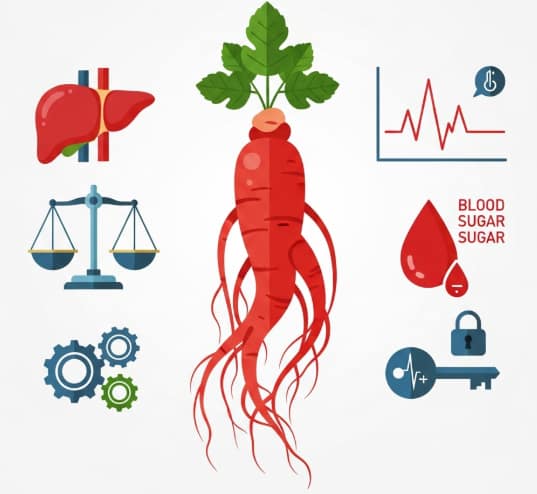
Research shows that Korean Red Ginseng improves glucose metabolism through multiple complementary mechanisms, making it both preventive and supportive for metabolic health.
- Enhancing Insulin Sensitivity
Ginsenosides—especially Rg1, Rb1, and Rg3—improve insulin receptor activity on cell membranes. This allows glucose to be absorbed more effectively by muscle and fat cells, reducing excess sugar in the bloodstream. - Reducing Post-Meal Glucose Spikes
Red ginseng slows carbohydrate absorption in the intestines and enhances glucose clearance after meals. In a Diabetes Research and Clinical Practice (2020) trial, daily red ginseng supplementation for 12 weeks led to lower fasting glucose and reduced postprandial peaks among pre-diabetic adults. - Supporting Pancreatic β-Cell Health
Chronic high sugar damages insulin-producing cells in the pancreas. Ginsenosides act as antioxidants, protecting these delicate cells from oxidative and inflammatory stress, helping maintain stable insulin output. - Balancing Gut Microbiota
Emerging studies indicate that red ginseng modifies gut flora composition, increasing beneficial bacteria like Akkermansia muciniphila, which is associated with improved insulin sensitivity and metabolic health.
Scientific Evidence: What the Studies Say
- A meta-analysis published in Frontiers in Pharmacology (2021) concluded that Korean Red Ginseng significantly improved fasting glucose and HbA1c levels in both diabetic and non-diabetic subjects.
- Another randomized controlled trial in The Journal of Ginseng Research (2019) found that 2 g of red ginseng extract daily improved insulin resistance markers and lipid profiles in overweight adults.
- In animal models, ginsenoside Rb1 improved glucose tolerance by increasing GLUT4 transporter expression, the protein responsible for moving glucose into cells.
These findings confirm that the effects of red ginseng are not anecdotal—they are reproducible and measurable across different study designs and populations.
👉 Read supporting studies here
The Role of Oxidative Stress in Glucose Imbalance
Uncontrolled blood sugar doesn’t just cause metabolic strain—it fuels oxidative stress, damaging blood vessels, nerves, and organs.
Korean Red Ginseng combats this cycle by neutralizing free radicals and reducing inflammatory cytokines such as TNF-α and IL-6. This antioxidant action protects the insulin receptors from degradation and prevents the formation of harmful advanced glycation end products (AGEs) that accelerate aging and arterial stiffness.
This dual antioxidant and anti-inflammatory property makes ginseng a functional adaptogen—one that restores equilibrium where the body needs it most.
Ginseng, Fatigue, and Energy Metabolism
Blood sugar imbalance often leads to energy fluctuations: sudden crashes, brain fog, and cravings. Ginseng stabilizes this by improving mitochondrial efficiency—the process by which cells turn glucose into ATP (energy).
Clinical users often report smoother energy throughout the day without the jitteriness associated with caffeine or energy drinks. This balanced vitality reflects ginseng’s unique adaptogenic nature: it doesn’t overstimulate but harmonizes the body’s natural energy rhythm.
A Nutrition Journal (2018) study found that individuals taking red ginseng reported less fatigue, improved concentration, and more consistent mental alertness even under stress.
The Heart–Sugar Connection
Metabolic and cardiovascular health are inseparable. Elevated glucose thickens the blood, damages vessels, and accelerates plaque buildup—key drivers of hypertension and heart disease.
By improving glucose control, Korean Red Ginseng indirectly supports heart function as well. Its combined actions—reducing blood sugar, improving lipid balance, and protecting endothelium—make it a comprehensive cardio-metabolic regulator.
Integrating Korean Red Ginseng Into Daily Life
Consistency is crucial when using ginseng for blood sugar management.
Recommended intake:
- 500–2000 mg of standardized Korean Red Ginseng extract daily
- Preferably in the morning, with or after meals
- Duration: at least 8–12 weeks for noticeable results
Tips for optimal use:
- Pair with balanced nutrition and moderate exercise
- Limit processed sugar and refined carbs
- Stay hydrated—ginseng works best in well-oxygenated, well-hydrated cells
- If on diabetes medication, consult your doctor before starting supplementation
Look for GMP-certified, standardized extracts with quantified ginsenoside content (≥5%). Authentic Korean products ensure purity and potency, free from contaminants and unnecessary additives.
Processed Red Ginseng: Why It Works Better
Korean Red Ginseng differs from white or raw ginseng because it undergoes steaming and drying, a process that transforms natural saponins into more potent ginsenosides such as Rg3, Rg5, and Rh2.
These compounds have stronger antioxidant and anti-inflammatory properties and show greater bioavailability, allowing them to reach target tissues faster. This makes red ginseng particularly effective for metabolic and circulatory functions compared with unprocessed varieties.
Prevention Over Treatment
The best approach to blood sugar health is prevention. Even if you don’t have diabetes, maintaining balanced glucose levels prevents premature aging, inflammation, and vascular damage.
Korean Red Ginseng excels in early-stage metabolic support—helping the body self-regulate before imbalance turns into disease. It embodies the principle of traditional Korean medicine: support the system, not just the symptom.
Conclusion
Blood sugar balance is the cornerstone of modern vitality. It influences energy, mood, heart health, and even cognitive clarity. Korean Red Ginseng offers a scientifically validated, time-honored solution for maintaining this balance—naturally and holistically.
Through improved insulin sensitivity, reduced oxidative stress, and better circulation, it provides a foundation for sustainable metabolic wellness. Whether you’re managing pre-diabetes, supporting cardiovascular function, or simply seeking stable daily energy, Korean Red Ginseng stands as one of nature’s most complete adaptogens for blood sugar harmony.
🇰🇷 Premium Korean Ginseng Online Shop


