
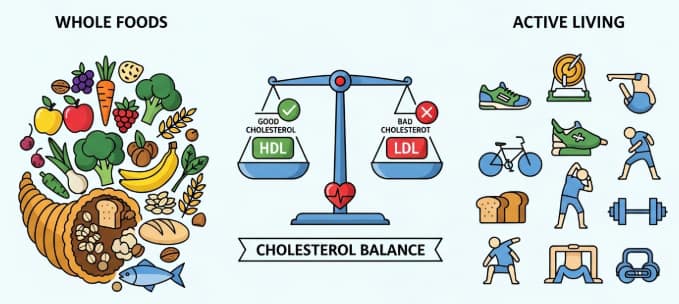
Maintaining balanced cholesterol levels is a cornerstone of cardiovascular health. For many adults, especially those concerned about heart disease risk, exploring natural ways to support healthy cholesterol is an important first step. Rather than relying solely on medication, lifestyle and dietary strategies supported by scientific evidence can play a meaningful role in improving lipid profiles while supporting overall metabolic health.
Cholesterol itself is not inherently harmful. In fact, it is essential for hormone production, cell membranes, and vitamin D synthesis. However, elevated low-density lipoprotein (LDL) cholesterol and low levels of high-density lipoprotein (HDL) cholesterol are strongly associated with atherosclerosis and cardiovascular disease. Therefore, supporting healthy cholesterol balance requires a holistic, evidence-based approach.
Understanding Cholesterol and Why Balance Matters
Cholesterol travels through the bloodstream via lipoproteins. The most clinically relevant include:
- LDL cholesterol (“bad” cholesterol), which contributes to plaque formation
- HDL cholesterol (“good” cholesterol), which helps remove excess cholesterol
- Triglycerides, a form of circulating fat linked to metabolic risk
According to the World Health Organization (WHO), abnormal blood lipids are a major modifiable risk factor for heart disease worldwide. Importantly, cholesterol levels are influenced not only by genetics, but also by diet, physical activity, gut health, and systemic inflammation.
Evidence-Based Dietary Approaches to Improve Cholesterol
Dietary modification is one of the most effective natural ways to support healthy cholesterol. Research consistently shows that certain foods and nutrients can positively influence lipid metabolism.
Increase Soluble Fiber Intake
Soluble fiber binds bile acids in the gut, promoting cholesterol excretion. As a result, LDL levels may decrease.
Key sources include:
- Oats and barley
- Legumes such as lentils and chickpeas
- Apples, citrus fruits, and berries
- Psyllium husk
Clinical trials published in The American Journal of Clinical Nutrition demonstrate that 5–10 grams of soluble fiber daily can significantly reduce LDL cholesterol.
Choose Healthy Fats Over Saturated Fats
Not all fats affect cholesterol equally. Replacing saturated fats with unsaturated fats improves lipid profiles.
Recommended fat sources:
- Extra virgin olive oil
- Avocados
- Nuts and seeds
- Fatty fish rich in omega-3 fatty acids
In contrast, diets high in processed meats and trans fats increase cardiovascular risk. Therefore, fat quality matters more than total fat intake.
The Role of Plant-Based Compounds in Cholesterol Support
Many plant foods contain bioactive compounds that influence cholesterol metabolism.
Phytosterols and Stanols
Phytosterols structurally resemble cholesterol. They compete for absorption in the intestine, reducing LDL levels.
Natural sources include:
- Nuts and seeds
- Whole grains
- Vegetable oils
The National Institutes of Health (NIH) notes that 2 grams of phytosterols daily may reduce LDL cholesterol by up to 10%.
Polyphenols and Antioxidants
Oxidative stress contributes to LDL oxidation, a key step in plaque formation. Polyphenols help counter this process.
Rich sources include:
- Green tea
- Dark berries
- Cocoa flavanols
- Extra virgin olive oil
These compounds support endothelial function while reducing inflammation, according to multiple PubMed-indexed studies.
Physical Activity and Its Impact on Lipid Profiles
Regular physical activity is one of the most reliable natural ways to support healthy cholesterol. Exercise increases HDL cholesterol while improving insulin sensitivity.
Effective forms of activity include:
- Brisk walking or cycling (150 minutes per week)
- Resistance training two to three times weekly
- High-intensity interval training (when appropriate)
The American Heart Association confirms that consistent movement improves cholesterol independently of weight loss. Even moderate activity provides measurable benefits.
Weight Management and Metabolic Health
Excess visceral fat is strongly linked to dyslipidemia. Therefore, gradual weight reduction often improves cholesterol markers.
Importantly:
- Even 5–10% weight loss can reduce LDL and triglycerides
- Sustainable habits matter more than rapid results
- Crash diets may worsen lipid balance
A balanced dietary pattern combined with regular movement supports long-term metabolic stability.
Gut Health and Cholesterol Regulation
Emerging research highlights the role of gut microbiota in cholesterol metabolism. Certain gut bacteria convert cholesterol into less absorbable forms.
Strategies to support gut health include:
- Consuming fermented foods like yogurt and kefir
- Increasing prebiotic fibers from vegetables and legumes
- Avoiding excessive refined sugar
A healthy gut environment supports bile acid metabolism and systemic inflammation control.
Lifestyle Factors That Influence Cholesterol
Diet and exercise matter, but lifestyle habits also play a critical role.
Sleep Quality and Stress Management
Chronic stress and poor sleep increase cortisol, which may negatively affect lipid levels.
Helpful strategies include:
- Maintaining consistent sleep schedules
- Practicing mindfulness or breathing exercises
- Limiting excessive caffeine and alcohol
These practices support hormonal balance and cardiovascular health.
Smoking and Alcohol Intake
Smoking lowers HDL cholesterol and damages blood vessels. Similarly, excessive alcohol intake raises triglycerides.
Reducing or eliminating smoking and moderating alcohol are essential components of cholesterol management.
Comparison Table: Natural Strategies and Their Effects
| Strategy | Primary Effect on Cholesterol | Level of Evidence |
|---|---|---|
| Soluble fiber | Lowers LDL | Strong |
| Omega-3 fats | Lowers triglycerides | Strong |
| Exercise | Raises HDL | Strong |
| Phytosterols | Lowers LDL | Moderate–Strong |
| Stress reduction | Indirect improvement | Moderate |
Herbal Approaches: A Cautious Perspective
Some herbs have been studied for lipid support. However, they should complement, not replace, foundational lifestyle measures.
At the end of this discussion, it is worth noting that Korean ginseng has shown mild potential effects on lipid metabolism in preliminary studies. Research published in Journal of Ginseng Research suggests modest improvements in oxidative stress and cholesterol markers. However, evidence remains limited. Therefore, ginseng should be used cautiously and only under professional guidance.
When to Consult a Healthcare Professional
Natural strategies are powerful, but they are not universally sufficient. Individuals with:
- Very high LDL cholesterol
- Diabetes or cardiovascular disease
- A family history of early heart disease
should consult a qualified healthcare provider. In some cases, lifestyle approaches and medication work best together.
Organizations such as the WHO, NIH, and European Society of Cardiology emphasize individualized care based on risk assessment.
Conclusion
Adopting natural ways to support healthy cholesterol involves more than a single food or supplement. Instead, it requires an integrated approach combining nutrition, physical activity, gut health, stress management, and informed lifestyle choices. When grounded in evidence, these strategies can significantly improve lipid balance and long-term cardiovascular health.
Nevertheless, natural approaches should always be part of a broader medical conversation. Consulting a healthcare professional ensures safety, personalization, and optimal outcomes.
Read also: Managing Cholesterol Levels Naturally: Science-Backed Nutrition, Lifestyle, and Herbal Support