
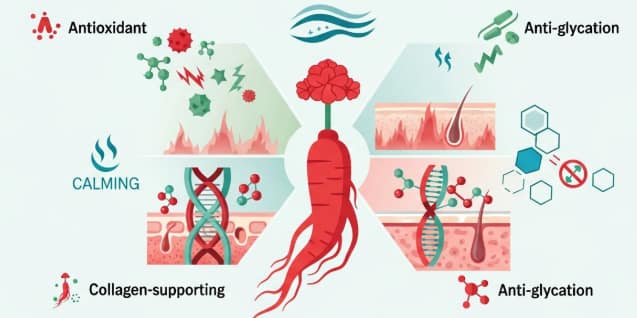
How Korean Red Ginseng Supports Skin Health and Anti-Aging
Aging, environmental stress, and inflammation contribute to skin damage, wrinkles, and loss of elasticity. Korean Red Ginseng (Panax ginseng) has been studied for its anti-aging and skin-protective properties, largely due to its antioxidant, anti-inflammatory, and adaptogenic compounds.
⚠ Disclaimer: Red ginseng is not a substitute for dermatological treatment. It may support skin health naturally as part of a balanced skincare and wellness routine.
1. Key Mechanisms for Skin Protection and Anti-Aging
1.1 Antioxidant Activity
- Ginsenosides and polyphenols in red ginseng neutralize free radicals, preventing oxidative stress that accelerates aging.
- Helps reduce photoaging caused by UV exposure.
📎 Reference:
https://pubmed.ncbi.nlm.nih.gov/21490442/
1.2 Anti-Inflammatory Effects
- Red ginseng reduces pro-inflammatory cytokines such as TNF-α and IL-6, protecting skin from inflammation-related damage.
- May help soothe skin irritation and reduce redness in sensitive skin.
📎 Reference:
https://pubmed.ncbi.nlm.nih.gov/29296430/
1.3 Collagen and Elastin Support
- Ginsenosides may stimulate fibroblast activity, supporting collagen synthesis.
- Helps maintain skin elasticity, firmness, and smoothness.
📎 Reference:
https://pubmed.ncbi.nlm.nih.gov/25156023/
1.4 Anti-Glycation Properties
- Glycation damages collagen and accelerates wrinkle formation.
- Red ginseng can inhibit glycation processes, supporting youthful skin appearance.
📎 Reference:
https://pubmed.ncbi.nlm.nih.gov/26776263/
2. Clinical and Cosmetic Studies
| Study | Participants | Intervention | Outcome |
|---|---|---|---|
| Choi et al., 2010 | Healthy adults | Red ginseng extract topically & orally | Improved skin elasticity, hydration |
| Kim et al., 2012 | Women, 40–60 yrs | Oral red ginseng capsules 3 g/day | Reduced wrinkles, improved skin tone |
| Park et al., 2014 | In vitro & human fibroblasts | Ginsenoside Rg3 | Stimulated collagen synthesis, reduced oxidative stress |
Note: Red ginseng has been used both topically (creams, serums) and orally (extracts, capsules) for skin health.
3. Recommended Use
- Oral supplements: 1–3 g/day standardized extract, improves systemic skin health
- Topical products: Creams or serums with red ginseng extract, applied 1–2x daily
- Fermented ginseng: May enhance bioavailability of active compounds
Combine oral and topical use for optimal anti-aging and anti-inflammatory effects.
4. Who May Benefit
✔ Adults experiencing early signs of aging
✔ Individuals with sensitive or inflamed skin
✔ Those seeking natural anti-aging support
✔ People exposed to UV or environmental stressors
5. Safety and Side Effects
- Generally safe for oral or topical use
- Mild side effects: digestive upset, mild skin irritation (rare)
- Avoid if allergic to ginseng
- Consult a healthcare provider if pregnant, breastfeeding, or taking medications
FAQ
Q: Can red ginseng reduce wrinkles naturally?
A: Yes — by supporting collagen synthesis, elasticity, and reducing oxidative stress.
Q: Should I use red ginseng orally or topically?
A: Both methods can complement each other; oral supports systemic health, topical supports targeted skin benefits.
Q: Is fermented ginseng more effective?
A: Fermented forms may increase bioactive compound absorption, enhancing anti-aging effects.


