AMPK

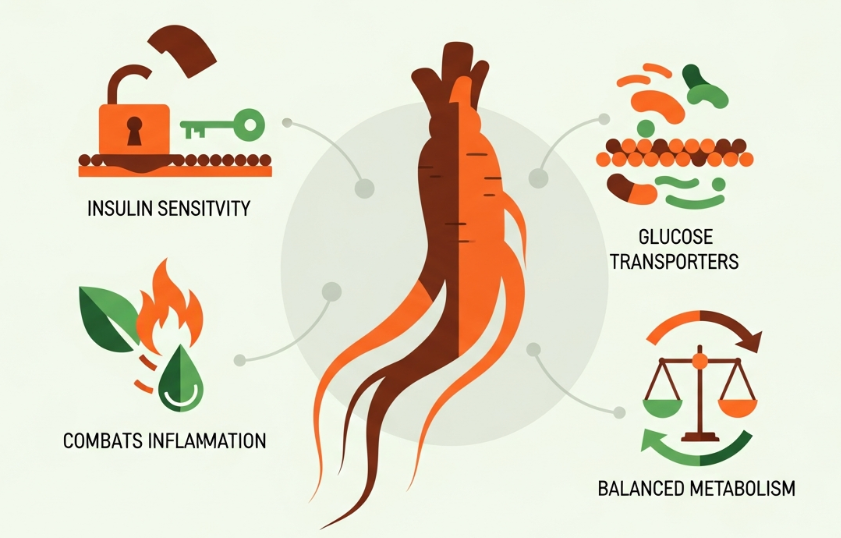
Diagram of Korean red ginseng supporting insulin sensitivity and glucose metabolism

Red Ginseng Benefits for Insulin Resistance: Research-Based Guide

Can Korean Red Ginseng Support Insulin Sensitivity? Insulin sensitivity refers to how effectively your cells respond to insulin, the hormone responsible for glucose uptake and energy regulation. Reduced sensitivity, or insulin resistance, is a key factor in metabolic syndrome, prediabetes, type 2 diabetes, and cardiovascular risk. Korean Red Ginseng (Panax ginseng C.A. Meyer) has been […]

Red Ginseng Benefits for Insulin Resistance: Research-Based Guide Read More »

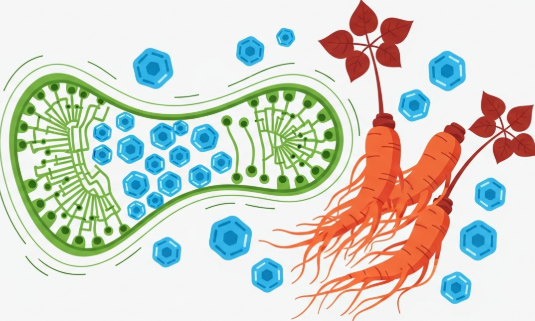
Korean red ginseng improving mitochondrial function and cellular energy

⚡ Mitochondrial Regulation & Bioenergetic Stability: How Korean Red Ginseng Protects Your Cellular Power Systems

🔬 Introduction: Why Mitochondria Matter More Than Ever Mitochondria are the energy currency factories of the human body, generating ATP to power everything from cognition and muscle movement to immune function and cardiovascular health. When mitochondrial function declines, the result is not just fatigue — but a systemic loss of vitality that affects metabolism, mental

⚡ Mitochondrial Regulation & Bioenergetic Stability: How Korean Red Ginseng Protects Your Cellular Power Systems Read More »

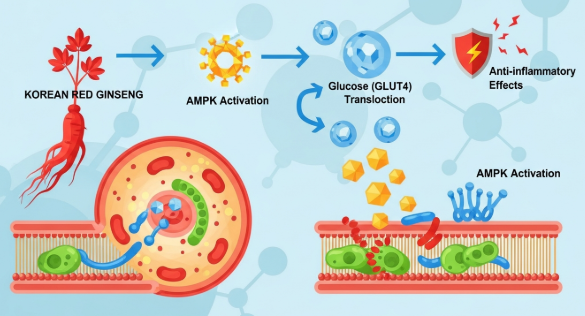
Korean red ginseng roots and molecular diagram illustrating insulin sensitivity improvement

The Science of Insulin Sensitivity: Korean Ginseng’s Role in Combating Insulin Resistance

Maintaining insulin sensitivity is vital for metabolic health, energy balance, and disease prevention. When insulin signaling falters, the body’s ability to regulate glucose collapses—leading to hyperglycemia, metabolic syndrome, and type 2 diabetes. Over the last two decades, Korean Red Ginseng (Panax ginseng C.A. Meyer) has gained attention as a natural agent that improves insulin sensitivity

The Science of Insulin Sensitivity: Korean Ginseng’s Role in Combating Insulin Resistance Read More »

Korean Red Ginseng roots with insulin receptor and glucose cell uptake illustration

💉 Restoring Insulin Sensitivity Naturally: The Role of Korean Red Ginseng in Metabolic Balance

Insulin resistance lies at the heart of many modern health challenges—from type 2 diabetes and obesity to chronic fatigue and cardiovascular disease. When cells become less responsive to insulin, the body compensates by producing more of it, eventually leading to high blood sugar, inflammation, and metabolic dysfunction. Emerging scientific evidence shows that Korean Red Ginseng

💉 Restoring Insulin Sensitivity Naturally: The Role of Korean Red Ginseng in Metabolic Balance Read More »

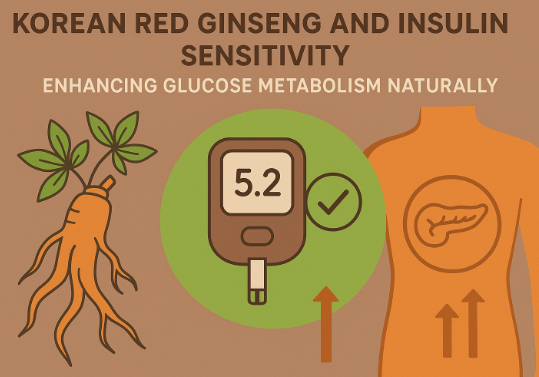
Korean Red Ginseng roots and molecular insulin icons representing improved glucose metabolism

Korean Red Ginseng and Insulin Sensitivity: Enhancing Glucose Metabolism Naturally

Maintaining optimal insulin sensitivity is vital for long-term health, energy, and metabolic balance. When the body becomes less responsive to insulin—a condition known as insulin resistance—glucose builds up in the blood, increasing the risk of type 2 diabetes, weight gain, and fatigue. Fortunately, natural compounds such as Korean Red Ginseng (Panax ginseng C.A. Meyer) have

Korean Red Ginseng and Insulin Sensitivity: Enhancing Glucose Metabolism Naturally Read More »

Does Eating Korean Ginseng Really Lead to Longevity?

The Secrets of Long Life—What Science Actually Shows TL;DR 1) What do we mean by “longevity”? 2) What the human evidence says A. Mortality (lifespan) — observational signals, not proof Takeaway: We don’t have randomized mortality trials, but population data trends favor ginseng users. B. Biological aging markers & antioxidant capacity C. Immunity (infection resilience

Does Eating Korean Ginseng Really Lead to Longevity? Read More »

Shopping Cart
Scroll to Top